Have you ever thought of why you react in a certain way when you are stressed? Or have you ever thought about how your childhood shapes your relationships today?
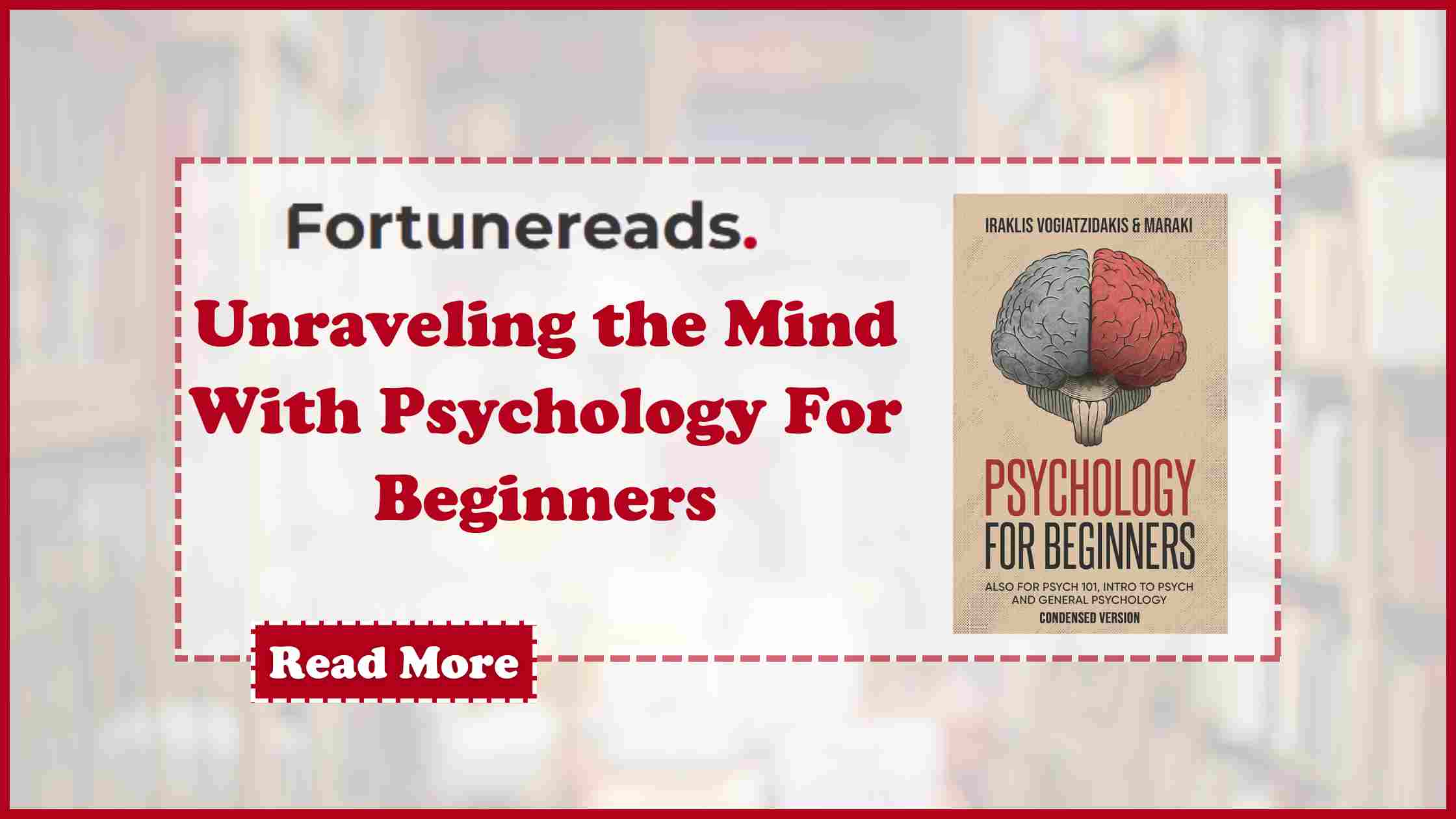
Psychology for Beginners by Iraklis Vogiatzidakis & Dr. Maraki is a captivating guide that answers these questions by welcoming readers into the world of human behavior. This condensed book, designed for Psych 101 students and curious minds alike, transforms complex psychological concepts into digestible insights.
The book grabs your attention right away with a question that you can relate to, like why some people handle stress well while others struggle. This establishes the tone for an interesting examination of psychology’s reach. It touches on everyday interactions, business, and education in addition to therapy couches. The authors masterfully balance academic rigor with accessibility and cover foundational theories like behaviorism, cognitive psychology, and Maslow’s Pyramid while grounding them in real-world applications. For instance, “Psychology in Everyday Life” offers practical tips on improving relationships through active listening and emotional intelligence.
To increase comprehension, each chapter builds on the one before it. While Chapter 4 delves into cognition, elucidating how perception and memory influence decisions, Chapter 1 charts psychology’s development from philosophy to science, highlighting pioneers such as Freud and Skinner. For students, the coverage of research methods in Chapter 8, including ethical considerations like informed consent, is a valuable primer for academic pursuits. Meanwhile, general readers will appreciate Chapter 5’s focus on emotional well-being, which offers strategies like cognitive reappraisal to manage stress.
Psychology for Beginners also advocates for mental health. It demystifies disorders using DSM-5 and ICD frameworks, promoting awareness and reducing stigma. Plus, the authors’ emphasis on practical tools, from mindfulness to conflict resolution, will help us apply psychology daily to improve our lives.
It might be possible that the book’s condensed format occasionally leaves you wanting more depth on certain topics, like psychoanalytic theory. However, this brevity keeps it accessible, making it ideal for beginners or readers who are short on time but want to understand more of physiology. The writing style is clear and conversational, avoiding jargon while maintaining credibility, which suits both students and self-help enthusiasts.
In a world where understanding human behavior is more crucial than ever, Psychology for Beginners is a lens to view yourself and others with greater empathy and insight, with mental clarity and composure. Whether you’re a college student tackling Psych 101 or a professional seeking self-improvement, this book offers a solid foundation and practical wisdom.
So, head to Amazon to purchase your copy: https://www.amazon.com/dp/B0F39TXSFZ/.