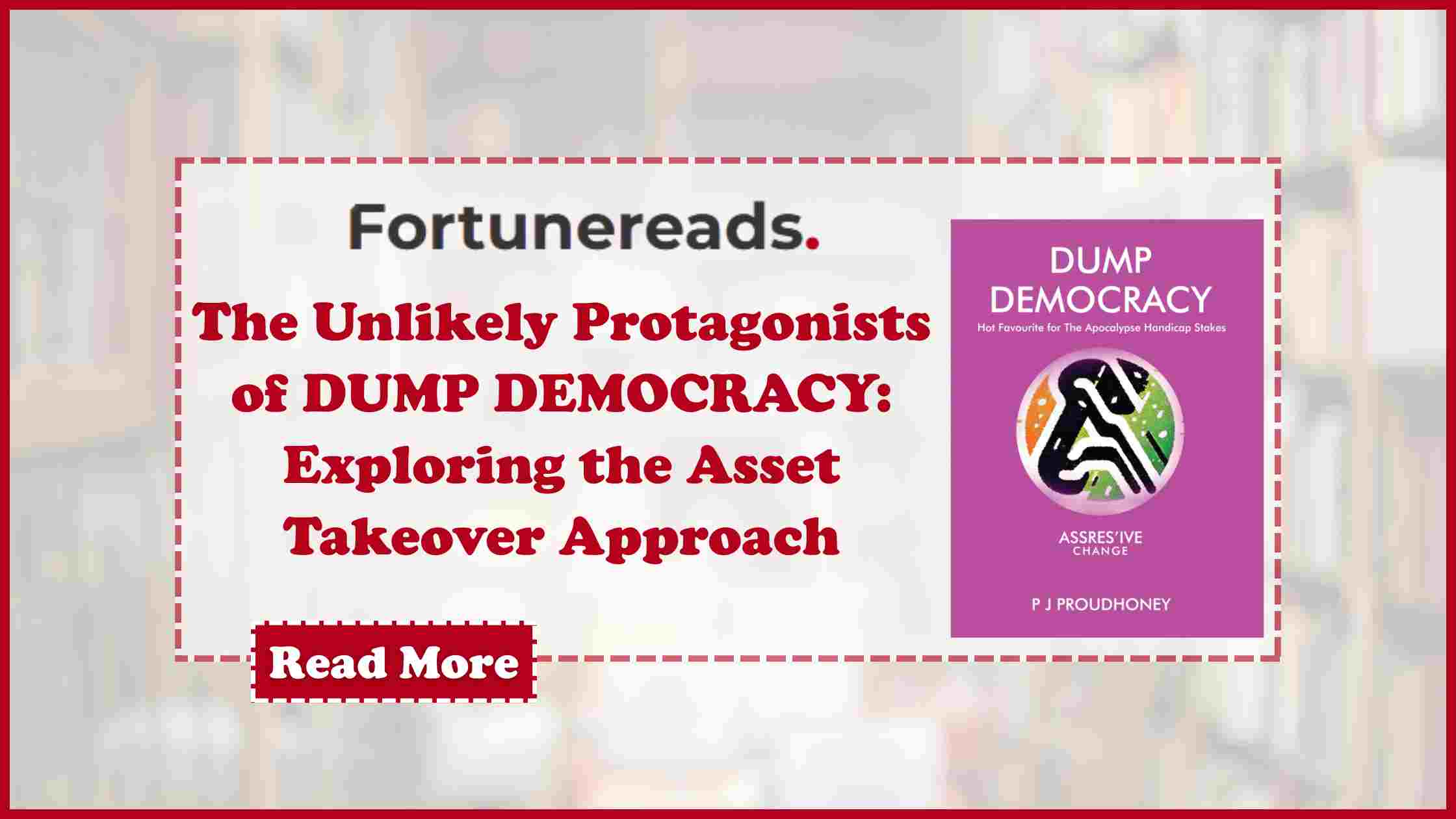
In this DUMP DEMOCRACY: Hot Favourite for The Apocalypse Handicap Stakes, the author introduces a quite out-of-the-box and strong idea-concept-replace conventional democratic governance by a corporate-style asset takeover model. Many would agree it’s quite strange for governments to be considered corporations and citizens shareholders, but perhaps business philosophies of efficiency and accountability serve the requirements of today’s more complex challenges. What does this really look like, and how realistic is the idea that it could replace our current democratic systems?
More fundamentally, the “asset takeover” practice in the DUMP DEMOCRACY is all about running governments precisely as companies run the machines intended to create value for their shareholders. In this model, the leaders would be elected based on their skill sets, expertise, and track records—just as corporate CEOs. The concept was to move out the inefficiencies of electoral cycles and popular opinion, so leaders could decide what is best for society in the long run rather than what would win them votes in the short.
The merit-based system based on corporate logic creates an interesting thought-provoking question: does it indeed result in a more effective and responsible government? According to DUMP DEMOCRACY, in theory, it would minimize the factors that partly cause the country to grind to a halt in a period of partisanship. Such a model of asset takeover would have politicians concentrate on measurable results — bringing down unemployment or curing the average voter of some malaise over health care. Politics would then take a back seat, as at least by this account, governments focus more on output and less on image.
DUMP DEMOCRACY cannot, however deny dangers that such a paradigm presents. The most serious threat is that some form of corporate governance will want the bottom line to be people: economic growth supersedes social welfare. Certainly, social welfare programs will be sacrificed for policies that may boost metrics but show scant concern for vulnerable populations under a business-run government. All these possible fallacies the book depicts and asks if it is possible to marry, in part, the efficiency of a corporate model to the morality of a democratic one.
But asset takeover does also raise questions about what happens in terms of transparency and accountability. After all, if elected officials are directly accountable to the people through regular elections, who would hold leaders accountable in a corporate-style model? DUMP DEMOCRACY sees a potential role for a board of directors; after all, who can forget that a company has its board of directors? Citizens would become “shareholders” in the governance of society, but voice-informed by data-driven feedback, not a rolling balance of public opinion polling. Public satisfaction, the book suggests, is something that could be measured via performance metrics rather than through election results, so this way leaders would be held high standards without becoming sidetracked by any momentary shifts of public mood.
Ultimately, DUMP DEMOCRACY introduces the asset takeover model as an exercise in imagination rather than a practical solution but provokes the status quo to rethink or reimagine. This book by the author asks the question: Could a government structured like a corporation end up being more favorable to solving the current problems of humanity better- rapid change environment, highly volatile environment across issues of climate crisis and economic inequality?. While this method may not suit any society, the book does suggest that infusion of business principles in governance could usher in new thinking about leadership and accountability.
In this world, most democratic systems are weighed down by their own bureaucracy and inefficiency, DUMP DEMOCRACY encourages one to think out of the box. The asset takeover approach seems radical but forces us to ask if democracy’s traditional framework can keep pace with the demand. As this book makes clear, it may be a matter of challenging the unthinkable notions and rehabilitating what it means to serve the best interests of society. Whether or not the reader will end up agreeing with the corporate model, DUMP DEMOCRACY is a seminal perspective on governance that will surely stir conversation and rile debate.