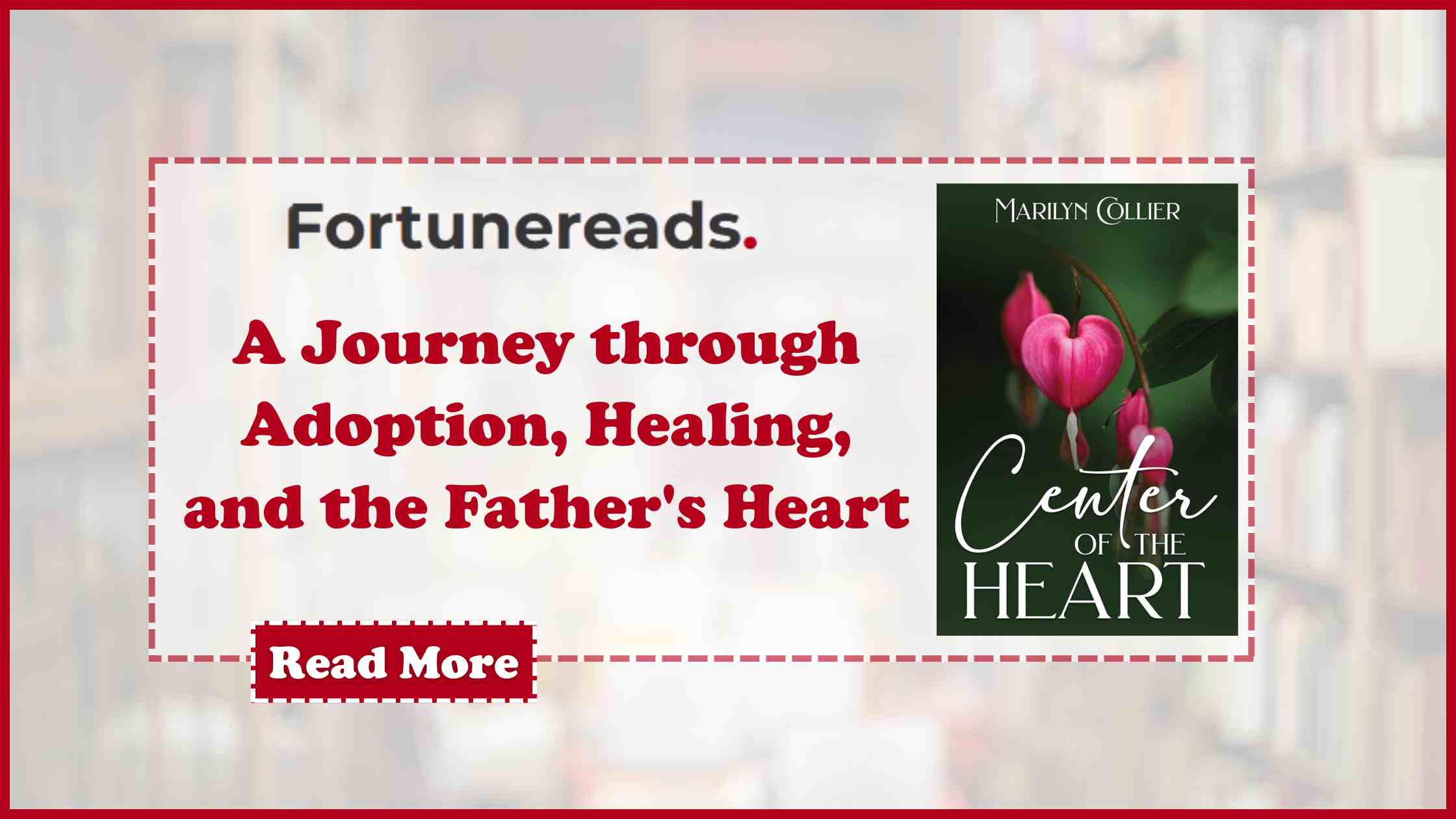
In Center of the Heart, Marilyn Collier offers more than just a collection of daily devotions—she offers her story. Woven into each page is the fabric of a life shaped by both brokenness and redemption, abandonment and belonging. One such powerful devotion, titled “Adoption,” stands out not only as a theological reflection but as a soul-bearing testimony of the kind of love that heals at the deepest level.
Marilyn opens this entry with a memory that is both ordinary and extraordinary: her stepfather, whom she lovingly calls “daddy,” chose to love her even before he married her mother. That simple yet profound decision—to love a child not born of his blood, but of his heart—became a living image of what divine adoption looks like.
“My daddy was my stepfather… He chose to love me as his daughter, which made loving him quite easy.”
In these lines, readers are invited into a deeper revelation: love that is chosen is often even more impactful than love that is merely expected. Marilyn’s story isn’t just about family—it’s about the heart of God. She beautifully mirrors this earthly experience with the eternal truth of Ephesians 1:4-7, which speaks of God’s choice to adopt us into His family before the foundation of the world.
In spiritual terms, we too are adopted—not by obligation, but by grace. Just like her stepfather embraced her as his own, God, through Christ, redeems us, forgives us, and welcomes us as His sons and daughters. There is no earning. No striving. Just grace.
But Marilyn doesn’t gloss over the wound. Her biological father left when she was just three—the very age when children are supposed to begin bonding with their fathers. That early abandonment left a hole in her heart, one that whispered lies: You must work to be loved. You must earn your place. Don’t get too close—you might be left again.
“He left me unconnected and insecure; that made me feel I must work to belong and to be loved and not left.”
With profound emotional honesty, she exposes the burden many carry silently—the belief that love is conditional and belonging must be fought for. This distorted lens, forged in childhood, follows us into our adult relationships, creating fear, pressure, and performance-based intimacy. But Marilyn reminds us that this is not what God intends for His children.
What makes Center of the Heart so special is that it doesn’t stop at identifying pain—it leads readers into healing. Marilyn’s journey with her stepfather becomes a spiritual metaphor that reorients the reader’s perspective of the Father’s heart. Her experience isn’t shared to glorify earthly relationships but to magnify the divine nature of God’s unconditional love.
“The grace of God toward me makes loving Him easy.”
In those few words lies the secret of the Christian life: not that we must work harder to earn God’s love, but that we awaken to the reality that we are already fully and deeply loved. That revelation changes everything. It brings rest to the weary, identity to the abandoned, and healing to the brokenhearted.
For readers, this devotion becomes more than a reflection, it becomes a mirror, revealing hidden insecurities and gently guiding the heart back to truth. Marilyn’s openness offers a sense of companionship, as if she is saying, “I’ve been where you are. Let’s walk this road together, toward healing, freedom, and the Father’s arms.”