What if we knew with absolute certainty that Earth had only fifty years left? That is not just a chilling question for scientists and policymakers. It is the central pulse of Paul Osborn’s novel The Edge of Time. In a world already reeling from fires, floods, and the slow unraveling of ecosystems, Osborn poses a daring challenge: can humanity find a way to survive when the clock on our planet is ticking down?
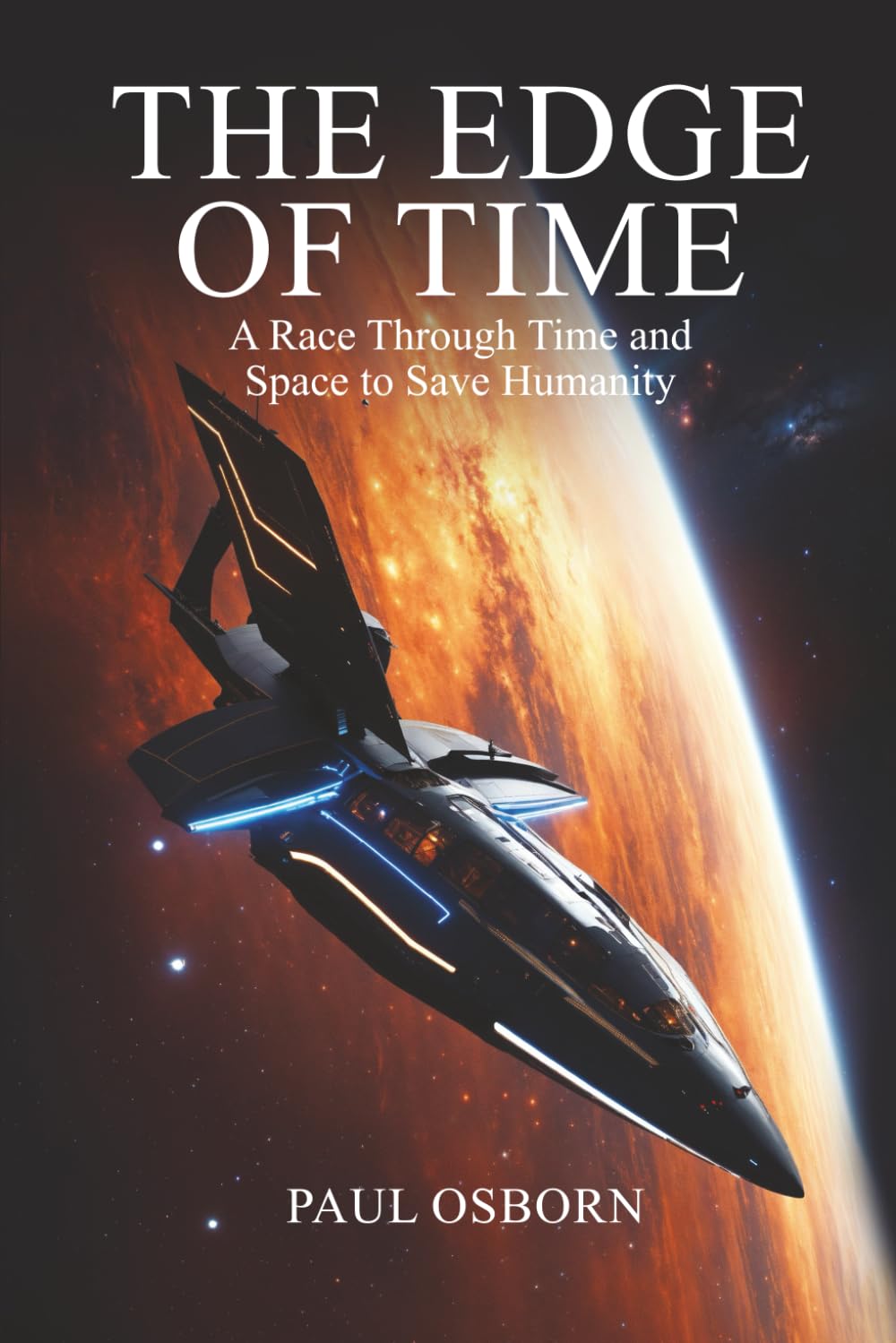
The novel imagines a future where the collapse is no longer hypothetical. Nations are forced to confront the unimaginable truth that Earth’s ecosystems have passed the point of recovery. The stakes are not about slowing climate change anymore; they are about outpacing it. Osborn places readers in the midst of political chambers, scientific laboratories, and deeply personal moments of love and sacrifice, asking us to struggle with the same question that haunts his characters: Can we really outrun climate collapse?
What makes The Edge of Time so compelling is how it ties today’s serious environmental challenges to tomorrow’s possibilities. While the backdrop is terrible, the novel doesn’t just stay on destruction. Instead, it focuses on the extraordinary resilience of the human spirit. Ambitious projects unfold: space colonization, cryogenics, wormhole research, and groundbreaking time-travel technology. These are not simply flashy science-fiction ideas, but metaphors for the lengths to which humanity might go when survival is on the line. Each innovation in the book reflects real-world debates we are having today, about geoengineering, off-planet exploration, and whether science can outpace the damage we’ve already done.
But the novel is not only about machines and theories. It is about people. Families torn apart, leaders burdened by impossible choices, scientists driven not just by curiosity but by the hope of saving their children’s children. In this way, Osborn connects the global to the personal. Readers are reminded that behind every statistic on rising seas or vanishing species is a human story, someone’s home, someone’s loss, someone’s fight to hold on.
By blending speculative science with emotional storytelling, The Edge of Time transforms climate collapse from a distant abstraction into an intimate reckoning. It sparks conversation about responsibility and possibility. Could we, in real life, marshal the kind of collective will the book describes? Would political divisions keep us grounded until it’s too late, or could the shared threat finally unite us?
These are not just questions for fiction. They echo in headlines about international climate summits, debates over renewable energy, and the race to Mars. The book acts as both a mirror and a warning, showing us the path we are on, but also the cleverness we might harness if we choose differently.
In the end, Osborn leaves us not with despair but with hope. His characters fight, love, and dream even in the shadow of collapse. They remind us that the future is not yet written.
For readers searching for a story that blends science, politics, and the raw emotions of survival, The Edge of Time is both thrilling and deeply relevant. It asks the question that matters most today, and dares us to answer it.
Read The Edge of Time by Paul Osborn, and join the conversation about whether humanity can truly outrun climate collapse. Available now on Amazon: https://www.amazon.com/dp/B0FPBSTVG4/.