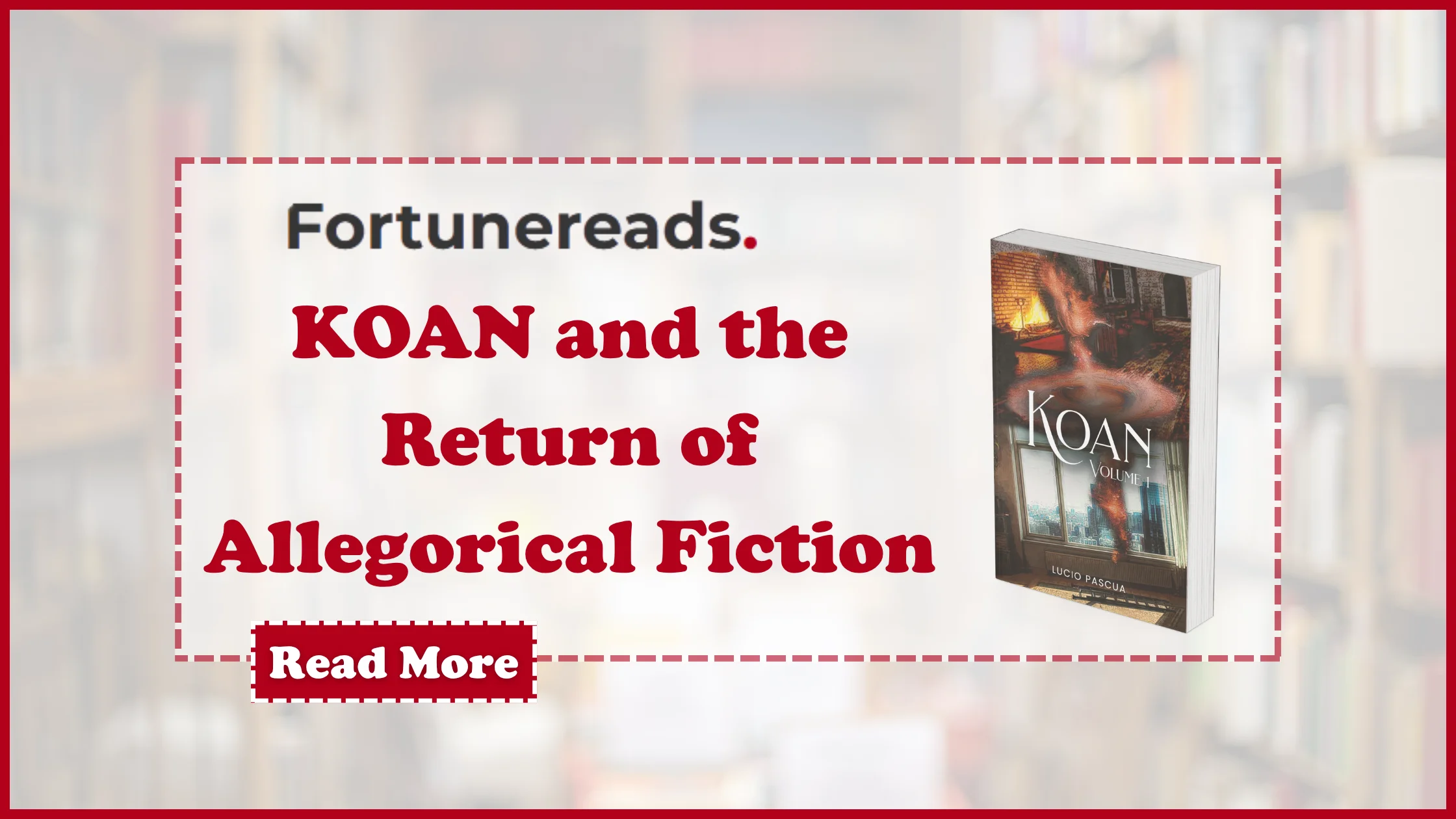
For centuries, the greatest stories were not just stories. They were lessons. From Aesop’s fables to Dante’s Divine Comedy, allegory has long been a way for writers to entertain while guiding readers toward deeper truths. But in today’s world of fast-paced narratives and plot-driven spectacles, allegorical fiction often feels like a forgotten art. That’s why Lucio Pascua’s KOAN is such a refreshing and important contribution. It revives allegory not as a relic of the past, but as a living, breathing form of storytelling that resonates with modern readers.
At first glance, KOAN reads like a sprawling tapestry of myth, philosophy, and speculative fiction. Its mythical guardians, the Northern Tortoise, Eastern Dragon, and others, stand as symbols of wisdom, endurance, and balance. Characters like El-Javaz and the Enlightened One embody ideals of peace, leadership, and self-discovery, while Hel, a villain shaped by generations of cruelty, reflects the dangers of unchecked darkness. But beneath the narrative lies a clear allegorical thread: every figure, every conflict, and every choice is also a lesson, a meditation on how we live, govern, and dream.
This dual function, as a narrative and teaching tool, is what makes KOAN feel both timeless and timely. Pascua’s novel doesn’t preach or lecture; instead, it invites readers to enter a world where the line between story and philosophy blurs. The multiverse isn’t just a backdrop for adventure. It’s an allegory for the endless possibilities of human destiny. Nonviolence in governance isn’t only El-Javaz’s policy. It’s a reflection of the choices we face today in a world where conflict often feels inevitable. Even the satirical elements, poking at politics, science, and religion, are more than playful critique; they are tools for reflection, asking us to look at ourselves through the lens of myth.
It is the essence of allegorical fiction. It’s not simply about creating another world; it’s about holding up a mirror to our own. KOAN continues the tradition of stories that are entertaining on the surface but transformative underneath. It stands alongside classics like The Pilgrim’s Progress or Animal Farm, but with a distinctly modern and metaphysical twist. Instead of focusing on linear morality tales, Pascua opens a multiverse of lessons, each one shaped by choice, perspective, and the fluid balance between chaos and order.
For readers, this means KOAN is more than just a novel. It’s an invitation to engage. It rewards those who are willing to pause, reflect, and return to its pages again and again, each time uncovering new layers of meaning. Like the best allegories, it is not exhausted by a single interpretation. Instead, it grows with the reader, offering insights that feel different depending on where you are in your own life’s journey.
In a literary landscape where allegory is too often dismissed as outdated, KOAN proves it still has the power to inspire. By combining the mythic scope of fantasy, the philosophical depth of literary fiction, and the satire of political critique, Pascua reclaims allegory as both relevant and necessary. It reminds us that stories can do more than entertain. They can teach, guide, and provoke the questions we most need to ask.
The return of allegorical fiction isn’t just about nostalgia for an older form of storytelling. It’s about recognising that in times of uncertainty and change, we need narratives that don’t just distract us, but help us see the world, and ourselves, more clearly. With KOAN, Lucio Pascua has crafted a modern allegory for an age in search of meaning.KOAN byLucio Pascua is available on Amazon: https://www.amazon.com/dp/B0FHDQN2C1