Anxiety and neurosis have long been associated with Jewish identity in film, television, and popular culture. From the self-deprecating humor of Woody Allen to endless punchlines about nervous mothers and hypochondriac uncles, the stereotype of the “neurotic Jew” is widespread. It is often treated with a smile, sometimes even with pride, framed as a sign of intelligence or sensitivity. But when we look at the science, the picture is far more complex. It challenges the simple stereotype that Jews are more anxious than everyone else.
Studies going back decades have tried to answer whether Jews experience higher rates of mental illness than the general population. A 1992 analysis from the National Institutes of Mental Health found that the overall lifetime rate of psychiatric disorders did not differ between Jews and non-Jews once demographic factors were considered. In other words, Jews are not more likely to suffer from mental illness as a group. Yet the study also showed nuance: Jewish participants had higher rates of certain conditions, such as major depression, dysthymia, schizophrenia, and simple phobia, but lower rates of alcoholism. Other conditions, like bipolar disorder, panic disorder, and obsessive-compulsive disorder, showed no significant differences across religious groups.
Later studies echo this complexity. Research in Israel has found rates of mood and anxiety disorders that fall within the normal range of Western countries. Some genetic studies have found a variation among Ashkenazi Jews that can increase risk for schizophrenia, though the same variation is also found in other groups. More recent work in epigenetics suggests that trauma experienced by past generations can affect genetic expression in ways that may influence mental health in descendants.
In Orthodox Jewish communities, another area of focus has been obsessive-compulsive disorder, particularly when it overlaps with religious devotion. Psychologists note that it can be difficult to tell the difference between sincere observance of religious commandments and compulsive behaviors that cause distress. The distinction lies in flexibility: healthy devotion allows for balance, while OCD often traps individuals in patterns that cause suffering. This overlap underscores the importance of adopting nuanced and compassionate approaches to diagnosis and care.
Beyond the science, there is the question of stigma. Like other communities, Jews have struggled with shame and secrecy around mental illness. In the Orthodox world, especially, families have worried about the impact of disclosure on marriage prospects, leading to silence that makes treatment harder to access. Decades ago, Orthodox practitioners compared the shame of mental illness to breaking the most serious religious laws. While progress has been made, stigma still lingers.
Yet Jewish communities have also been leaders in opening conversations about mental health. Surveys suggest Jews may be more willing than others to seek professional help and to speak positively about therapy. Organizations such as Refuat Hanefesh, Chazkeinu, and Refa’enu have emerged to break down barriers, establish support groups, and provide education in schools and synagogues.
The stereotype of the anxious Jew may still circulate in comedy, but it does not capture the whole story. Science tells us that Jews are neither more nor less prone to mental illness overall than other groups. What stands out instead is a culture that has long employed humor, storytelling, and resilience to face life’s challenges, with a growing willingness to openly address mental health issues and stigma.
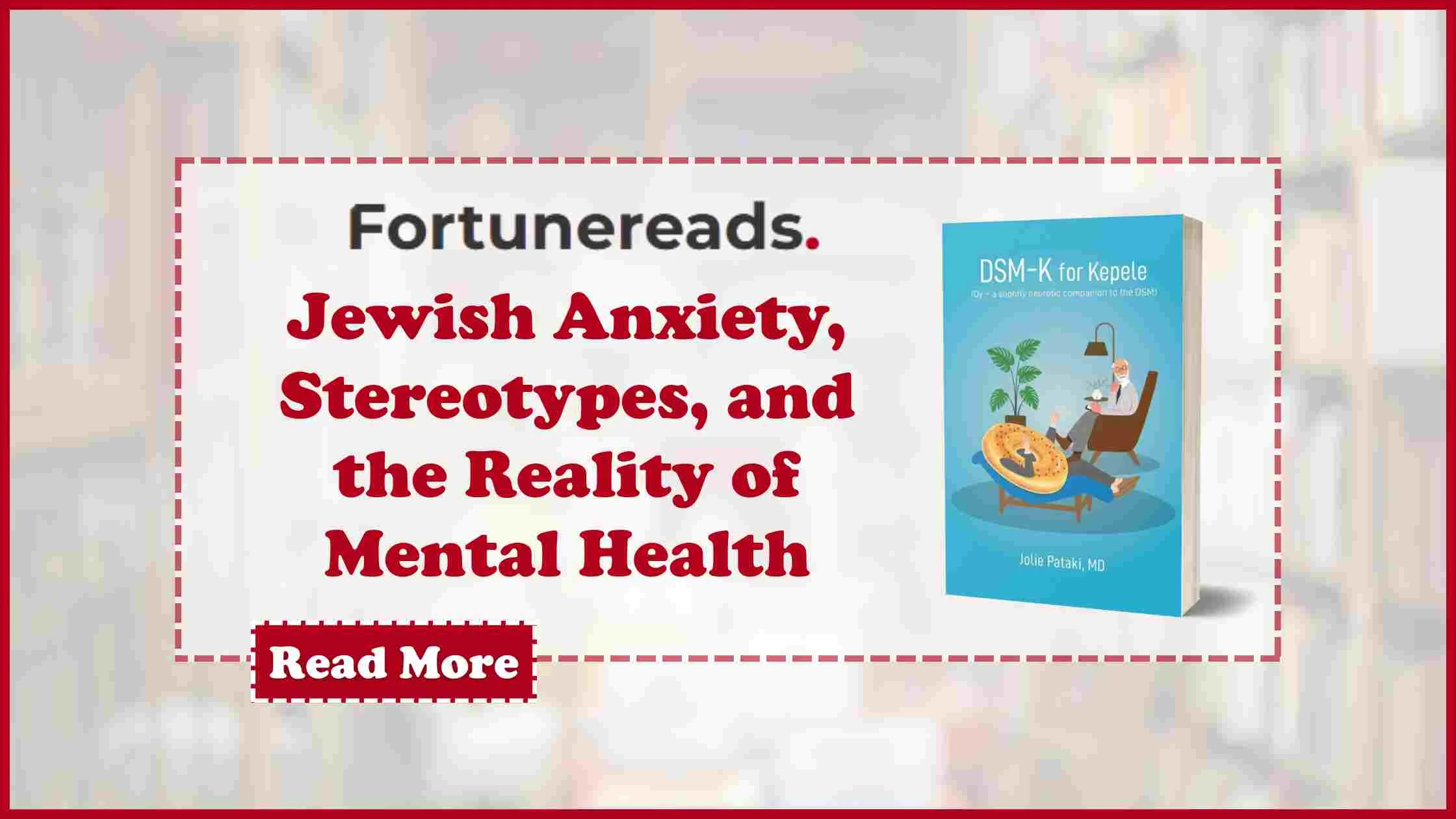
For readers who want to explore how Jewish humor can serve as a tool for understanding mishegos, quirks, and worries, Dr. Jolie Pataki’s DSM-K for Kepele offers a witty and insightful read. It reminds us that laughter, culture, and psychiatry can all work together to make mental health less intimidating and more human.
Head to Amazon to purchase your copy: https://www.amazon.com/dp/1968966498.