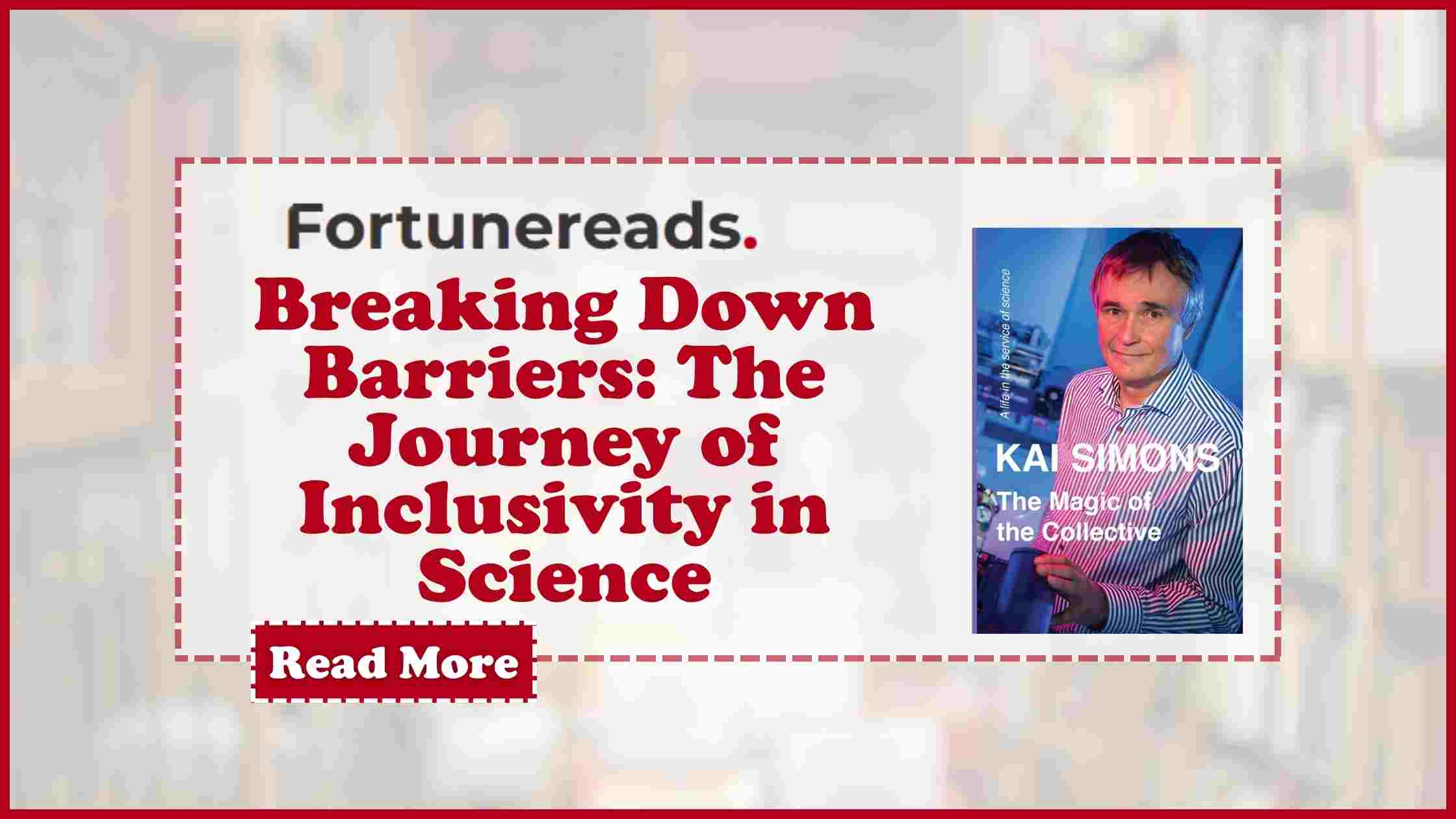
The Magic of the Collective: A Life in the Service of Science, an autobiography by Kai Simons, happens to be one which does not only narrate the biography of a glorious scientific career but also turns out to make a very strong statement for diversity in research work in science. The personal journey that Simons takes one through is closely intertwined with professional experiences and makes for a profound commentary on the barriers within the scientific community and how these are broken down to create a more innovative and equitable field.
The early life of Simons in Helsinki laid out a background for his keen interest in science. More than that, though, he wanted to see more science and a more integrated, cooperative scientific environment. “At the very beginning of his career, Simons saw that the scientific environment was far from inclusive; indeed, women and other minorities were grossly underrepresented in science.” His book highlights how such systematic processes forge inequalities and offers remedies for such problems.
One of the key topics in Simons’ book is the need to build inclusive research environments that support diversity. He shares his experience at some of the world’s most prestigious institutions, such as Rockefeller University and the European Molecular Biology Laboratory (EMBL), where he witnessed firsthand how inclusivity can accelerate scientific progress. According to Simons, a diverse research team brings a wealth of perspectives and ideas, which can lead to more comprehensive and innovative solutions to scientific problems.
He continues to discuss mentorship and inclusivity. For most of his career, he experienced the right kind of mentors who helped him with all the challenges he encountered at each phase of his work but also supported him in all ways to build even more inclusive research environments. He feels they paved his way through some tough challenges during his career while motivating him to do the same for someone else. According to Simons, the only way the underrepresented groups will break the barrier and flourish in the scientific community is through effective mentorship.
Another significant characteristic of the book is that Simons attacks the very competitive character of scientific investigation. According to him, the “publish or perish” mentality discourages cooperation and promotes a negative environment in which only aggressive individuals thrive. He maintains that this atmosphere has particularly been detrimental to those not naturally aggressive by nature-very often women and minorities. Given a more collaborative and supportive environment, he believes this would make the scientific world richer in inclusiveness and productivity.
Therefore, Simons refers to several successful initiatives and practices meant to enhance inclusiveness in science. The various projects of collaboration and inclusion have brought about considerable improvement in most fields. In conclusion, these are real-life case studies of inclusiveness as powerful as it works in most institutions.
In conclusion, The Magic of the Collective: A Life in the Service of Science by Kai Simons is a thought-provoking and inspiring read that highlights diversity’s importance in scientific research. Along with his journey and thoughts, Simons has provided a roadmap for more equitable and innovative research environments. It calls for the scientific community to break down barriers, embrace diversity and work together to achieve a more inclusive future. This book is essential for anyone interested in the intersections between science and social justice.