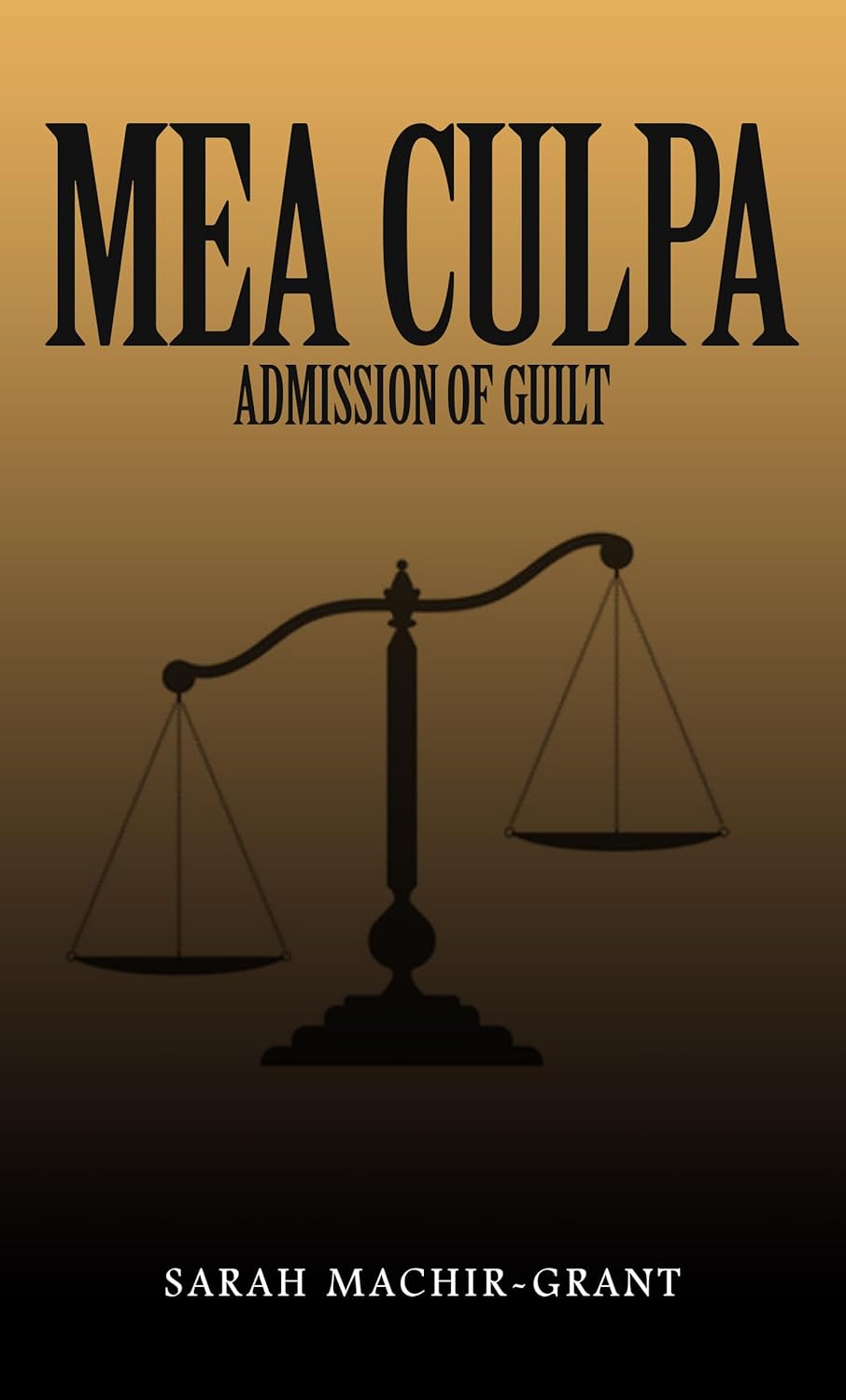
Fear that begins in childhood rarely announces itself with loud alarms. It forms quietly, often unnoticed by the adults who shape a young person’s world, and then follows that child into adulthood, where it surfaces in unexpected and often painful ways. This quiet catastrophe is at the heart of many personal struggles, and it is a theme powerfully reflected in MEA CULPA (Admission of Guilt) by Sarah Machir-Grant. The memoir offers a clear look at how early fear can embed itself so deeply that it shapes thoughts, choices, and relationships long after the danger has passed.
Childhood fear does not always come from dramatic moments. Sometimes it comes from constant tension in a home where a child must watch every word. Sometimes it comes from emotional unpredictability or from feeling responsible for keeping the peace. These early moments may seem small at the time, but they accumulate. They teach a child that the world is unsafe, or that love must be earned, or that one wrong step can unravel everything. As adults, these lessons can quietly evolve into anxiety, withdrawn behavior, or an inability to trust.
For example, a child who grows up in a space where anger can erupt without warning may learn to stay silent to protect themselves. As an adult, that same person might avoid conflict entirely, even in situations where speaking up is both safe and necessary. Another child who learns to soothe a parent’s moods may later become the adult who takes responsibility for everyone else’s emotions, often at the cost of their own well-being. These patterns are not conscious choices. They are survival behaviors carried forward because the body remembers what the child once endured.
MEA CULPA examines this long arc of fear with careful honesty. Sarah Machir-Grant shows how early emotional injury can shape adult life in ways that feel confusing to those who did not live it. She traces how fear born in childhood can become adult paralysis, leaving a person feeling stuck even when they want to move forward. She also reveals how these early wounds can lead to persistent anxiety and strained relationships. Her experiences illustrate what many survivors know but struggle to name. Fear does not stay in one moment. It travels with us.
Understanding this connection is essential for anyone who feels that their reactions in adulthood do not match the current situation. When fear takes root early, it can become the lens through which a person sees the world. It does not mean they are weak or broken. It means they adapted to survive. The work of healing begins when a person recognises that these responses are not their fault, and that change is possible through awareness, support, and patience.
Childhood fear shapes adult lives quietly but powerfully. By learning to recognise its influence, individuals can start to separate their past from their present. This book offers understanding, validation, and a companion for those who are beginning that journey.
For anyone who wants to understand better how fear forms, how it lingers, and how a person might finally break free from its hold, MEA CULPA (Admission of Guilt) by Sarah Machir-Grant is a compelling read.
Available on Amazon: https://www.amazon.com/dp/B0G4KSKTZZ/.