Many of the objects we use every day come from machines, factories, and global supply chains. It is easy to forget that, not long ago, these same objects were made by hand in small workshops. During the Industrial Revolution, trades such as nail making, rope twisting, weaving, and candle making supported entire families. These trades shaped daily life for working people, yet they are rarely discussed with children today. Learning about these forgotten trades helps young readers understand how the modern world was constructed and why history is important.
The Industrial Revolution is often taught through big ideas, such as factories, steam engines, and railways. While these topics are important, they can feel distant to children. Forgotten trades bring history closer to home. They show how ordinary families worked together, how skills were passed from parent to child, and how survival depended on hard physical labor. When children learn about these trades, they begin to see history as something lived by real people rather than just dates in a book.
Nail making is one example of a craft that has disappeared during this period. Before mass production, nails were made by hand from iron rods, heated in small fires, and shaped with hammers. Entire families worked in dark workshops, often attached to their homes. This trade supported building, farming, and transport, yet the workers themselves remained poor. Understanding this helps children see the importance of work, but it does not always lead to fair rewards.
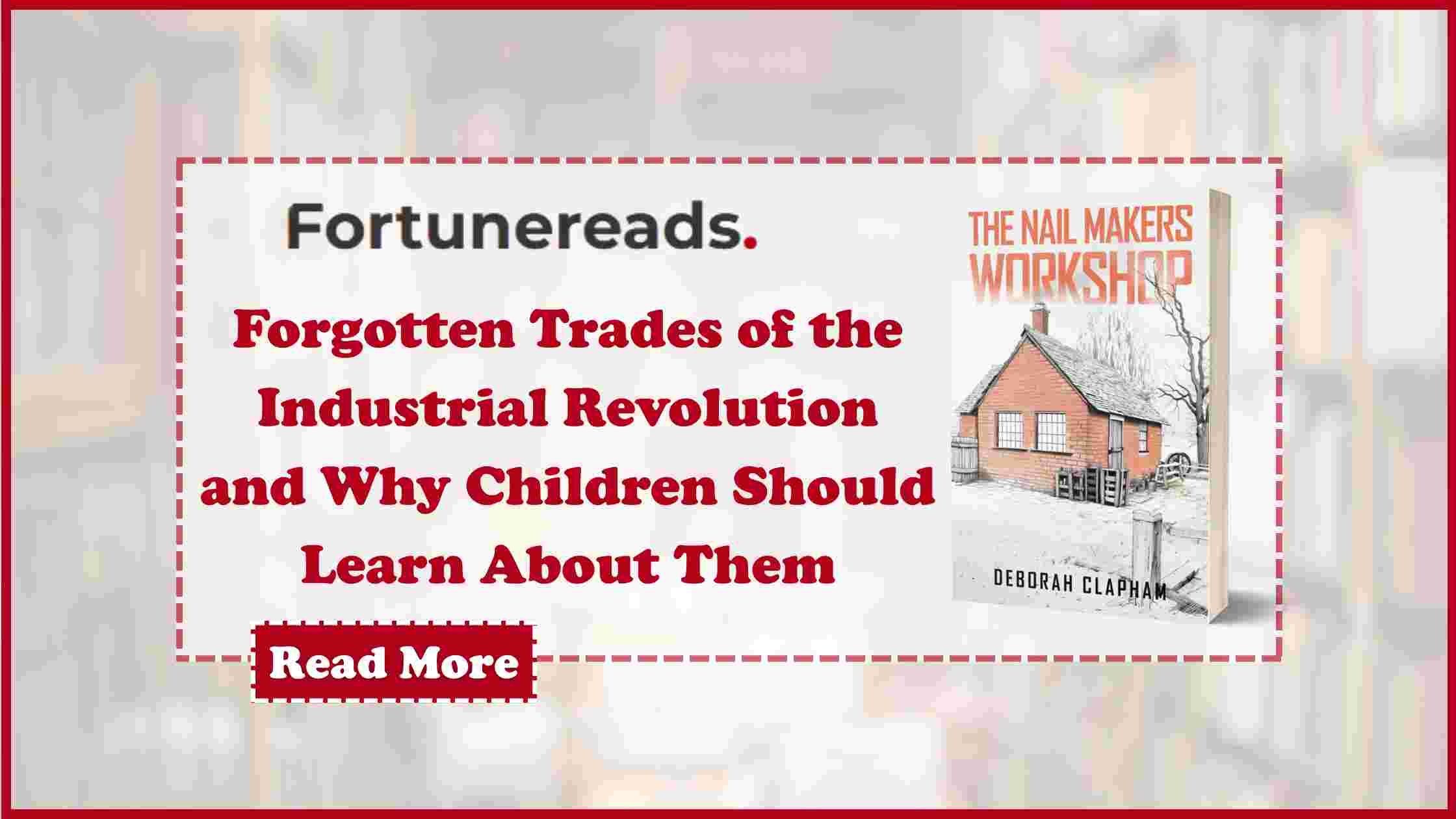
Stories play a key role in bringing these trades back into focus. In Emily’s Adventures: The Nail Makers’ Workshopby Debbie Clapham, nail making is presented through the voice of a child. This approach positions nail making as a disappearing craft and explains how Debbie Clapham revives it through storytelling. Instead of listing tools and processes, the story shows daily life inside a nail maker’s family. Children learn how nails are made, who controls the trade, and how hard work shaped family routines.
Learning about forgotten trades also connects well with modern curriculum needs. History lessons often aim to teach social change, working conditions, and family life. Trades like nail making naturally link these topics together. They help children understand concepts such as child labor, unfair pay, and the lack of worker protection in a clear and age-appropriate manner. It connects heritage education with modern curriculum needs by supporting lessons on industry, society, and empathy.
These stories also help children develop respect for manual work. Forgotten trades remind readers that skill, patience, and effort mattered long before machines took over. They encourage curiosity about how things are made and gratitude for modern safety and education.
Teaching children about the forgotten trades of the Industrial Revolution builds understanding, empathy, and historical awareness. It illustrates how the past influences the present and why these stories remain relevant today.
For a gentle and informative introduction to this topic, Emily’s Adventures: The Nail Makers’ Workshopby Debbie Clapham is a thoughtful book to explore and share with young readers.
Read this book, available on Amazon: https://www.amazon.com/dp/B0G63Y8Q6B/.