Children often notice when something feels unfair, even before they have the words to explain it. They understand when effort does not match reward, or when some people have more while others struggle to get by. Teaching social inequality to young minds builds on this natural sense of fairness. When handled with care, it helps children understand the past and reflect on the world around them without confusion or fear.
Social inequality means that people do not have equal access to resources such as money, food, safety, and opportunities. In history, these differences were often sharp and deeply rooted in daily life. During the Industrial era, working families laboured long hours yet remained poor, while others controlled wages and resources. Explaining this through simple facts can feel abstract. Stories help make these ideas clear and relatable.
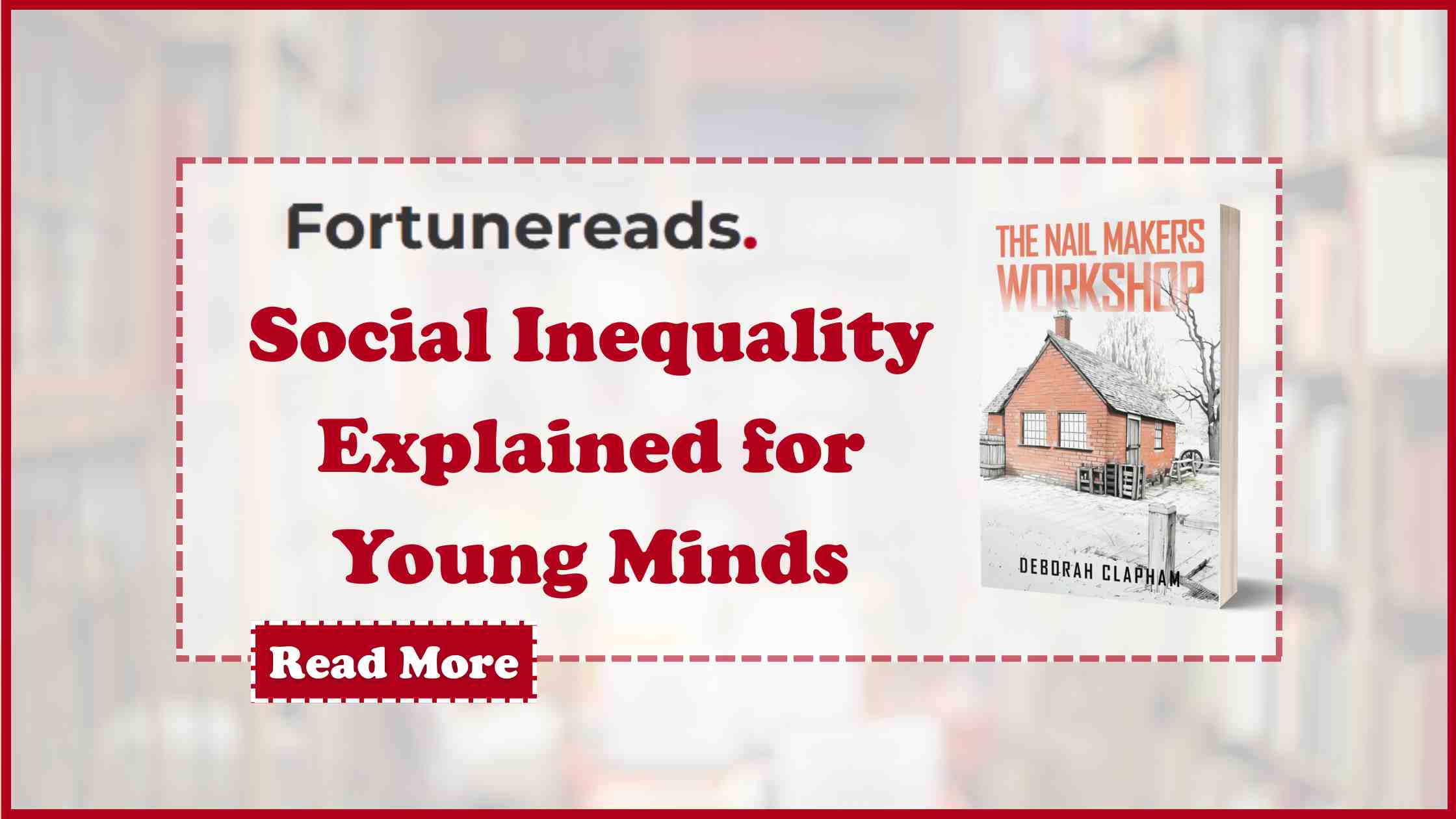
Historical storytelling offers a gentle way to explore unfair systems. In Emily’s Adventures: The Nail Makers’ Workshop by Deborah Clapham, young readers learn about inequality through everyday experiences. Emily describes her family’s work as nail makers and the challenges they face despite constant effort. It examines themes of exploitation, unfair wages, foggers, and token systems, showing how the book gently and understandably introduces complex economic injustice.
For example, Emily explains that her family is paid less than their work is worth. A middleman known as a fogger weighs their nails and often cheats them by using unfair scales. Instead of receiving proper money, families are sometimes paid in tokens that can only be spent at certain shops. These details show how control over wages keeps families struggling. The explanation is calm and clear, allowing children to understand unfairness without distress.
Food scarcity is another manifestation of inequality. Emily’s family works long hours, yet meals are simple and limited. It helps children understand that hard work does not always lead to comfort. It opens conversations about why some systems benefit a few while many others struggle to get by. These examples are grounded in daily life, making the lesson easier to grasp.
The book also shows inequality through access to education. While many children must work, Emily is given a chance to learn reading and writing. It highlights how opportunity was unevenly shared and why education became an important path toward change. Young readers can see how learning offered hope in a difficult world.
Explaining social inequality to children does not mean giving them heavy economic theory. It means showing how systems affect people. Stories allow children to connect emotionally and think critically simultaneously. They learn to ask questions about fairness, work, and responsibility.
Books that handle these themes carefully help children build empathy and awareness. They learn that inequality is not about individual failure, but about systems that shape lives. This understanding supports both historical learning and emotional growth.
For parents and educators looking to introduce social inequality clearly and thoughtfully, Emily’s Adventures: The Nail Makers’ Workshop by Deborah Clapham is a valuable choice. It offers young readers a calm and honest look at past unfairness, helping them understand complex ideas through story rather than explanation alone.
This book is available on Amazon: https://www.amazon.com/dp/B0G63Y8Q6B/.