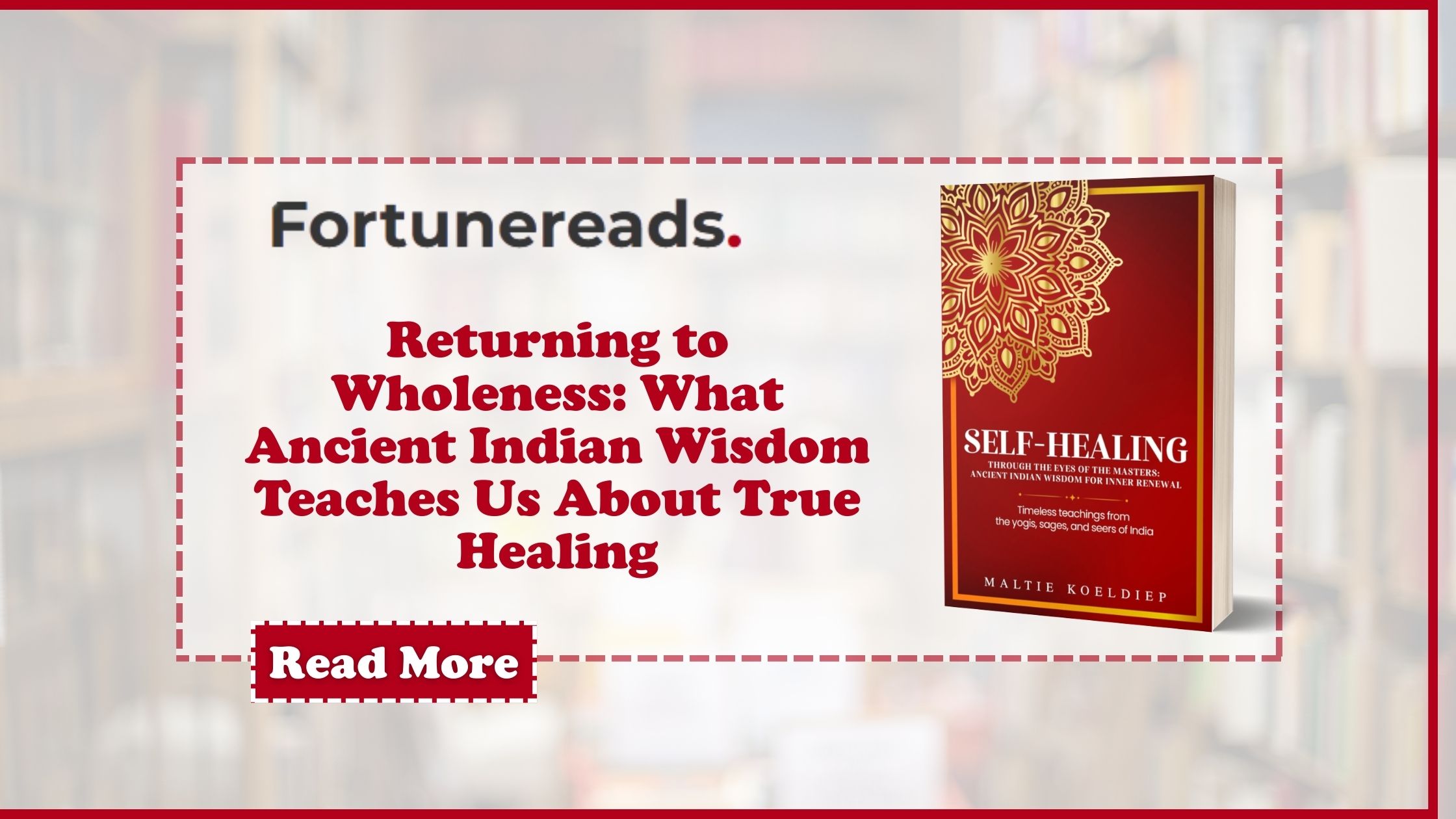
In a world saturated with quick fixes and performance driven wellness culture, the idea of healing has become increasingly narrow. We often equate health with the absence of symptoms or the ability to function at high speed. Yet ancient Indian wisdom presents a far more expansive understanding of what it means to be truly well. In Self-Healing Through the Eyes of the Masters: Ancient Indian Wisdom for Inner Renewal by Maltie Koeldiep, healing is described not as temporary relief but as a return to inner wholeness.
Ancient Indian traditions begin with a foundational premise: you are more than your physical body. The rishis taught that human beings consist of multiple interconnected layers. The body is only the outermost expression. Beneath it exist layers of energy, mind, discernment, and inner bliss. When one layer becomes disturbed, the others are affected. Therefore, healing cannot be isolated to physical intervention alone. It must include the mind, lifestyle, and deeper awareness.
Modern culture often treats stress as inevitable and distraction as normal. Ancient teachings recognize these patterns as signs of imbalance. When attention is constantly pulled outward, the connection to inner steadiness weakens. Yoga philosophy defines healing as calming the fluctuations of the mind. When mental turbulence settles, clarity naturally emerges. Peace is not manufactured. It is uncovered.
Ayurveda, the traditional science of life, further explains that each individual has a unique constitution. Health depends on maintaining balance within that constitution through diet, sleep, environment, and emotional regulation. Unlike generalized wellness trends, Ayurveda does not promote universal solutions. It encourages awareness of personal rhythms and seasonal cycles. Living in harmony with nature is considered preventive medicine.
Another core insight from ancient Indian wisdom is the law of cause and effect. Every thought, action, and habit plants a seed. Over time, these seeds shape physical vitality and mental stability. Healing therefore becomes a daily practice of conscious living. Small choices matter. How we speak, how we eat, how we breathe, and how we respond to challenge all influence inner equilibrium.
Mindfulness and non-attachment also play critical roles. Emotional suffering intensifies when we cling to outcomes or resist change. The Buddha emphasized that awareness of the present moment reduces unnecessary distress. When we observe thoughts instead of becoming entangled in them, emotional intensity decreases. Non attachment does not mean indifference. It means flexibility. It allows us to care deeply without collapsing when circumstances shift.
Perhaps the most transformative teaching comes from Advaita philosophy, which encourages inquiry into the nature of the Self. If identity is built entirely on external roles or temporary experiences, instability follows. When awareness recognizes itself as something deeper than passing thoughts and emotions, resilience strengthens. Healing at this level is not about adding something new. It is about removing false identification.
Ancient Indian healing differs from modern wellness trends in one important way. Its ultimate aim is integration rather than optimization. It does not seek to enhance performance alone. It seeks harmony between body, mind, and consciousness. Health is not simply energy or productivity. It is alignment with truth.
In times of uncertainty, these teachings remain remarkably relevant. They remind us that peace is cultivated through discipline, clarity, and self-knowledge. They encourage us to slow down, listen inwardly, and live deliberately. True healing is not a product to consume. It is a state of balance to return to.
When we shift from constant striving to conscious alignment, we rediscover something steady beneath the noise. That steadiness is not distant. It has always been present, waiting for attention.
Read this book, available on Amazon: https://www.amazon.com/dp/1971228133/.