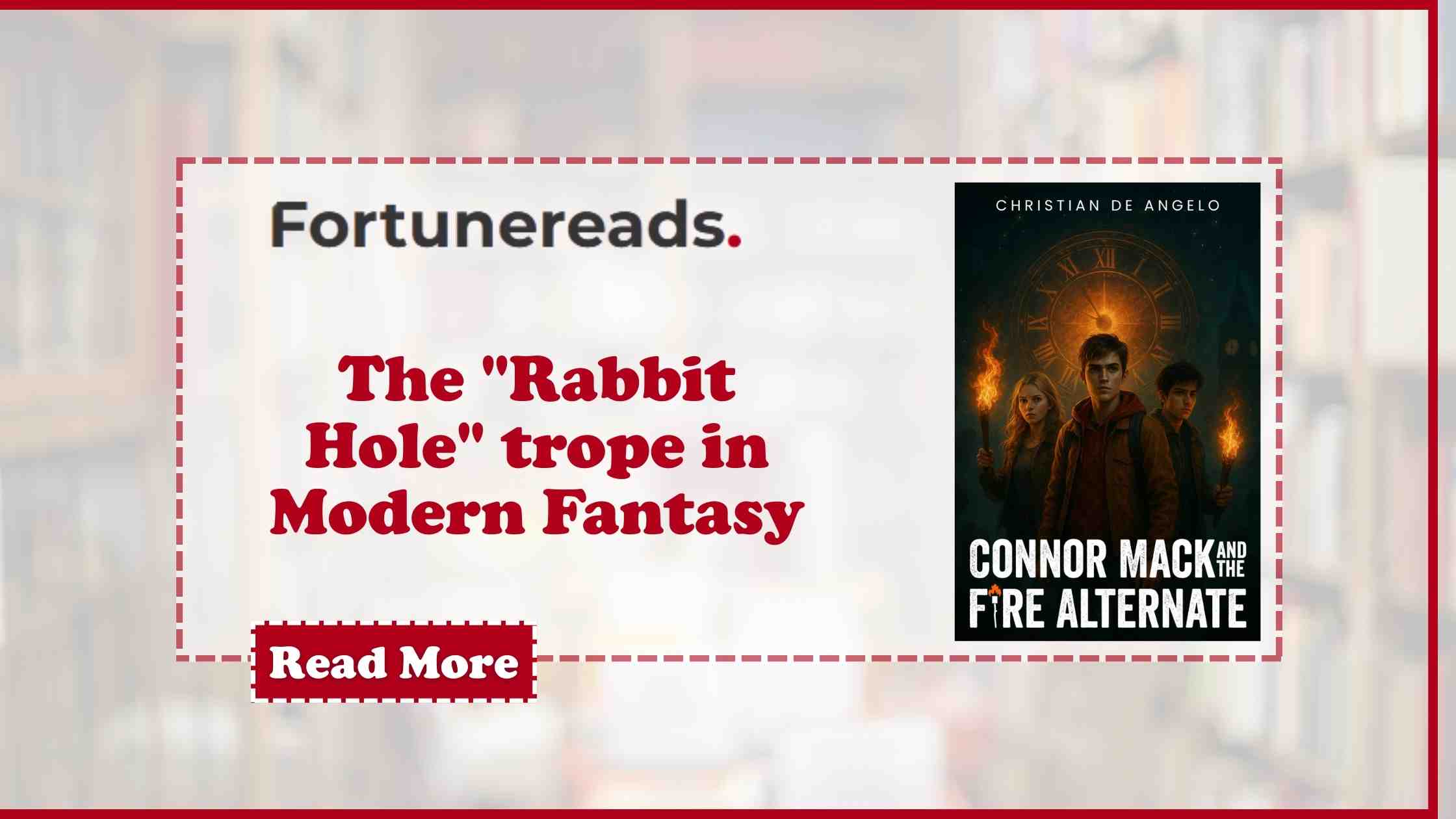
The “Rabbit Hole” trope, a literary device famously pioneered by Lewis Carroll in Alice’s Adventures in Wonderland, remains one of the most resilient and evocative foundations in modern fantasy. At its core, the trope describes the sudden, often involuntary transition of a protagonist from a mundane, recognizable reality into a world of incomprehensible magic and logic-defying rules. In contemporary narratives, such as Christian De Angelo’s Connor Mack and the Fire Alternate, the “Rabbit Hole” is no longer just a physical pit in the ground but a metaphorical and technological breach that challenges the protagonist’s perception of identity and agency.
In the modern context, the transition often begins with an anomaly in the ordinary. While Alice followed a waistcoat-wearing rabbit, modern heroes might find their “Rabbit Hole” through a glitch in a digital interface, a hidden frequency in a smart device, or a sudden, inexplicable shift in the local environment. In the story of Connor Mack, the transition is jarring and absolute, stripping away the safety of the known world and replacing it with a high-stakes “Alternate” reality. This serves a vital narrative function: it forces an immediate shedding of the character’s former self. When a character falls down the hole, they cannot bring their social status, their comfort, or their mundane problems with them. They are reduced to their most basic survival instincts, which allows the author to rebuild them into a hero from the ground up.
Furthermore, the modern “Rabbit Hole” often reflects our collective anxieties about the unknown. In 19th-century literature, the hole led to a whimsical, if dangerous, dreamscape. Today, the trope frequently leads to dystopian reflections of our own world or complex multi-dimensional systems governed by “portal chips” and energy grids. This evolution mirrors our relationship with technology; we feel that at any moment, a single wrong click or a technological breakthrough could plunge us into a reality we are unprepared to navigate. The trope creates a bridge between the relatable and the radical, allowing readers to explore alien concepts like elemental magic or collective amnesia through the eyes of someone who is just as confused and overwhelmed as they would be.
The “Rabbit Hole” also serves as the ultimate catalyst for the “Hero’s Journey.” By physically removing the protagonist from their “Ordinary World,” the author bypasses the hesitation often found in other genres. There is no debating whether to take the quest when the floor has literally disappeared beneath your feet. In the “Fire Alternate,” Connor’s plunge into a new dimension isn’t just an adventure; it is a forced evolution. The trope demands that the character adapt or perish. This pressure cooker environment is where the most significant character growth occurs, as the protagonist must master new laws of physics or magic to find their way back, or to decide if they even want to return.
Ultimately, the “Rabbit Hole” trope survives because it taps into a universal human curiosity about what lies behind the veil of our daily routines. It suggests that just beneath the surface of the Launderette, the school, or the office, there is a world of infinite possibility and terrifying danger. It reassures the reader that even the most ordinary person, when dropped into extraordinary circumstances, has the capacity to ignite their inner fire and reshape their destiny. Whether it is a literal tunnel or a tear in the fabric of time, the “Rabbit Hole” remains the most effective way to invite a reader to leave their world behind and step into the light of the unknown.
Discover this book now, available on Amazon: https://www.amazon.co.uk/dp/1970749725/.