There’s something irresistible about the idea that the answers we seek in the present might be buried in the past. Old letters, faded maps, forgotten buildings, and ancestral secrets all carry an unspoken promise that history still holds something to reveal. That is what makes the past the perfect stage for a modern mystery. It provides not only clues and context but also a sense of wonder, reminding us that time never truly erases what once was.
In fiction, mystery thrives on silence, secrecy, and uncertainty. The further back we go, the more room there is for interpretation. Historical settings create natural gaps in understanding, missing records, lost witnesses, and misunderstood motives, and those gaps are where good stories live. A writer can weave modern discovery with ancient consequence, letting readers experience two timeframes at once. Each thread of history pulls on the other, tightening the tension as the truth slowly surfaces.
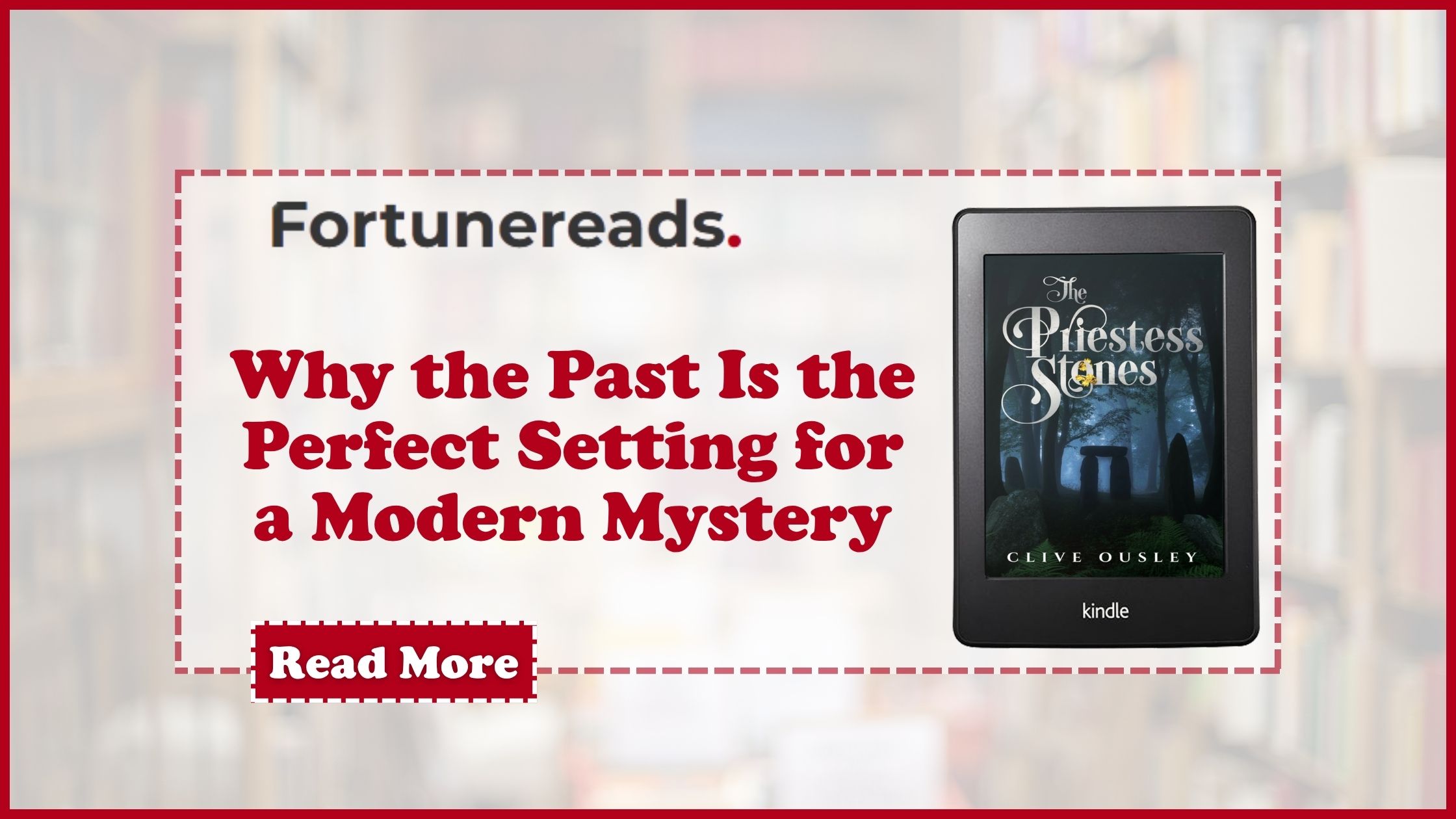
Clive Ousley’s The Priestess Stones is a strong example of this kind of storytelling. The novel draws readers into the shadowy forests of Britain, where archaeology and mystery meet. A forgotten 18th-century cult, a buried stone circle, and a hidden illustration form the backbone of the narrative, while modern characters race to uncover the truth before others twist it for greed. The power of the book lies not only in what happens now but in how the past refuses to stay buried. It’s a story that shows why history is not just background. It’s the living engine of suspense.
Explore how blending timelines enhances suspense and discovery. A dual approach allows writers to show how human nature repeats itself, even centuries apart. The fears, ambitions, and mistakes of the past echo through the present, creating layers of meaning that deepen the mystery. When a modern character uncovers a forgotten story, a persecuted woman, a stolen artefact, or a hidden ritual, it’s not just a revelation of facts, but of shared humanity. Readers experience that thrill of connection, realising that the people who lived long ago were not so different after all.
Setting a mystery in the past also allows authors to tap into atmosphere. Old buildings, overgrown paths, and ancient relics naturally stir curiosity. They suggest that something once happened there, something worth remembering. The contrast between modern logic and the lingering power of superstition gives writers space to explore belief, doubt, and the fine line between reason and fear. In The Priestess Stones, that contrast is clear: science and folklore stand side by side, each revealing part of the truth and hiding another.
The best historical mysteries remind us that time is circular. What we uncover today often mirrors what was lost long ago. The past gives depth to a modern mystery because it allows readers to feel both distance and closeness at once, to step outside their world and yet recognise themselves within another.
For readers who enjoy stories that bridge centuries with suspense, atmosphere, and meaning, The Priestess Stones by Clive Ousley offers the perfect escape. It’s a reminder that the greatest mysteries aren’t always ahead of us. They’re waiting patiently behind us, buried in the places where history still whispers.
Amazon Book Link : https://www.amazon.co.uk/dp/B0G3XVSQDJ