Explaining medical conditions to children is never simple. The language can feel overwhelming, the concepts difficult to grasp, and the emotions even harder to manage. For parents and caregivers, finding the right words often becomes one of the most challenging parts of the journey. This is where superhero storytelling steps in with remarkable clarity and purpose.
Children naturally understand the world through imagination. Heroes, powers, and adventures give them a framework that feels safe and familiar. When complex medical realities are presented through this lens, they become less intimidating and far more accessible. Instead of focusing on what is wrong, the narrative shifts toward strength, growth, and possibility.
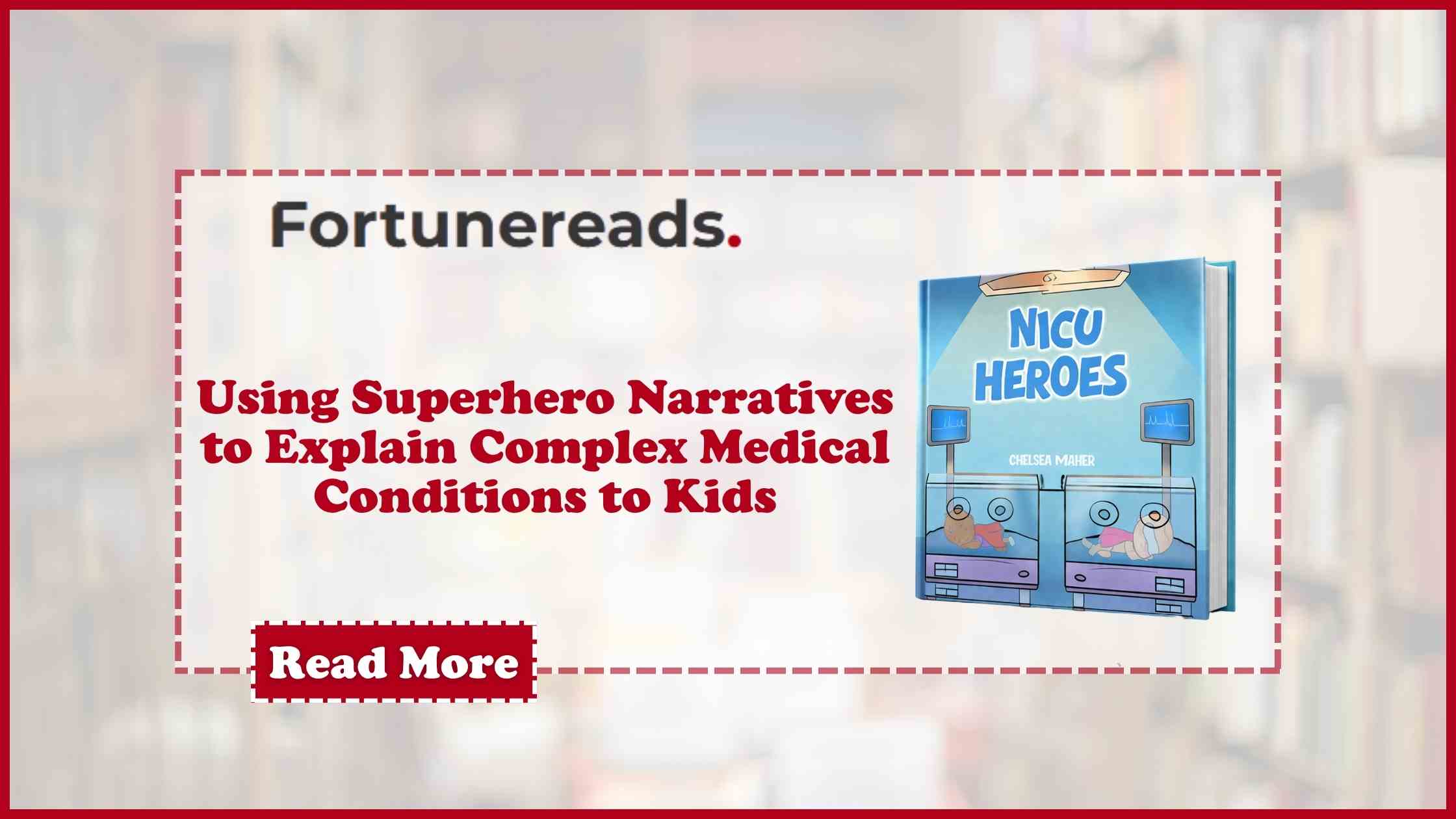
NICU Heroes by Chelsea Maher uses this approach with precision and care. Rather than presenting medical conditions in clinical terms, the story introduces characters whose challenges are transformed into unique abilities. A baby who needs help breathing becomes a hero with powerful lungs. A child who required special light therapy becomes someone who can heal others. Each situation is reframed in a way that children can not only understand but also feel proud of.
This method does more than simplify information. It changes perception. For a child, hearing that something is “wrong” can create fear or confusion. Hearing that they have a “power” tied to their experience creates confidence. It replaces uncertainty with identity. The child is no longer defined by a condition but by resilience and strength.
Parents benefit from this approach as well. Conversations about health can be emotionally charged, especially in environments like the NICU. Superhero narratives provide a shared language that feels lighter without dismissing the reality of the situation. A parent can explain a feeding tube, surgery, or medical support in a way that feels reassuring rather than frightening. The story becomes a bridge between difficult truths and emotional comfort.
Another strength of superhero storytelling lies in its ability to create lasting understanding. Children remember stories far more easily than explanations. When a concept is tied to a character or an ability, it sticks. A child who learns about healing through a character who uses light or strength through a character who overcomes physical challenges will carry that understanding forward. It becomes part of how they interpret their own experiences and the experiences of others.
NICU Heroes also expands the idea of what it means to be a hero. In many traditional stories, heroes are defined by physical power or dramatic acts. This book redefines that idea. Strength is shown through endurance, healing, adaptation, and courage. It teaches children that being a hero is not about perfection. It is about facing challenges and continuing forward.
Superhero narratives also create space for hope. Medical journeys, especially those involving young children, can feel uncertain. A story that highlights growth and possibility offers reassurance without ignoring reality. It allows families to hold onto something positive while navigating difficult moments.
NICU Heroes by Chelsea Maher stands as a powerful example of how storytelling can transform understanding. It takes complex medical experiences and reshapes them into something meaningful, approachable, and empowering. For children, it offers clarity. For parents, it provides a way to communicate. For families, it creates connection.
As more families look for ways to explain difficult experiences to young minds, this style of storytelling continues to prove its value. It meets children where they are, speaks in a language they understand, and reminds them that even in the face of challenges, they carry strength that is uniquely their own.
Read this book, available on Amazon: https://www.amazon.com/dp/B0GP9G4QM2