Collapse is often imagined as an ending. A final break. A point beyond which nothing familiar can survive. But the harder question is not whether society can fall apart. It is whether people can build anything worth living in after it does.
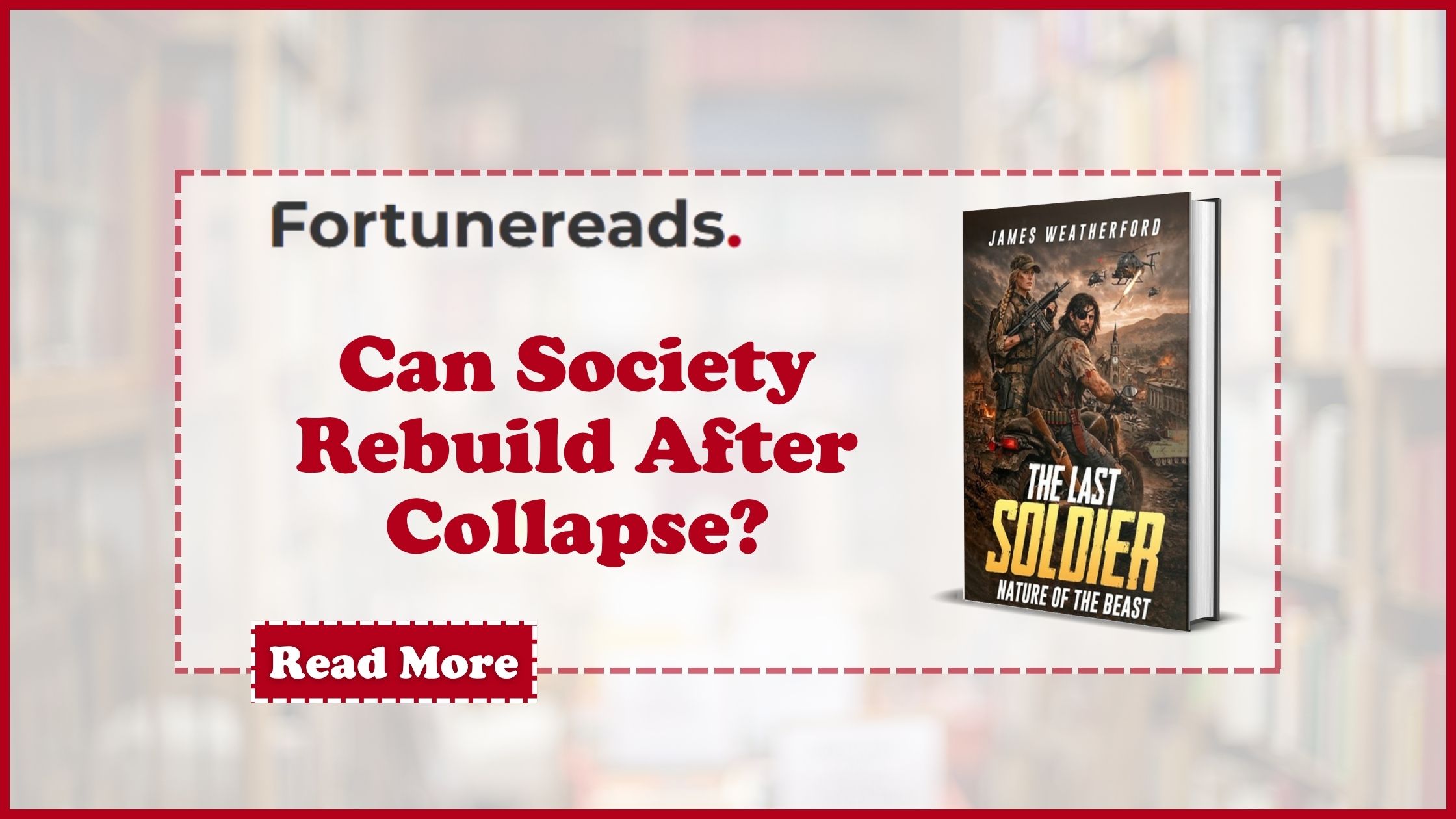
The Last Soldier: Nature of the Beast by James Weatherford takes that question and gives it real weight. This is not a story that treats collapse as spectacle. It treats it as consequence. Systems fail because they are pushed beyond their limits. Order tightens because resources thin out. People adapt, but not always for the better. In that kind of world, rebuilding is not just difficult. It becomes a test of what humanity is willing to become in order to survive.
Rebuilding after collapse is never just about roads, food, power, or defense. Those matter, of course, but the deeper challenge is trust. Once institutions fail, once leadership becomes corrupt or brutal, once fear replaces stability, people stop believing in systems. They begin to believe only in what they can hold, defend, or hide. That shift is one of the most powerful tensions in The Last Soldier. It shows how quickly survival can replace community, and how hard it is to reverse that change.
The novel understands that a broken society does not heal simply because the fighting stops. Damage lingers. Scarcity lingers. Suspicion lingers. People carry the memory of control, betrayal, and loss into whatever comes next. That is why rebuilding is not just a political act. It is a human one. Before walls can rise, people have to believe in something beyond the next meal or the next threat.
The author, James Weatherford brings this reality into sharp focus through a world where structure still exists, but it is failing from within. Authority remains, yet it no longer offers security. Rules remain, yet they do not protect dignity. In that setting, the idea of rebuilding becomes more than a practical challenge. It becomes a moral one.
That question drives the tension beneath the action. Will the future be shaped by the same control that helped create the ruin, or by something stronger, more honest, and more humane? The Last Soldier does not hand readers a simple answer. It gives them something better. It gives them a world where the answer must be fought for.
That is part of the book’s strength as a dystopian military thriller. It delivers conflict, pressure, and danger, but it also carries larger stakes. Every mission, every decision, every fracture in the chain of command points toward a deeper issue. When the old world no longer works, what comes next?
Readers who enjoy fiction with grit, consequence, and a strong sense of purpose will find plenty to hold onto here. This is a novel that reaches beyond surface level thrills. It asks difficult questions while still delivering a tense, absorbing story. It understands that collapse is frightening, but rebuilding may be even more dangerous, because it forces people to decide what they truly value.
The answer is yes, society can rebuild after collapse, but not by pretending the damage never happened. Or by repeating the same mistakes with a different face in power. Rebuilding demands vision, sacrifice, and the courage to choose something better than mere control.
That is exactly why The Last Soldier: Nature of the Beast leaves such a strong impression. It is not only about the fall. It is about the struggle to imagine what might rise from it, and whether humanity is still worthy of that second chance.
Read this book now on Amazon: https://www.amazon.com/dp/B009H66YQM