The argument between formal education and real world experience has never truly been settled. Both promise growth, both shape direction, and both carry their own limitations. The real question is not which one is superior, but how each influences the path a person ultimately takes.
Education offers structure. It provides a basic ground for understanding the world, a place where ideas are introduced, tested, and refined. It builds discipline and exposes individuals to knowledge they may not encounter otherwise. For many, it creates a sense of progression, moving from one level to the next with a clear goal in sight.
Yet, education also operates within boundaries. It often teaches theory before application, sometimes leaving a gap between what is learned and what is lived. The environment is controlled. Mistakes are contained. Outcomes are measured in grades rather than consequences. While this can build confidence, it can also create a false sense of preparedness.
Real world experience, on the other hand, is immediate and unforgiving. It does not wait for readiness. It demands adaptation, resilience, and quick decision making. Lessons are not explained in advance. They are learned through action, often through failure. This type of learning can be chaotic, but it is deeply personal and difficult to forget.
Experience builds instincts. It teaches how to navigate uncertainty, how to read situations, and how to respond when plans fall apart. It exposes individuals to environments that cannot be replicated in classrooms. From workplaces to relationships, from financial pressures to personal setbacks, these experiences shape a level of awareness that theory alone cannot provide.
However, experience without direction can also lead to repetition rather than growth. Without reflection, the same mistakes can occur again and again. Without foundational knowledge, opportunities may be missed simply because they are not recognized. Experience teaches, but it does not always explain.
The tension between the two becomes clear when looking at life outcomes. Some individuals follow structured educational paths, only to find themselves unprepared for the realities they encounter. Others rely on experience, learning through trial and error, but struggle to access opportunities that require formal qualifications. Neither path guarantees success.
What truly matters is how these elements interact. Education can provide the tools, but experience shows how to use them. One offers understanding, the other offers application. When combined, they create a more complete foundation. When separated, each reveals its limitations.
Life rarely follows a straight line, and this is where the balance becomes essential. Opportunities do not always appear at the right time. Decisions are made with limited information. Circumstances shift. In these moments, neither education nor experience alone is enough. It is the ability to adapt, to learn continuously, and to apply knowledge in changing conditions that defines progress.
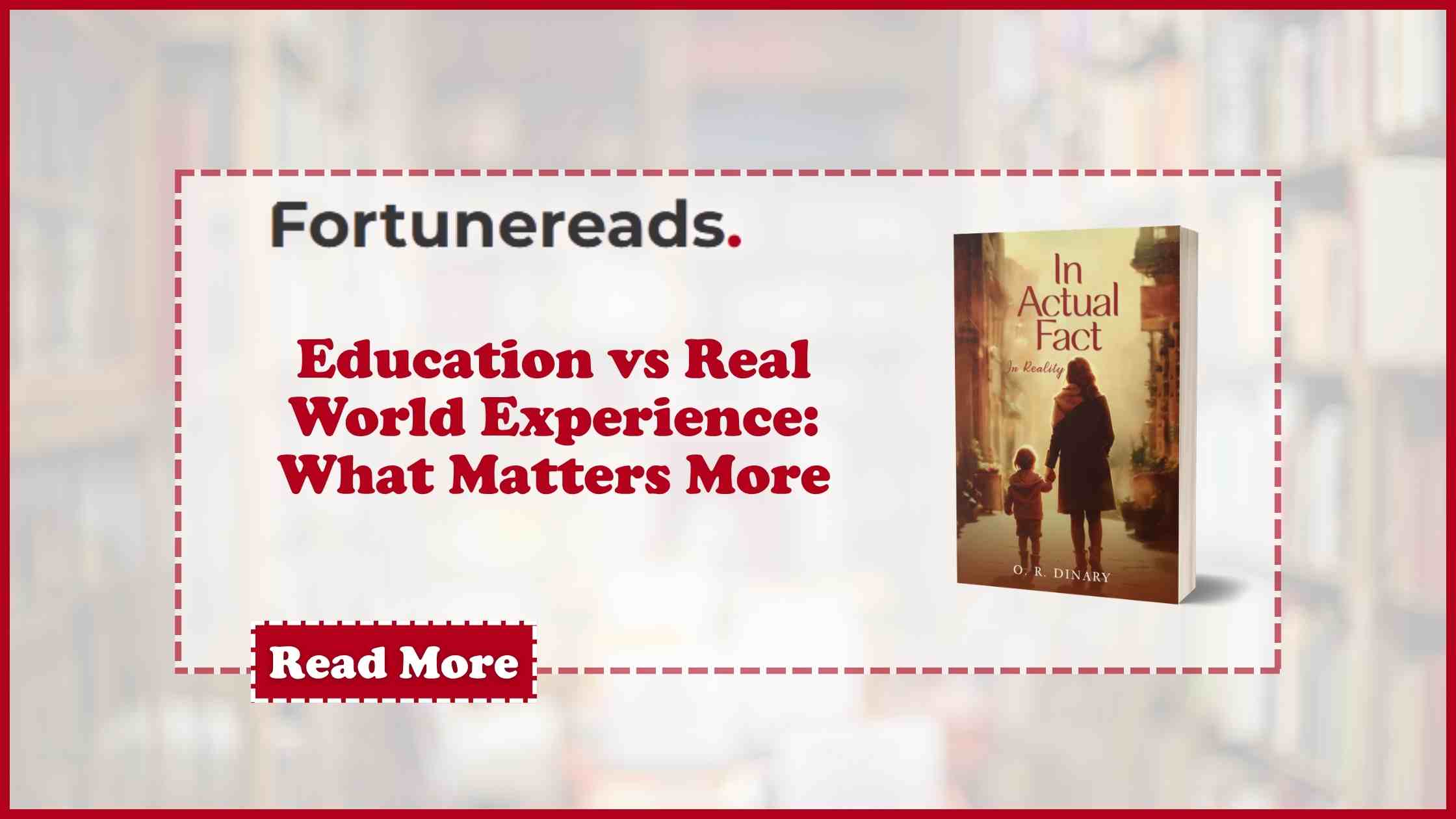
This complexity is brought to life in In Reality by O. R. Dinary. The narrative moves through different stages of life, showing how formal learning and lived experience intersect in unpredictable ways. It does not present one as the answer. Instead, it reveals how each shapes decisions, influences direction, and contributes to both progress and setbacks.
The value of this perspective lies in its honesty. It reflects the uncertainty many people face when trying to find their place in the world. It shows that success is not always the result of a clear plan, but often the outcome of navigating between what is taught and what is lived.
In the end, the question is not which matters more. It is how well a person can bridge the gap between the two. Those who learn to connect knowledge with experience, to adapt what they know to what they face, are the ones who move forward with greater clarity.
Available Now On Amazon: https://www.amazon.com/dp/1971610690/