Artificial Intelligence is transforming the workplace at an unprecedented pace. From predictive analytics and automated decision-making to robotics and employee monitoring systems, AI is helping organizations improve efficiency, reduce costs and increase productivity. Yet amid the excitement surrounding innovation, many employers are overlooking a critical question:
What are the human risks of AI?
While most discussions focus on what AI can do for businesses, far fewer address what AI can do to employees. Job insecurity, workplace surveillance, cognitive overload, algorithmic bias and mental health concerns are rapidly emerging as some of the most significant challenges of the AI era. For employers, understanding and managing these risks is no longer optional; it’s a business necessity.
The Hidden Side of AI Adoption
AI promises remarkable benefits. Organizations can automate repetitive tasks, improve operational efficiency and make faster, data-driven decisions. However, AI also introduces a new category of workplace hazards that traditional safety and risk management programs were never designed to address.
Employees working alongside AI systems may experience increased stress due to constant monitoring, uncertainty about job security or pressure to meet algorithm-driven performance expectations. In some environments, workers report feeling as though they are being managed by machines rather than supported by them.
These challenges extend beyond productivity. They affect employee well-being, workplace culture, trust and long-term organizational resilience.
Why Traditional Risk Management Is No Longer Enough
Historically, workplace safety focused on physical hazards such as chemicals, machinery, noise and ergonomics. But AI has expanded the definition of workplace risk.
Today’s employers must also consider:
- Psychological stress and burnout
- Cognitive fatigue from human-AI collaboration
- Ethical concerns related to algorithmic decision-making
- Privacy issues caused by AI surveillance tools
- Bias and discrimination within automated systems
- Human-robot interaction risks
These emerging hazards require a new framework, one that places human well-being at the center of technological advancement.
Enter Artificionomics
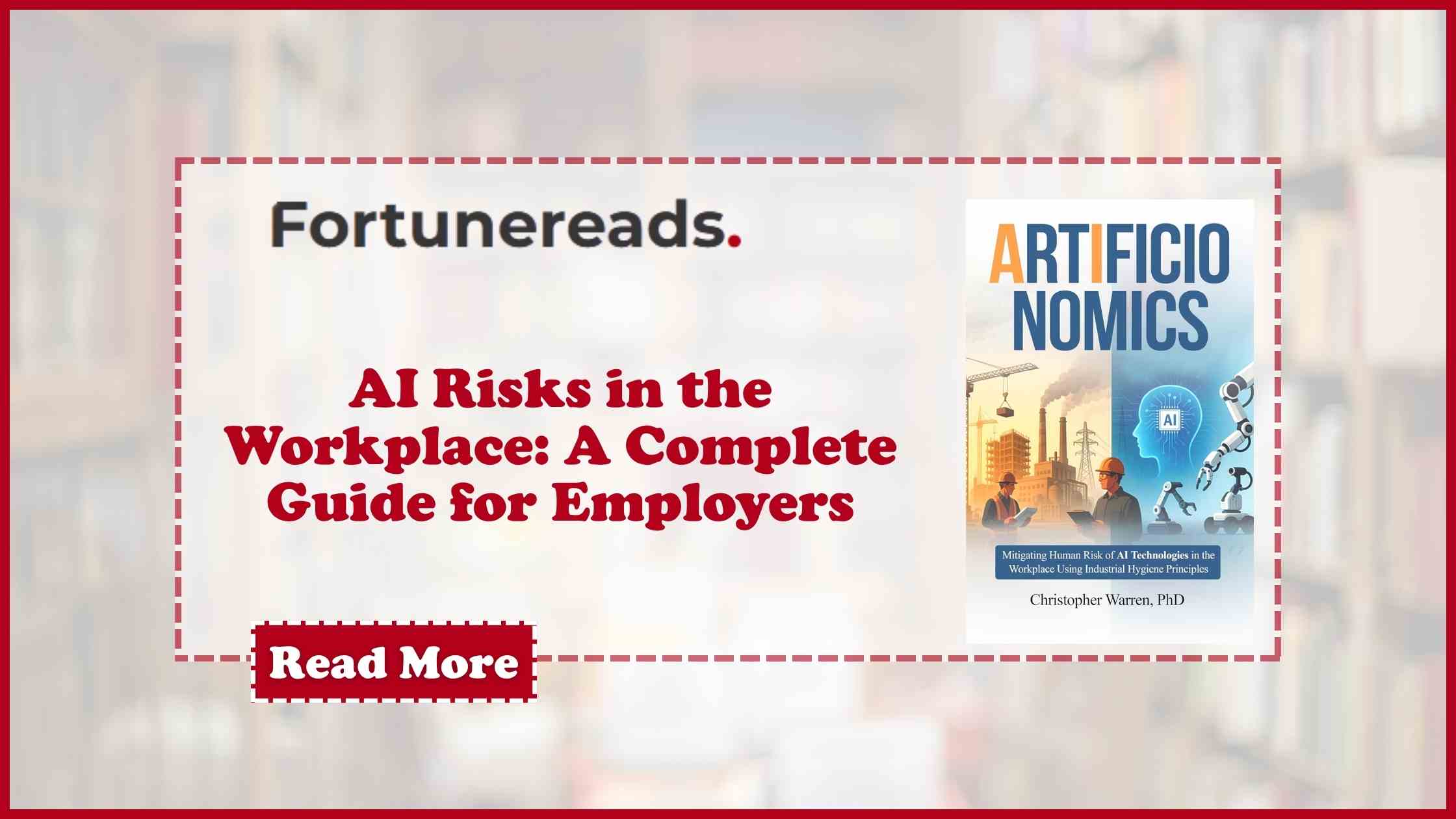
In his groundbreaking book, Artificionomics: Mitigating Human Risk of AI Technologies in the Workplace Using Industrial Hygiene Principles, Christopher Warren, PhD, introduces a pioneering discipline designed specifically for the AI age.
Artificionomics applies the proven principles of industrial hygiene to identify, evaluate and control the unique risks created by artificial intelligence and robotics. Rather than viewing AI solely as a technological issue, Warren reframes it as a workplace health, safety and human performance challenge.
This innovative approach helps employers:
- Identify AI-related workplace hazards.
- Evaluate their impact on employees.
- Implement effective controls and safeguards.
- Build worker-centric AI programs.
- Develop responsible governance frameworks.
- Protect both productivity and human dignity.
The Future Belongs to Human-Centered Organizations
The organizations that thrive in the AI economy will not be those that adopt technology the fastest. They will be the ones that adopt it responsibly.
Employers who prioritize transparency, employee well-being, ethical governance and human-centered design will build stronger cultures, earn greater trust and achieve more sustainable results.
AI is changing the future of work. The question is whether organizations will manage that future proactively or react to its consequences later.
Artificionomics offers a practical roadmap for leaders, safety professionals, HR teams and decision-makers who want to harness the power of AI without sacrificing the health, dignity and well-being of the people who make organizations successful.
As we enter a new industrial revolution driven by intelligent systems, one thing is clear: safeguarding humanity must remain at the center of innovation.