Who am I?
It is one of humanity’s oldest questions and perhaps one of the most urgent questions of our time.
In an age of social media, globalization, political polarization and rapid technological change, many people find themselves struggling with identity. Traditional communities are weakening, cultural boundaries are shifting and individuals are increasingly expected to define themselves independently. Yet despite unprecedented freedom and connectivity, many people feel disconnected, uncertain and alone.
This raises an intriguing possibility: Could ancient wisdom offer guidance for modern identity crises?
The answer may be found in places many people rarely look, within the philosophical and spiritual traditions of indigenous cultures that have reflected on human identity for centuries.
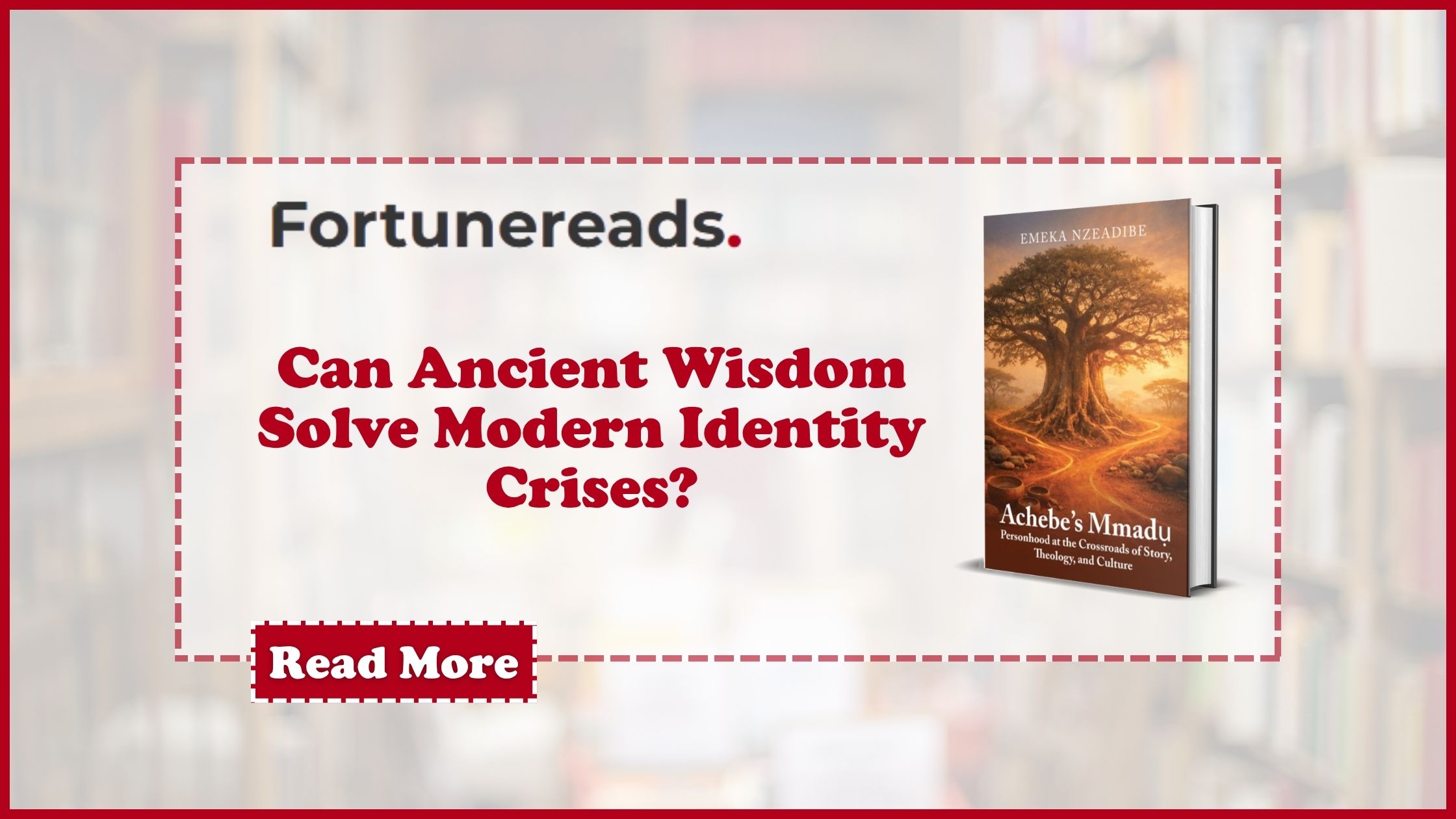
One such tradition is found in the Igbo worldview of southeastern Nigeria. In Achebe’s Mmadụ: Personhood at the Crossroads of Story, Theology, and Culture, scholar Emeka Nzeadibe explores how Chinua Achebe’s literary works reveal a profound understanding of personhood through the concept of Mmadụ, a term that refers to the human person but also carries deeper meanings related to identity, dignity, consciousness and belonging.
What makes this concept particularly relevant today is its challenge to the modern assumption that identity is something we create entirely by ourselves.
Modern culture often encourages people to see identity as a personal project. We are told to “find ourselves,” “reinvent ourselves” or “be whoever we want to be.” While personal freedom is important, this perspective can sometimes place an overwhelming burden on individuals. If identity depends entirely on self-creation, what happens when we feel lost? What happens when our achievements fail to provide meaning?
The Igbo concept of Mmadụ offers a different perspective.
According to this worldview, a person does not exist in isolation. Identity emerges through relationships with family, community, culture, history and the divine. Human beings become themselves through participation in a larger network of life. Rather than asking only “Who am I?” the tradition also asks, “To whom do I belong?” and “How do my relationships shape who I am becoming?”
This ancient insight speaks directly to many modern struggles.
Consider the growing loneliness affecting societies around the world. Despite living in densely populated cities and having access to digital communication twenty-four hours a day, countless people report feeling disconnected from meaningful relationships. Ancient traditions understood something that modern society is rediscovering: human beings are relational by nature. We thrive not merely through independence but through connection.
Ancient wisdom also reminds us that identity is not solely about personal success. In many contemporary cultures, people often define themselves through careers, achievements, wealth or social status. Yet these markers can change or disappear. A job can be lost. A reputation can fade. A title can be taken away.
The deeper question is whether our humanity depends on those things in the first place.
The wisdom reflected in Achebe’s work suggests that human dignity exists prior to achievement. A person’s worth is not earned through success alone but is rooted in their humanity itself. This understanding provides stability in a world where external circumstances can change overnight.
Perhaps most importantly, ancient traditions recognize the power of stories. Human beings understand themselves through narratives, stories about where they come from, what they value and where they are going. When societies lose their stories, people often lose their sense of identity as well.
This is why ancient wisdom remains relevant. It does not offer easy answers or a return to the past. Instead, it provides enduring insights into what it means to be human.
In a world searching for identity, belonging and meaning, ancient wisdom may not solve every problem. But it can remind us of something essential: before we can know where we are going, we must understand who we are and that journey often begins by listening to voices from the past.