A single postcard could cross hundreds of miles in a matter of days, carrying news, emotion, and ordinary moments from one life to another. Long before phones rang in every home or messages appeared instantly on screens, postcards were how people stayed connected. They were small, affordable, and deeply personal, and today they offer one of the clearest windows into everyday life one hundred years ago.
Postcards were not written for history books. They were written to mothers, sweethearts, coworkers, and friends. That is precisely why they matter. A hurried note about arriving safely, a line mentioning sore feet after a long day at work, or a cheerful message about a picnic by the lake reveals how people actually lived. These brief messages capture routines and emotions that rarely appear in official records.
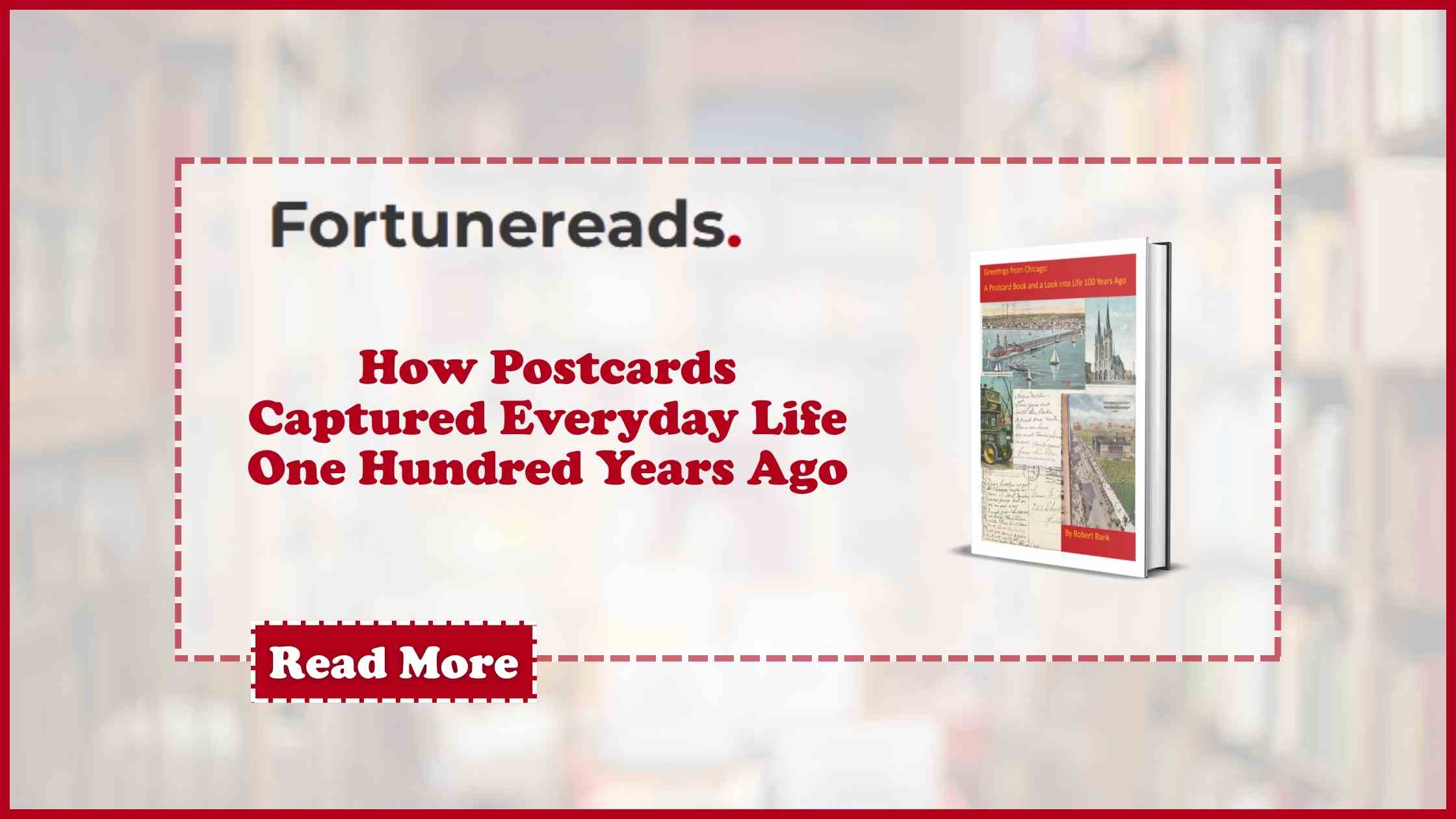
In Greetings from Chicago: A Postcard Book and a Look into Life 100 Years Ago by Robert Bank, postcards become more than charming images. They become living documents. Each card combines handwritten messages, visual scenes, and postal markings that anchor the moment in time. Together, these elements tell stories about work, travel, family obligations, leisure, and hope in early 20th-century Chicago.
The handwritten notes are especially powerful. Some are practical, mentioning train schedules or job locations. Others are tender, filled with affection or quiet longing. A few are humorous or blunt, revealing personality in just a sentence or two. Because space was limited, writers chose their words carefully, making every line meaningful. These voices from the past feel remarkably close, reminding readers that people one hundred years ago worried, celebrated, and dreamed in familiar ways.
The imagery on postcards adds another layer of understanding. Scenes of bustling streets, grand train stations, parks, factories, and waterfronts show how the city looked and functioned. Buildings that no longer exist appear alive again. Public spaces reveal how people gathered and relaxed. Even when the image had little to do with the message, it still reflected what the sender saw as important, impressive, or worth sharing.
Postmarks and stamps quietly complete the record. Dates, locations, and routes document how communication moved across the country. A card postmarked in Chicago and delivered to a small town days later shows the reach and efficiency of the postal system at the time. These details help historians and readers place each message within a precise moment, turning a simple card into a reliable historical artifact.
What makes postcards especially valuable is their honesty. They were not filtered through nostalgia or rewritten years later. They captured life as it was happening. In Greetings from Chicago by Robert Bank, this authenticity is preserved and thoughtfully presented, allowing readers to experience history through real voices and real moments.
For anyone interested in social history, urban life, or human connection across time, this book offers an intimate and visually rich experience. To truly understand how postcards captured everyday life one hundred years ago, reading Greetings from Chicago: A Postcard Book and a Look into Life 100 Years Ago by Robert Bank is highly recommended.