A real estate investment should be judged by facts, not excitement. A property may look attractive, sit in a desirable area, or appear to offer strong rental income, but those details alone do not make it a sound investment. Before buying, an investor must examine the property’s financial performance, physical condition, location, financing requirements, and long term potential.
Begin with the numbers. Review the property’s actual rental income, operating expenses, vacancy history, taxes, insurance costs, maintenance records, and utility obligations. Do not rely only on projected rents or statements about what the property could earn. A careful investor works with verified figures and allows for periods when units may be vacant or tenants may pay late.
The purchase price should also be compared with recent sales of similar properties in the same area. This helps determine whether the asking price reflects current market conditions. A property that appears inexpensive may still be overpriced if it requires major repairs, produces weak income, or is located in an area with limited demand.
Location has a lasting influence on value. Study the neighborhood, nearby employment, transportation access, schools, shopping, crime levels, zoning rules, and future development plans. Investors should also consider whether the area attracts reliable tenants and whether similar properties are selling or remaining on the market for long periods.
A professional inspection is essential. The roof, foundation, plumbing, electrical system, heating, cooling, drainage, windows, and structural condition should be examined carefully. Moisture, mold, termites, radon, flooding, and environmental concerns may create serious expenses. Repair estimates should be obtained before the purchase agreement becomes final.
Financing must be evaluated with equal care. Calculate the required down payment, mortgage payment, closing costs, and cash reserves. Determine whether the expected net operating income can comfortably cover the debt. Borrowing can improve returns when the property performs well, but excessive debt can quickly create losses when vacancies rise or repairs become necessary.
Investors should also review leases, tenant histories, security deposits, and upcoming lease expiration dates. Several tenants leaving at the same time can reduce income and increase improvement and marketing expenses. Existing leases may contain terms that limit rent increases or place unexpected responsibilities on the owner.
Ownership risks should never be ignored. Confirm that the property complies with zoning rules, building codes, permits, title requirements, and environmental regulations. Review available insurance coverage and determine whether flood, hazard, liability, or other special protection is required.
Most importantly, ask whether the property supports your investment goal. It should fit your available capital, experience, risk tolerance, and ability to manage it. A deal that depends on perfect conditions is rarely a safe deal.
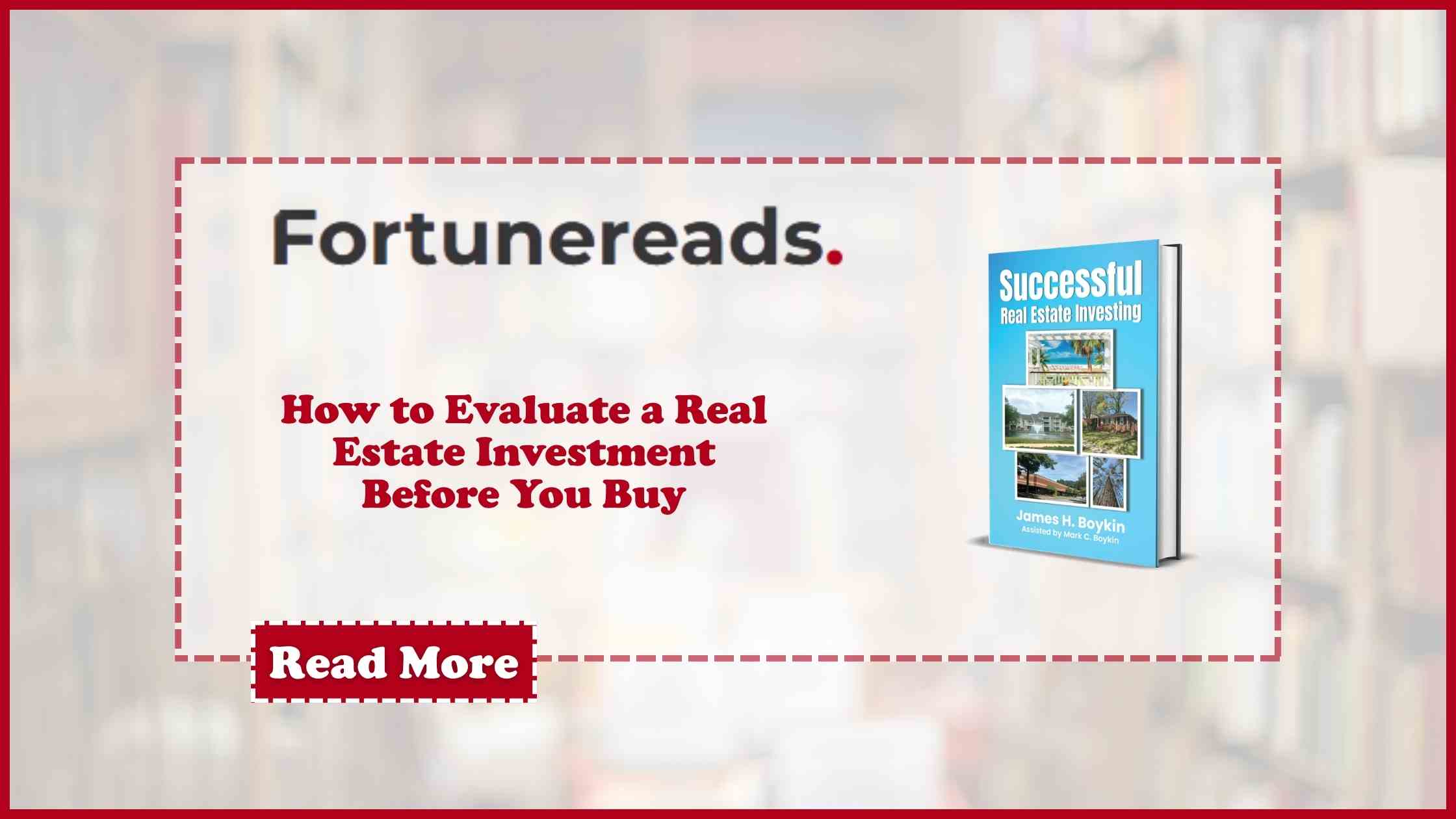
Successful Real Estate Investing by James H. Boykin provides practical guidance for evaluating property before committing capital. The book helps investors understand financial analysis, inspections, financing, negotiation, leasing, and risk so they can make informed decisions and avoid costly mistakes.