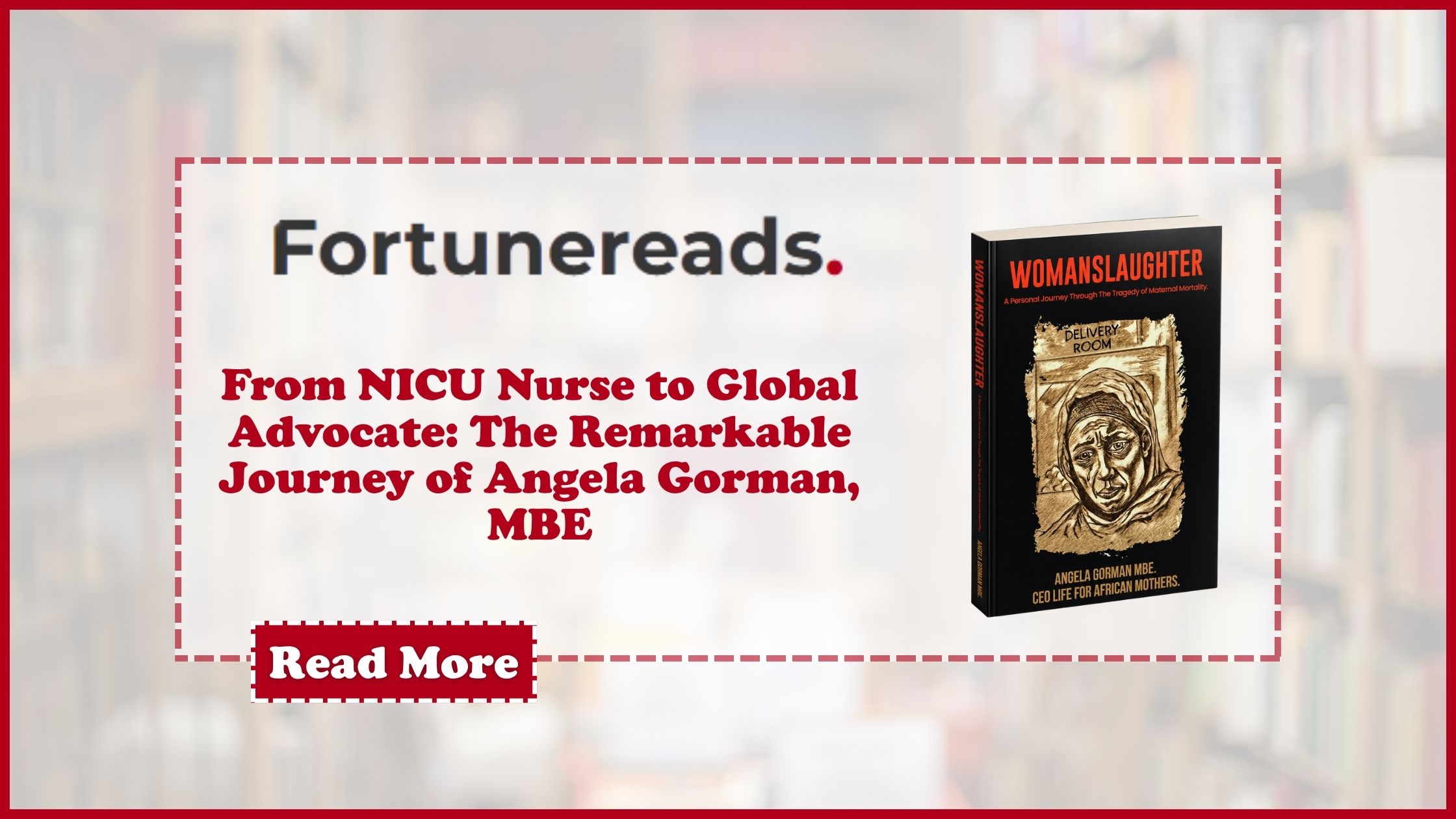
Few people can pinpoint the exact moment their life changed direction. Angela Gorman, MBE, can. Her book, WOMANSLAUGHTER: A Personal Journey Through The Tragedy of Maternal Mortality, tells the extraordinary story of how a senior neonatal intensive care nurse from Cardiff became a determined global advocate for mothers and babies facing preventable death.
In June 2005, Gorman was 57 years old and working in a busy neonatal intensive care unit. After one particularly exhausting shift, she returned home physically drained. That evening, she almost switched off the television before hearing an announcement for the BBC Panorama documentary Dead Mums Don’t Cry. The programme focused on maternal mortality in Chad and the work of obstetrician Dr. Grace Kodindo.
What Gorman saw stayed with her.
Women and girls were dying from complications associated with pregnancy and childbirth. In many cases, the treatments needed to save them were familiar to Gorman from her own healthcare experience in the UK. The painful difference was access.
Rather than simply feeling horrified and moving on, she opened her laptop that same night and wrote an email asking how she could help. She later described it as the email that changed her life.
Turning Experience Into Action
Gorman’s professional background gave her a practical understanding of how urgently medical supplies could be needed. Her initial aim was straightforward: help provide medicines to Dr. Kodindo’s hospital in Chad.
Support quickly grew. Her UNISON Health Branch committed £5,000, donations began arriving and International Health Partners helped make the supply of medications possible.
Before long, Gorman was no longer helping from a distance. She travelled to Chad herself.
The realities she encountered were stark. She saw maternity wards operating with shortages of basic equipment, medications and clinical supplies. She witnessed the consequences of poverty directly, including women who could not afford treatment that might determine whether they lived or died.
Yet she also witnessed something profoundly hopeful: intervention worked.
During her first visit, donated antibiotics enabled a mother with a serious infection to receive a complete course of treatment free of charge. The woman survived, providing Gorman with powerful evidence that the right medicine, delivered to the right place, could change an entire family’s future.
A Mission That Kept Growing
What started with one hospital eventually developed into the work of Life for African Mothers. Gorman’s journey took her into countries including Liberia, Sierra Leone, Uganda, Rwanda and Somaliland, where she connected with clinicians, midwives, government officials and humanitarian organisations.
Over roughly two decades, Gorman records that LFAM supplied more than six million Misoprostol tablets across parts or all of seven countries. She estimates that approximately two million women received the medication free of charge.
Her efforts were eventually recognised with an MBE. Yet in WOMANSLAUGHTER, Gorman makes clear that recognition was never the objective. She viewed the honour as something that could bring greater credibility and visibility to the cause of maternal health.
A Journey With Deep Personal Meaning
Years into her humanitarian work, Gorman learned something that made her mission even more personal. Her paternal grandmother, Hannah Granville, had died in 1915. When Angela later obtained the death certificate, she discovered that catastrophic postpartum haemorrhage had contributed to her death.
It was the same complication Gorman had spent years helping women survive.
That connection gives WOMANSLAUGHTER much of its emotional power. It is not simply the story of a nurse who became an advocate. It is the story of how one unexpected moment became a twenty-year mission.
WOMANSLAUGHTER: A Personal Journey Through The Tragedy of Maternal Mortality shows what can happen when professional knowledge, compassion and determination come together and when one person decides that preventable maternal death should never be accepted as inevitable.
Read Angela Gorman, MBE’s remarkable story: https://www.amazon.com/dp/B0H8FKFQBZ