The word “accountability” can make people uncomfortable, especially in healthcare.
For some, it sounds like blame. For others, it suggests punishment, judgment or the idea that patients should be held responsible for illnesses shaped by genetics, social conditions, financial barriers or circumstances beyond their control.
But what if accountability could mean something different?
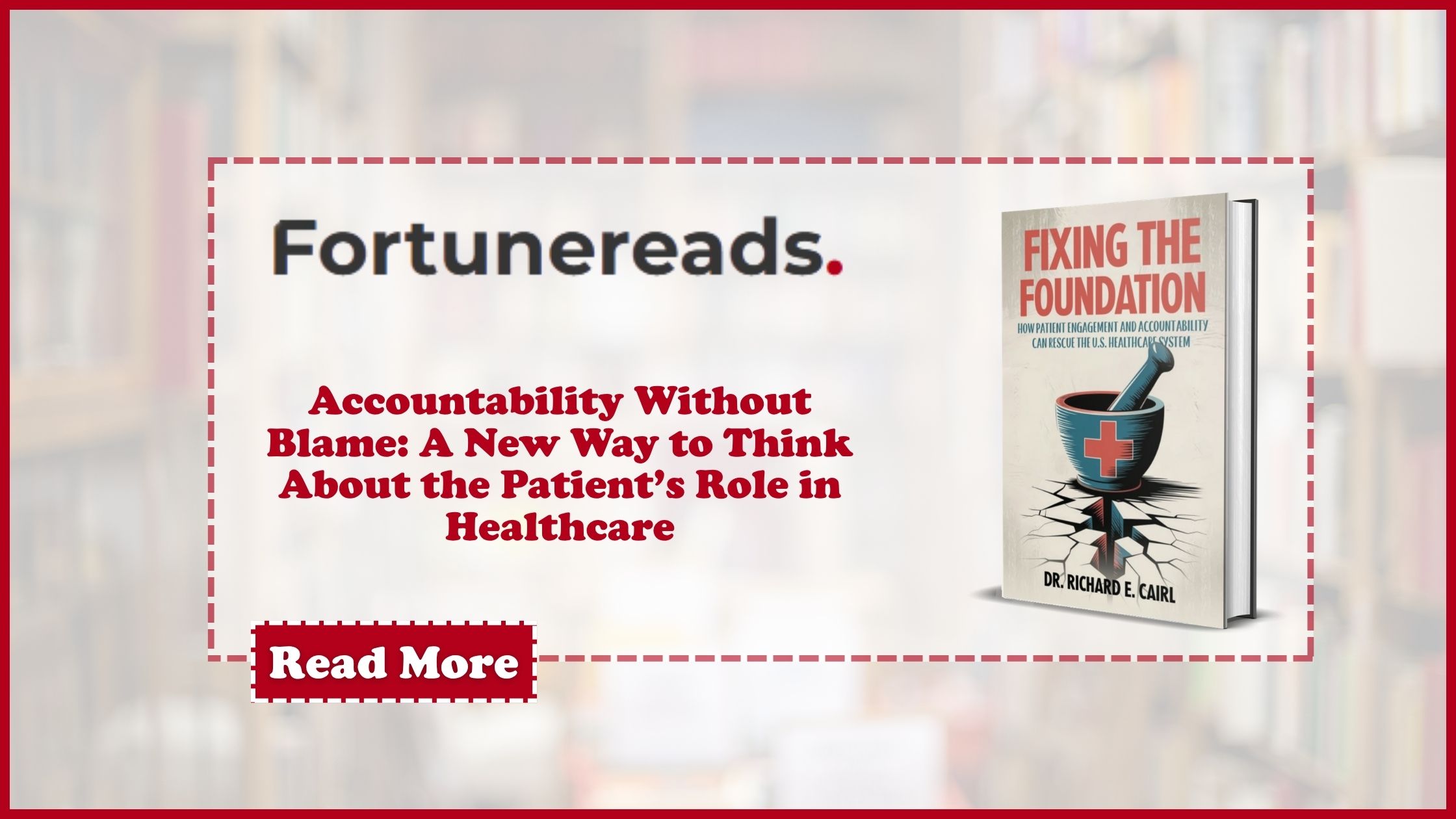
In Fixing the Foundation: How Patient Engagement and Accountability Can Rescue the U.S. Healthcare System, Dr. Richard E. Cairl argues for a more constructive definition, one built around partnership, support, autonomy and shared responsibility.
The distinction matters because patients are not passive bystanders in their own health.
Much of healthcare happens outside hospitals and clinics. Patients decide whether to take medications, attend follow-up appointments, monitor symptoms, ask questions, follow care plans, make lifestyle changes and respond to warning signs. These everyday actions can strongly influence the prevention and management of chronic conditions.
Yet expecting patients to participate more actively does not mean ignoring the barriers they face.
Dr. Cairl repeatedly emphasizes that accountability should not be reduced to moral judgment. Patients may struggle with health literacy, access to resources, fear, mistrust, financial pressure, emotional stress, cultural differences or simply the difficulty of changing long-established habits. A healthcare system that demands responsibility without providing support is unlikely to succeed.
That is why engagement must come first.
Patients need clear information, meaningful communication, realistic goals and opportunities to take part in decisions about their care. Healthcare providers need to listen carefully, understand individual circumstances and use tools that build confidence rather than shame.
When those elements are present, accountability becomes less about asking, “Who is at fault?” and more about asking, “What role can each person play in improving the outcome?”
That shift is central to Fixing the Foundation.
Dr. Cairl explores strategies such as motivational interviewing, shared decision-making, behavioral nudges, self-monitoring, health literacy support and personalized goal setting. These approaches recognize that behavior change is rarely achieved by giving people instructions and expecting immediate compliance.
Patients are more likely to follow through when they understand why an action matters, believe they can accomplish it and feel supported rather than judged.
The same principle applies to healthcare professionals and policymakers.
Providers also have responsibilities: communicate clearly, create partnerships, understand patient readiness and make engagement part of routine care. Policymakers and healthcare organizations must build systems that reward prevention, participation and long-term behavior change rather than focusing primarily on treatment after illness has progressed.
In this model, accountability is shared.
That may be one of the most important ideas in Dr. Cairl’s book. Compassion and responsibility do not have to compete with each other. In fact, they may work best together.
A compassionate healthcare system should recognize hardship and remove barriers. An accountable healthcare system should also respect patients enough to believe that, when properly equipped, they can influence their own health journey.
Fixing the Foundation: How Patient Engagement and Accountability Can Rescue the U.S. Healthcare System challenges readers to move beyond the false choice between blaming patients and asking nothing of them.
The better alternative is partnership, where patients are supported, empowered, heard and encouraged to take meaningful ownership of their health.
Read Dr. Richard E. Cairl’s book on Amazon: https://www.amazon.com/dp/B0GRCRBKB6/