The phone rings. A social worker needs an answer. There is a baby who needs somewhere safe to go.
For a first-time foster parent, saying “yes” can feel exciting, frightening, meaningful and completely overwhelming all at once.
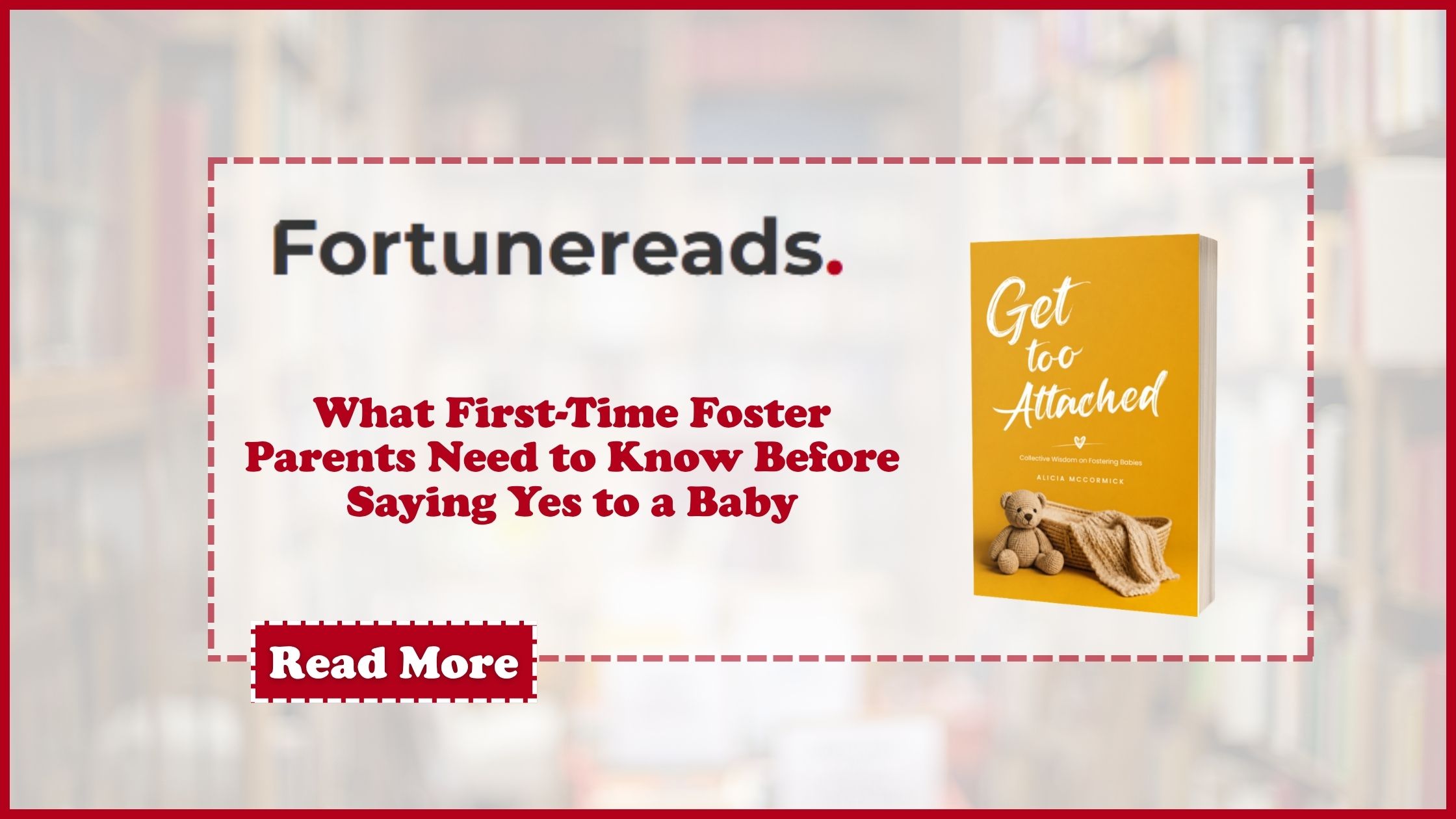
In Get Too Attached: Collective Wisdom on Fostering Babies, Alicia McCormick, PhD, brings together the experiences of foster parents who have lived through those calls, rushed preparations, sleepless nights, appointments, uncertainty, reunifications and unexpected moments of joy. Their collective wisdom offers an important message to anyone considering fostering a baby: prepare your heart, but prepare your expectations too.
Babies Can Come With Trauma
One of the biggest misconceptions the book addresses is the belief that fostering a newborn means avoiding the trauma often associated with older children in foster care.
That is not the experience shared by the parents in McCormick’s book.
Babies may have experienced prenatal stress, substance exposure, neglect, medical trauma, instability or the separation from familiar voices, smells and caregivers that occurs when they enter foster care. Even when they cannot explain what they feel, that distress may appear through feeding problems, sleep difficulties, excessive crying, unusual quietness, trouble being comforted or later developmental and emotional challenges.
First-time foster parents therefore need more than bottles, diapers and a crib. They need a willingness to learn about trauma-informed caregiving.
Know Your Limits Before the Call Comes
Another lesson repeated throughout Get Too Attached is the importance of knowing your boundaries.
Social workers are often trying to find homes in difficult circumstances and foster parents may feel tremendous pressure to say yes. But accepting a placement that exceeds your family’s physical, emotional, financial or practical capacity may ultimately help no one.
The foster parents featured in the book encourage prospective caregivers to consider what ages, medical needs, sibling situations, schedules and levels of support they can realistically manage.
Saying no to one placement does not mean you are unwilling to help. Sometimes it means protecting your ability to say yes successfully when the right placement comes.
You Will Need a Village
Fostering a baby rarely affects only the foster parent.
There may be medical appointments, therapy sessions, social-worker visits, court proceedings, biological-family visits, developmental evaluations and unexpected schedule changes. The manuscript repeatedly emphasizes the value of a community that understands foster care and can offer practical help.
That help might look like bringing dinner, washing bottles, watching other children, accompanying someone to an appointment or simply listening without judgment.
First-time foster parents should build that support system before they desperately need it.
Be Ready to Love Without Certainty
Perhaps the hardest preparation cannot be purchased or taught in a licensing class.
You must be willing to become attached.
Foster care does not guarantee adoption. A baby may reunify with biological parents, move to relatives or transition elsewhere. McCormick’s book repeatedly encourages foster parents to support reunification when it can safely happen while still loving the child wholeheartedly.
That balance can hurt.
But Get Too Attached argues that protecting yourself emotionally cannot come at the expense of a baby who needs connection. Foster children need adults willing to show up fully, even when those adults cannot control how long they will remain together.
Saying yes to fostering a baby is therefore much bigger than opening your home.
It means opening yourself to learning, uncertainty, advocacy, biological families, community, attachment and possibly goodbye.
Get Too Attached: Collective Wisdom on Fostering Babies by Alicia McCormick, PhD, offers prospective foster parents an honest look at that responsibility and reminds them why saying yes can still be profoundly worthwhile.
Read the book on Amazon: https://a.co/d/021kJ9Y3