Most relationships come with expectations.
We expect family to remain family. We expect the people we love to stay in our lives. We build routines, traditions and memories around the assumption that tomorrow will look something like today.
Foster care does not offer that kind of certainty.
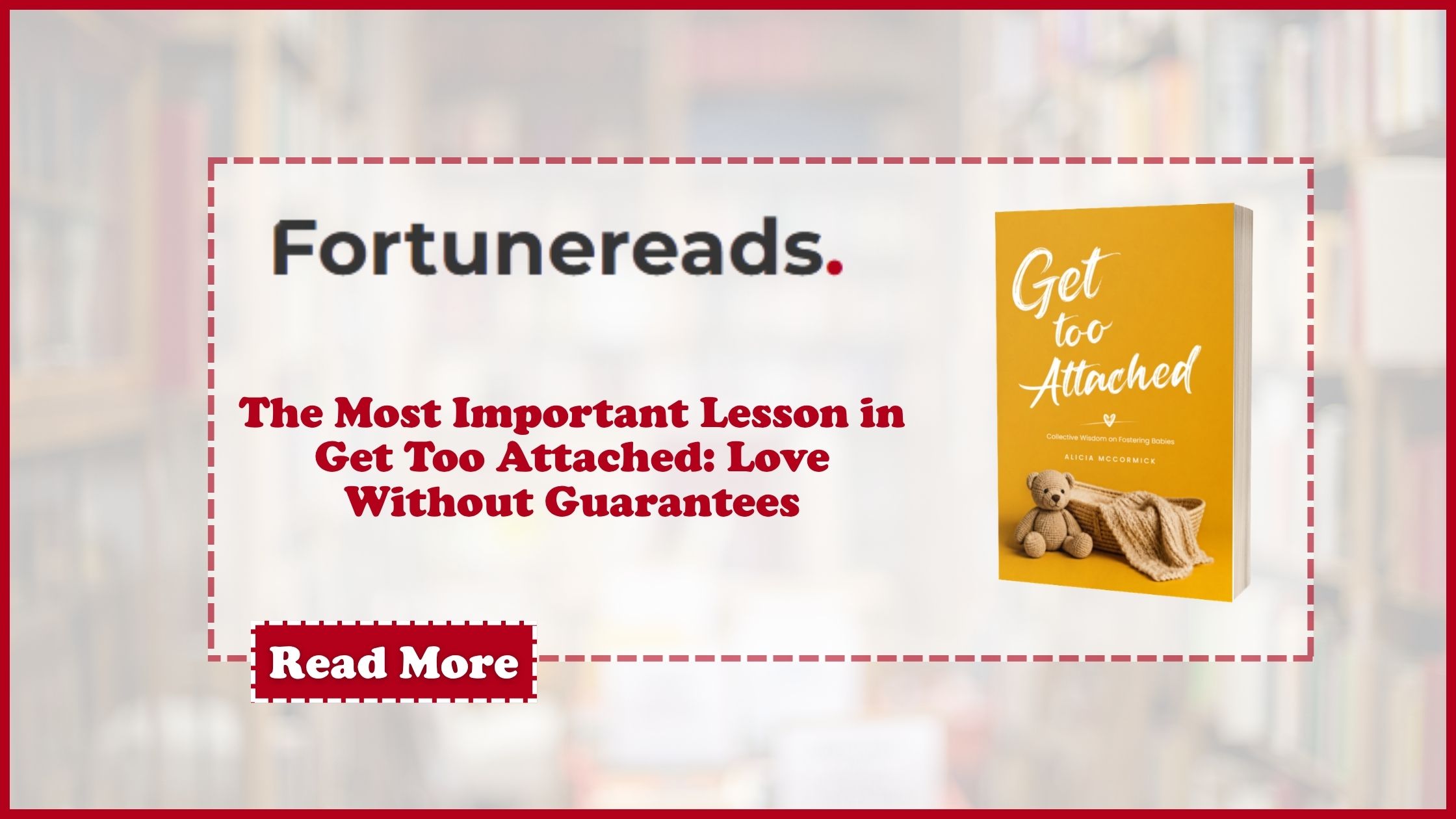
That is what makes one of the central lessons in Get Too Attached: Collective Wisdom on Fostering Babies by Alicia McCormick, PhD, so powerful: foster parents are called to love children wholeheartedly even when they have no guarantee how long those children will stay.
Attachment Is Not the Problem
Foster parents often hear some version of the same sentence:
“I could never foster. I would get too attached.”
It sounds sympathetic, but Get Too Attached challenges the thinking behind it.
The babies entering foster care do not benefit from emotional distance. They need caregivers who are willing to hold them, comfort them, learn their cues, respond to their needs and become familiar, dependable people in their lives.
McCormick makes it clear that foster parents do become attached. They are not somehow immune to grief or naturally better at saying goodbye. Instead, they accept the possibility of heartbreak because the baby in their care needs connection more than the adult needs protection from future loss.
That is love without guarantees.
Foster Care Is Filled With Uncertainty
The foster parents featured throughout the book repeatedly describe uncertainty as part of everyday life.
A baby may return to biological parents. A relative may become available for placement. A case that appears headed toward adoption may change direction. A reunification plan may take months or years.
Foster parents do not control those outcomes.
What they can control is how they care for the child while that child is with them.
That may mean attending medical appointments, advocating for early intervention, supporting biological-family visits, building predictable routines, learning trauma-informed parenting or sitting awake with a baby who cannot settle.
None of those acts comes with a promise of permanence.
They matter anyway.
Loving Fully Can Include Letting Go
One of the most difficult parts of foster care is understanding that reunification and grief can exist together.
A foster parent can genuinely want a biological parent to succeed and still feel devastated when a baby leaves. Supporting reunification does not erase attachment and attachment does not automatically mean hoping reunification fails.
The manuscript repeatedly encourages foster parents to hold both truths at once: love the child fully and remember that foster care should remain centered on what is best for that child.
That kind of love requires emotional courage.
The Child Still Gets to Keep the Love
Even when a placement ends, the care given during that time was not wasted.
The routines mattered. The comfort mattered. The advocacy mattered. The nights spent holding a crying baby mattered.
Most importantly, the attachment mattered.
Get Too Attached reminds readers that foster parents cannot always control how the story ends, but they can influence what a child experiences while they are part of that story.
Alicia McCormick, PhD and the foster parents whose experiences shape the book offer a compelling message: do not love less simply because the future is uncertain.
Love fully because the present matters.
Read the book on Amazon: https://a.co/d/021kJ9Y3