Why do people act the way they do? It’s a question that kids ask with wide-eyed curiosity, teens start asking it with a hint of doubt, and adults often find themselves still searching for the answer. Sometimes we can explain it easily, like why someone laughs at a joke or holds the door open. Other times, it’s a mystery, like why a friend suddenly stops talking to you or why a stranger reacts with anger to something small.
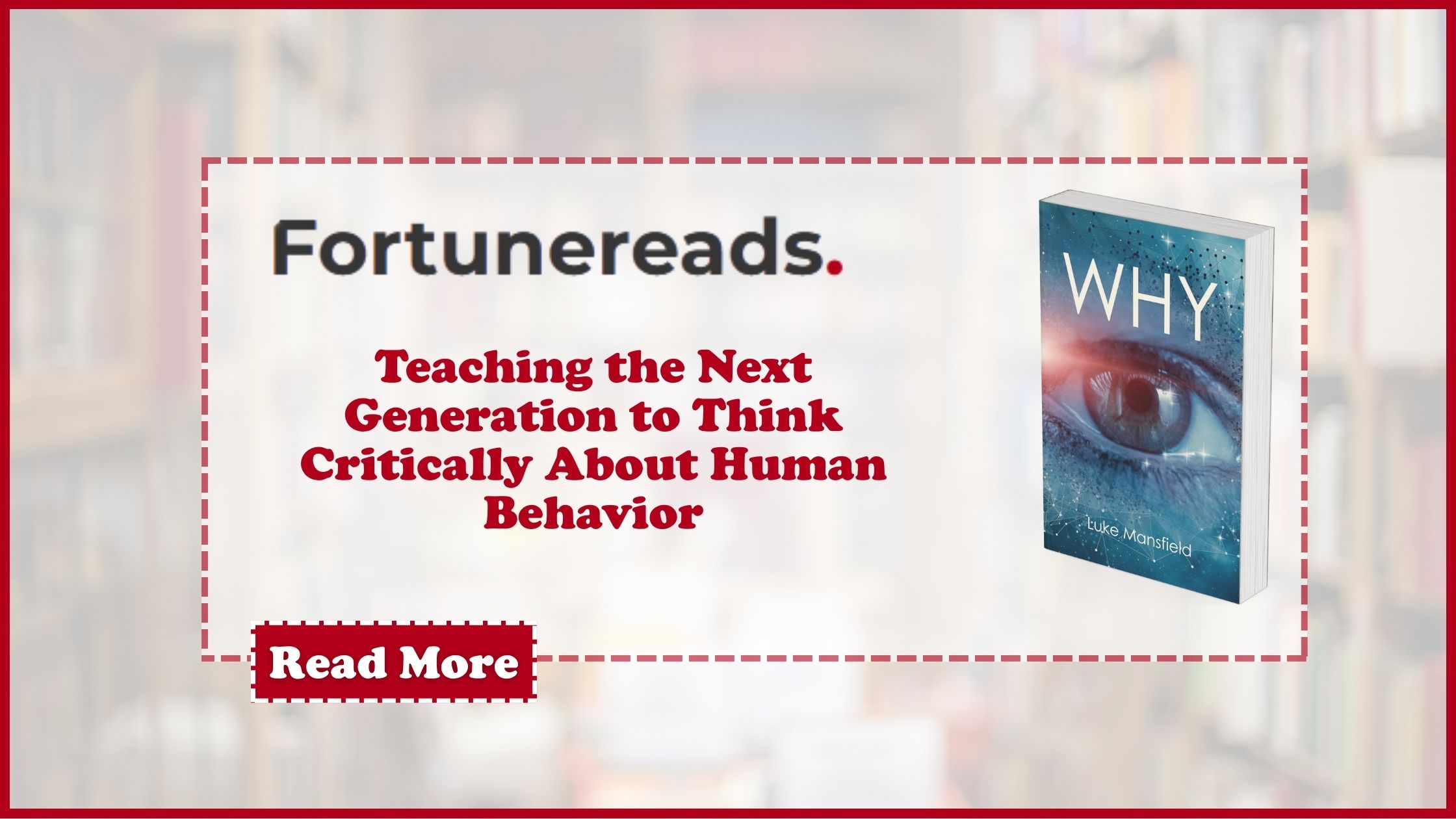
Luke Mansfield’s WHY: Explanation, Guide, and Reference to Basic Human Motivations takes that curiosity and turns it into a practical life skill, showing young adults how to look past surface impressions and dig into the real reasons behind people’s actions.
The truth is, the world today is louder, faster, and more opinion-driven than ever before. Kids are growing up in a constant swirl of headlines, memes, hot takes, and social media updates. If they don’t learn how to slow down and think about the “why” behind what they see, they risk being pulled into other people’s narratives without realizing it. That’s where Mansfield’s “Y” comes in, a shorthand for the fundamental motivations behind human behavior.
These “Y” factors are as old as humanity. But they’re also constantly shaped by modern forces, technology, peer influence, and global events. When young people learn to spot these drivers, they begin to understand that most behavior, even the mysterious kind, makes sense when you look closely enough.
Take a school scenario. A classmate storms out of a group project meeting. At first glance, you might think they’re being rude or lazy. But a critical thinker asks: What’s driving that reaction? Maybe they feel unheard, maybe they’re stressed about something outside of school, or maybe they value control over the project’s direction. Instead of jumping to judgment, you start to see possibilities, and with that comes empathy.
Mansfield highlights that understanding motivations doesn’t mean excusing bad behavior. It means seeing the human beneath the action. It’s the difference between saying, They’re just selfish and saying, They’re trying to protect something that matters to them. This shift can change the way we respond, from confrontation to conversation.
Parents, teachers, and mentors can inspire young people in this by creating spaces where they can talk about human behavior openly. Watching a movie and discussing why characters made certain choices, breaking down a news story together, or even reflecting on personal experiences can all help build the habit of asking “why” before reacting.
WHY makes these lessons approachable, especially for high school and college students, by connecting timeless instincts to relatable, everyday situations. It shows that whether we’re looking at a friend’s awkward silence or a celebrity’s public explosion, the same basic motivations are often at play.
In the end, teaching your kids to think critically about human behavior isn’t just about decoding others; it’s about giving them tools for life. When they understand the “Y” behind actions, they’re better prepared to handle conflict, avoid misunderstandings, and build stronger relationships. Mansfield reminds us that once we start asking “why” in the right way, we stop just reacting to the world, and can start navigating our life and other aspects with clarity, curiosity, and a lot more compassion.
Read this book now on Amazon: https://www.amazon.com/dp/1967679878/.