HOW FEAR QUIETLY SHAPES OUR LIVES
How many opportunities have we missed simply because we were afraid to take the first step? Fear rarely announces itself as a life-changing force. Instead, it appears in everyday decisions: avoiding unfamiliar experiences, worrying about others’ opinions, or hesitating when something meaningful feels uncertain.
Over time, these small moments of hesitation can become lasting regrets. The real danger is not always failure itself, but reaching a point in life where we wonder what might have happened if we had been braver.
THE CHANGING FACE OF FEAR AS WE GROW OLDER
Fear does not remain the same throughout our lives. Childhood curiosity gradually gives way to concerns about acceptance, achievement, relationships, and the future.
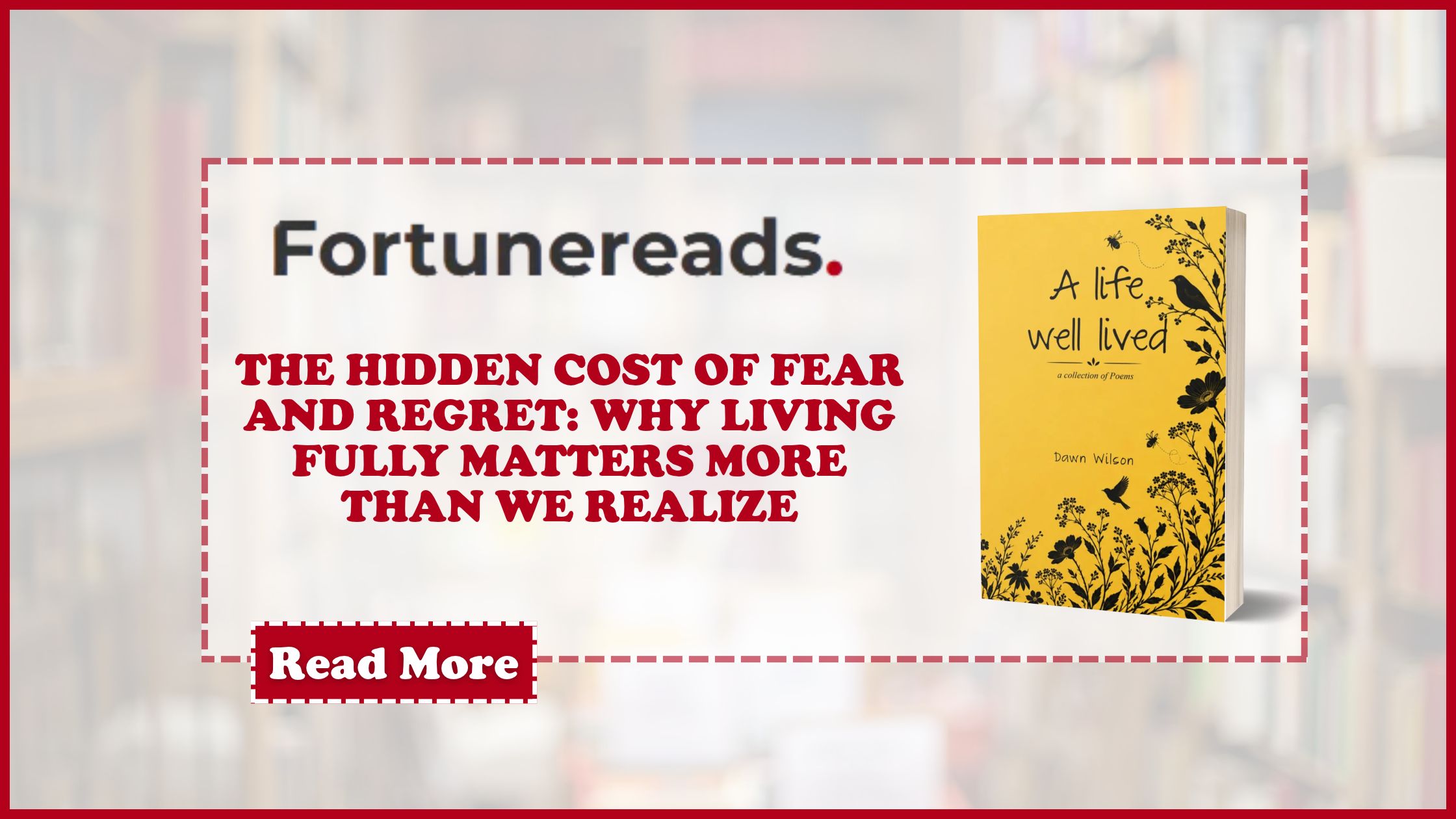
In A Life Well Lived, Dawn Wilson explores this progression through her poem “The Ages of Fear.” It moves from the fearlessness of early childhood through the anxieties of adolescence and adulthood, eventually arriving at the greater freedom of middle age.
Yet this freedom brings an uncomfortable realization: the years spent worrying cannot be recovered.
The poem raises a question worth considering. How much of our lives do we spend protecting ourselves from possibilities that might never become problems?
WHY TIME BECOMES MORE PRECIOUS WITH AGE
Our relationship with time changes as we grow older. During childhood, the future can seem almost endless. Later, the passing years encourage a different understanding of what truly matters.
Dawn Wilson examines this tension in “Time,” reflecting on how moments seem to move differently depending on our experiences and stage of life.
The underlying message is not simply that life is short. It is that time deserves conscious attention.
Meaningful living does not necessarily require extraordinary achievements. Sometimes it means enjoying familiar places, appreciating relationships, expressing feelings honestly, or making room for experiences we have continually postponed.
When we recognize that time cannot be reclaimed, ordinary moments begin to carry greater significance.
TURNING REGRET INTO PERSONAL UNDERSTANDING
Regret often grows from the distance between the life we imagined and the choices we actually made.
In A Life Well Lived, the poem “Which Life?” presents contrasting perspectives on family, hope, disappointment, and expectation. One reflects frustration and unfulfilled promises; the other recognizes unexpected happiness and possibility.
These perspectives suggest that our experiences and decisions influence how we understand our personal journeys.
Regret need not become a permanent burden. It can encourage reflection about what we value, what remains unfinished, and what we might still approach differently.
CHOOSING A LIFE BEYOND FEAR
Living fully does not mean eliminating uncertainty or making perfect decisions. It means recognizing when fear has begun to limit our choices.
Dawn Wilson also reflects on the freedom that can accompany growing older, particularly the relief of becoming less concerned with other people’s judgments.
That freedom offers a practical lesson: we do not have to wait for the ideal circumstances to begin living more authentically.
We can speak more openly, appreciate what surrounds us, make meaningful choices, and stop measuring our lives entirely against other people’s expectations.
Ultimately, a fulfilling life is not determined solely by what we accomplish. It is also shaped by what we allow ourselves to experience.
The question is not whether we can live without regret, but whether we are willing to make today’s choices ones we can look back on with greater peace.