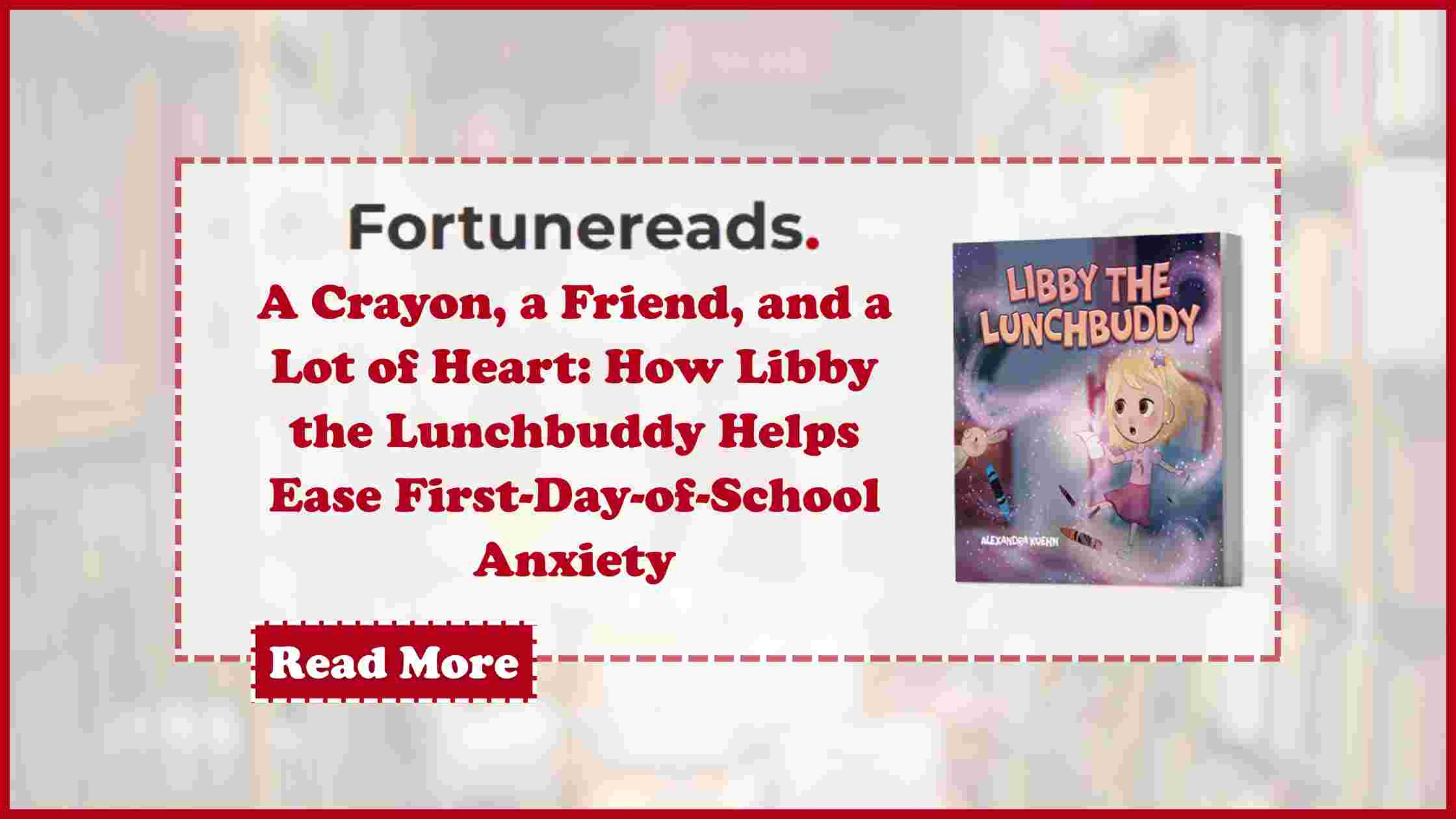
For many children, the first day of school is a cocktail of jitters, what-ifs, and butterflies in the stomach. For guardians, it’s equally emotional: watching your little one bravely march into a new classroom, hoping they’ll make friends, find comfort, and feel safe. Alex Kuehn’s enchanting debut picture book, LIBBY the LUNCHBUDDY, is a story that understands this moment deeply—and responds with love, color, and just the right touch of magic.
At the center of the story is Vivienne, a young girl paralyzed by the fear of eating lunch alone. She worries she won’t make friends, that no one will talk to her, and that she’ll become invisible in a sea of unfamiliar faces. Rather than pretend she’s not scared, Vivienne does what many children only dream of doing—she hides under her bed, wishing the day away.
Enter Mom. Calm, patient, and wise, she doesn’t push or scold. Instead, she offers Vivienne something far more powerful than reassurance: a creative outlet. “Draw a friend,” she suggests, “someone who will help you feel brave tomorrow.” That small, brilliant moment becomes the heart of the story.
Vivienne picks up her crayons and begins to imagine. With every stroke, she pours her heart into her drawing, giving her imaginary friend sparkly purple eyes, fuzzy ears, a colorful tail, and a warm smile. She names her drawing Libby, a vibrant creation stitched together with hope and glitter. As Vivienne falls asleep, she feels a little stronger, a little less alone.
But Libby the Lunchbuddy doesn’t stop at imagination—it takes it one magical step further.
The next morning, Vivienne sneezes on the bus, and from a swirl of rainbow smoke and leftover glitter, Libby comes to life. She’s not just a fantasy—she’s the embodiment of Vivienne’s courage, brought forth by creativity and emotion. Libby gently reminds Vivienne that she is capable, lovable, and strong enough to handle this new adventure.
What follows is a beautiful day of quiet transformation. With Libby by her side (invisible to everyone else), Vivienne finds the strength to speak to a classmate, share a table, and start a friendship. And by the end of the day, Libby, like a proud guide, knows her job is done. She lovingly suggests that maybe Vivienne can try going to school tomorrow, on her own.
The emotional intelligence of Libby the Lunch buddy is extraordinary. Kuehn doesn’t minimize children’s fears or offer false comfort. Instead, she validates the emotional landscape of anxiety, then shows readers, especially young ones, how imagination can serve as both a friend and a bridge to resilience.
Illustratively, the book sings with color and texture. Libby’s dazzling hair, glittery tail, and playful personality leap from the page. The contrast between Vivienne’s initial fear and her growing confidence is brought to life visually in a way that children can easily connect with.
This book is ideal for parents, teachers, counselors, and caregivers who want to open the conversation around school anxiety, loneliness, and emotional self-expression. It invites not just reading, but doing—encouraging children to draw their own “Lunch buddies,” identify their fears, and imagine how they might meet them with courage and heart.
In a world that often tells kids to “toughen up” or “just smile,” Libby the Lunchbuddy takes a more compassionate path. It tells children the truth: it’s okay to feel scared. It’s okay to imagine support.