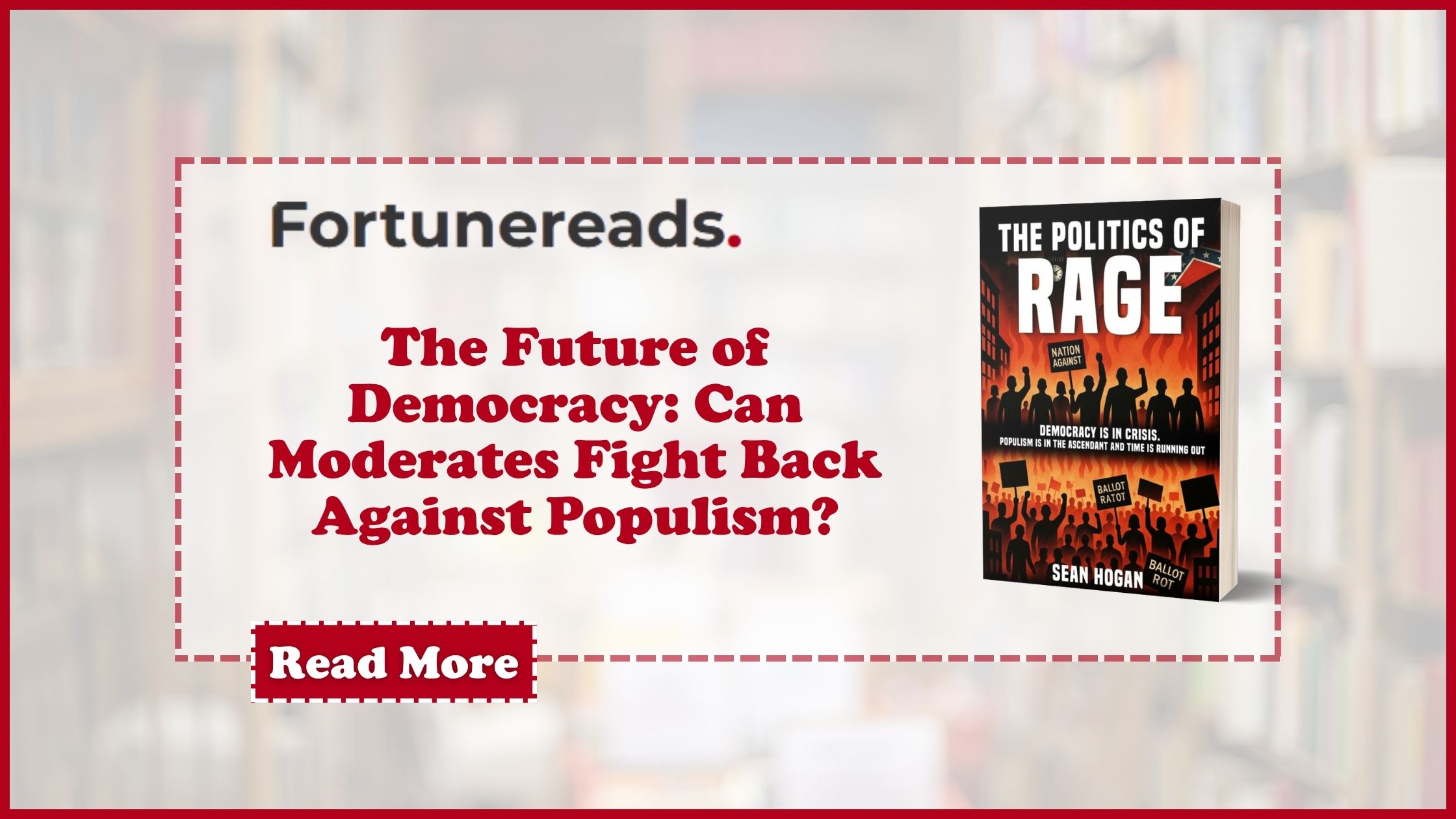
The rise of populism has become one of the most significant challenges facing modern democracies. Populist leaders, with their anti-establishment rhetoric, divisive tactics, and simple solutions to complex issues, have gained substantial traction in many countries, leading to a decline in the influence of traditional political moderates. In The Politics of Rage, the author explores this troubling trend and examines whether moderate political forces can effectively respond to the populist surge, or if democracy itself is at risk of being reshaped by populist ideologies.
Populism thrives on discontent. As economic inequality, cultural shifts, and political disenfranchisement grow, populist movements promise to restore power to the people, often by dismantling the political elite and rejecting the traditional political institutions that they claim have failed ordinary citizens. This rhetoric has been incredibly effective, particularly among voters who feel left behind by globalization, technological change, and the erosion of job security. However, this rise of populism has simultaneously led to a weakening of moderate political parties, which have struggled to respond to the growing demands for radical change.
Moderates in democratic systems have historically been the stabilizing force, advocating for compromise, incremental progress, and unity across political lines. However, in an increasingly polarized world, these centrist values have been sidelined in favor of more extreme political positions. Populist movements, by offering clear and emotionally charged alternatives to the status quo, often succeed in capturing the imagination of voters who feel that the political center is too complacent, detached, or ineffective.
A key challenge for moderates in combating populism is the perception that they are part of the same elite class that populist leaders claim to oppose. Traditional political parties have often been associated with bureaucratic, top-down approaches to governance, making them vulnerable to populist attacks that paint them as out of touch with the real concerns of ordinary citizens. In countries like the United States and many European nations, where populist leaders like Donald Trump, Viktor Orbán, and Marine Le Pen have made significant gains, moderates are often seen as defenders of the old guard, unable to respond effectively to the demands of those who feel marginalized by globalization and cultural change.
To fight back against populism, moderates must offer a clear and compelling alternative to the simplistic solutions presented by populist leaders. This involves addressing the economic and social issues that have fueled populist discontent, such as inequality, job insecurity, and the sense of cultural displacement. However, this cannot be done through mere rhetoric or superficial policy changes. Moderates must work to bridge the divides that have grown between different political, social, and economic groups, offering solutions that not only address immediate concerns but also promote long-term stability and inclusion.
Moreover, moderates must confront the growing distrust in democratic institutions, which is a central feature of populist rhetoric. In many countries, populist leaders have targeted the media, the judiciary, and other institutions that are essential to the functioning of liberal democracy. By framing these institutions as corrupt or elitist, populists undermine public trust and create an atmosphere of skepticism toward the very systems that uphold democratic governance. For moderates to reclaim political space, they must restore faith in democratic institutions by ensuring they are transparent, accountable, and responsive to the needs of the people.
The Politics of Rage offers a thoughtful exploration of the challenges that moderates face in a world increasingly dominated by populist rhetoric. The author argues that the future of democracy depends on moderates finding ways to reconnect with voters, to offer pragmatic solutions to pressing issues, and to defend the principles of liberal democracy from the corrosive effects of populism. While populist movements are often fueled by anger and frustration, the key to combating them lies in a politics of inclusion, dialogue, and mutual respect, which is the core of moderate political philosophy.
The book ultimately raises an important question: can moderates adapt and successfully fight back against the rise of populism, or will they continue to lose ground as populist ideologies reshape the political landscape? The Politics of Rage provides critical insights into this struggle and offers a roadmap for restoring balance and stability to democratic systems in the face of growing populist challenges. The future of democracy may depend on whether moderates can reclaim their role as the stabilizing force in a rapidly changing political world.
Find out in this essential read, available on Amazon https://www.amazon.com/dp/B0FHBDWJD4/