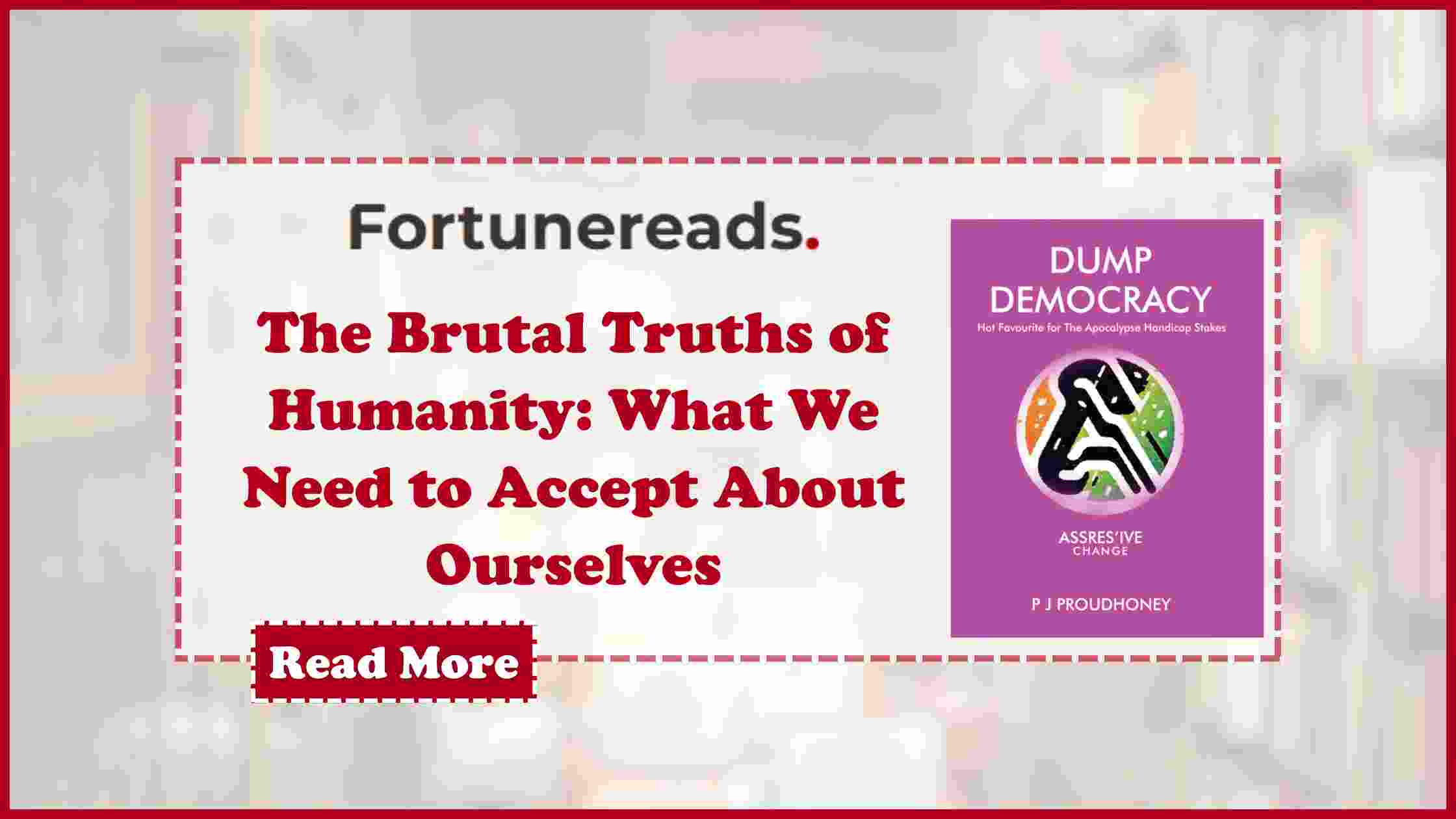
In his book, DUMP DEMOCRACY: Hot Favourite for The Apocalypse Handicap Stakes, PJ Proudhoney explores some uncomfortable realities about human nature and how these inherent tendencies shape political systems. According to Proudhoney, democracy, as we know it, has failed to address the darker aspects of humanity—namely, our tendencies toward tribalism, corruption, and inequality. These behaviors, deeply rooted in human nature, not only hinder democratic governance but also drive societal divisions, destabilize systems, and perpetuate inequality.
This blog delves into the brutal truths about humanity as presented by PJ Proudhoney, and how these behaviors impact our political systems.
Tribalism: The Us vs. Them Mentality
One of the central themes in PJ Proudhoney’s critique is the persistence of tribalism in human societies. Despite our modern advancements, humans remain fundamentally tribal creatures. We tend to group ourselves based on shared identities—whether they be national, religious, cultural, or political. This tribal instinct, which evolved to foster cooperation and survival within small communities, has profound implications for the functioning of large, diverse societies today.
In DUMP DEMOCRACY, Proudhoney argues that democracy, in theory, should transcend tribal divisions by creating a system where diverse voices are heard and respected. However, in practice, democratic systems often exacerbate tribalism. Political parties and interest groups serve as modern tribes, fueling an “us vs. them” mentality where compromise becomes nearly impossible. Rather than focusing on shared national interests, political discourse often devolves into factional infighting, with each group prioritizing its own interests over the collective good.
Corruption: The Inevitable Consequence of Power
Another harsh truth about humanity that PJ Proudhoney addresses is the tendency toward corruption, especially among those in power. In DUMP DEMOCRACY, Proudhoney posits that corruption is not just a byproduct of bad governance or poor systems—it is an inevitable consequence of human nature. Given the opportunity, individuals will almost always act in their own self-interest, even at the expense of others.
Proudhoney argues that democracy, while meant to act as a check on power, often provides fertile ground for corruption. Politicians, once elected, are incentivized to use their positions for personal gain. They may make backroom deals, accept bribes, or grant favors to powerful interest groups, all while presenting themselves as servants of the people. As PJ Proudhoney points out, this is not just a failure of individual leaders, but a reflection of the corruptible nature of human beings.
Inequality: A Deep-Rooted Human Flaw
Perhaps the most devastating critique PJ Proudhoney makes in DUMP DEMOCRACY is the idea that inequality is not just a failure of political or economic systems, but a fundamental aspect of human behavior. Proudhoney argues that humans, by nature, are not egalitarian. Throughout history, societies have been structured in hierarchical ways, with some groups dominating others based on wealth, power, or status. This tendency toward inequality is deeply ingrained in our social systems and is perpetuated across generations.
In theory, democracy is supposed to mitigate inequality by giving every citizen an equal say in governance. Yet, as Proudhoney notes, in practice, democracy often exacerbates inequality. Wealthy elites wield disproportionate influence over political systems, using their resources to shape policies in their favor. Campaign finance, lobbying, and media control all allow the rich to maintain their dominance, while the voices of the less privileged are marginalized.
PJ Proudhoney’s DUMP DEMOCRACY forces us to confront the brutal truths about ourselves. Tribalism, corruption, and inequality are not just failures of political systems; they are deeply ingrained aspects of human nature. While democracy offers a framework for addressing these issues, it has often been co-opted by the very behaviors it seeks to mitigate.
If we are to build a more just and equitable society, we must first accept these harsh realities. Only then can we begin to design systems of governance that account for the flaws in human nature and work to mitigate their impact. Whether this means reforming democracy or exploring alternative forms of governance, one thing is clear: we cannot ignore the brutal truths of who we are.