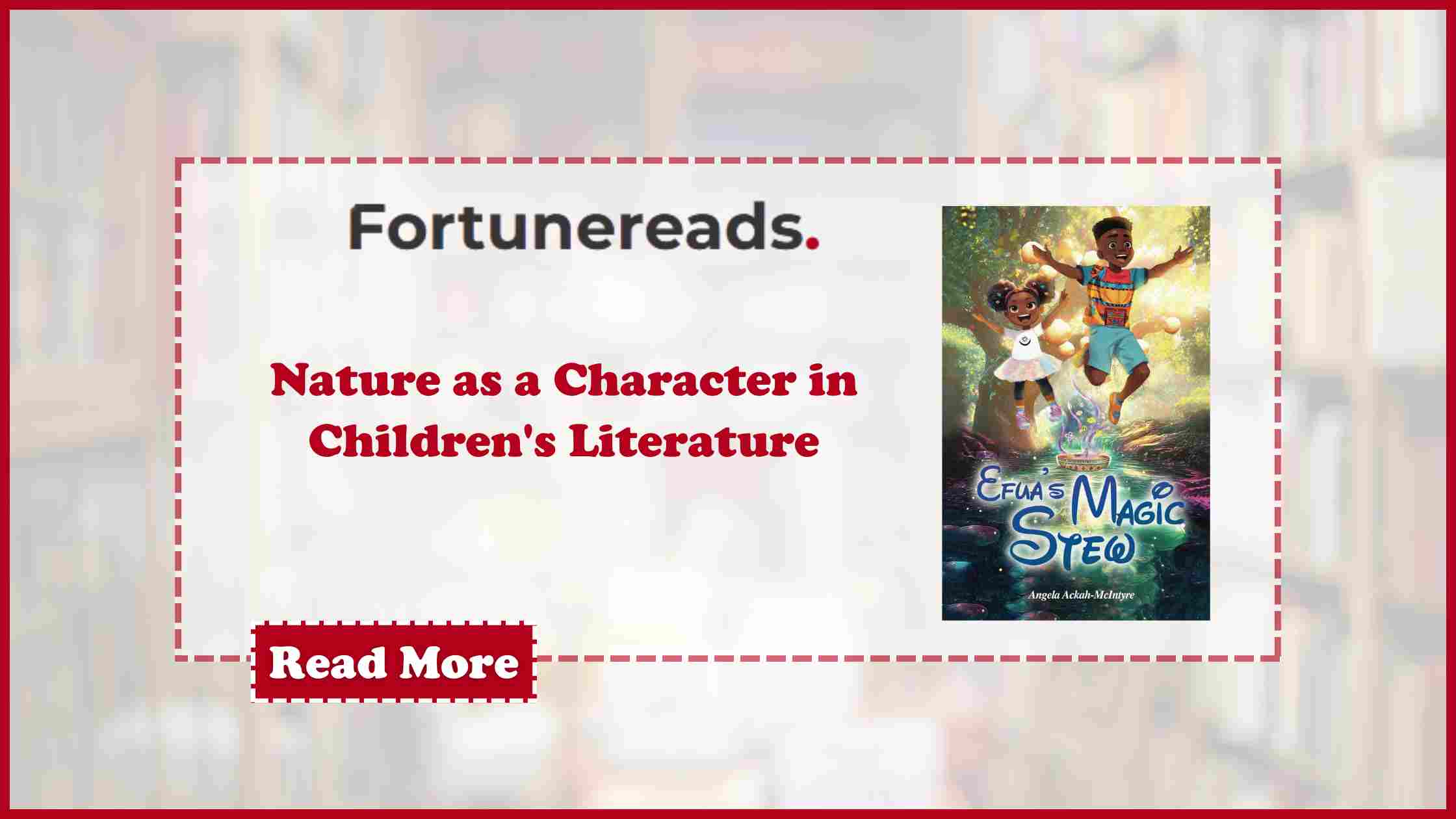
In the realm of children’s literature, nature often takes on a life of its own. More than a backdrop, it becomes a living, breathing presence that shapes the story and guides the characters’ journeys. Angela Ackah-McIntyre’s Efua’s Magic Stew is a shining example of this phenomenon, where the forest, mountains, and waterfalls are not just settings but active characters that influence the plot and evoke wonder.
When Efua, the young protagonist, embarks on her magical adventure, her journey is shaped by nature’s vast and unpredictable power. The forest in Ackah-McIntyre’s story is not a passive environment but a mysterious entity with its own will and personality. It is both a place of danger and discovery, luring Efua and Addae deeper with its foreboding allure. Its towering trees, vibrant foliage, and mythical inhabitants pulse with life, reminding us that nature is as dynamic and unpredictable as any human character.
What makes nature in children’s stories so compelling is its duality. It can be a source of immense beauty and comfort while also representing challenges to overcome. In Efua’s Magic Stew, the shimmering twin waterfalls and the enchanting puff-puff tree offer moments of respite and wonder. These vibrant depictions create a sense of magic, showing children the awe-inspiring aspects of the natural world. At the same time, the forest’s shadowy depths and its strange, watchful inhabitants remind readers that nature demands respect and courage.
This portrayal of nature reflects a timeless truth: the world around us is alive with mystery, power, and lessons to be learned. For young readers, stories like Ackah-McIntyre’s spark curiosity and imagination. They encourage children to see nature not just as a setting for play but as a source of adventure, wisdom, and connection. The forest in Efua’s Magic Stew teaches its characters resilience and bravery, challenging them to navigate its twists and turns while discovering their inner strength.
Beyond the narrative, the depiction of nature in children’s literature often serves to inspire environmental consciousness. When young readers become captivated by lush descriptions of forests, sparkling streams, and majestic mountains, they develop an appreciation for the natural world. In Ackah-McIntyre’s story, the vibrant forest scenes and their interplay with the characters invite readers to see the environment as something to cherish and protect. It fosters a sense of stewardship, reminding us that these magical places need to be preserved for future generations.
Nature as a character also bridges the gap between fantasy and reality. While Efua’s Magic Stew is steeped in magic, its portrayal of nature feels authentic and relatable. This balance allows young readers to draw parallels to their own experiences with the natural world—whether it’s climbing trees, exploring parks, or simply marveling at a sunset. By blending fantasy with the familiar, Ackah-McIntyre invites children to see the magic that exists in their everyday surroundings.
The emotional connection between children and nature in literature cannot be overstated. A story like Efua’s Magic Stew creates moments of awe, fear, and triumph that resonate deeply with young readers. The forest becomes a companion on Efua’s journey, offering lessons that extend beyond the story’s pages. It’s a reminder that nature, with its vast beauty and challenges, has a profound role to play in shaping who we are.
Through Efua’s Magic Stew, Angela Ackah-McIntyre masterfully shows how nature can become a character in its own right—one that inspires, challenges, and transforms. For children, these stories are more than escapism; they are an invitation to engage with the world around them. As they read about Efua’s adventures, they are encouraged to embark on their own explorations of nature, discovering not only its wonders but also the strength and imagination within themselves.