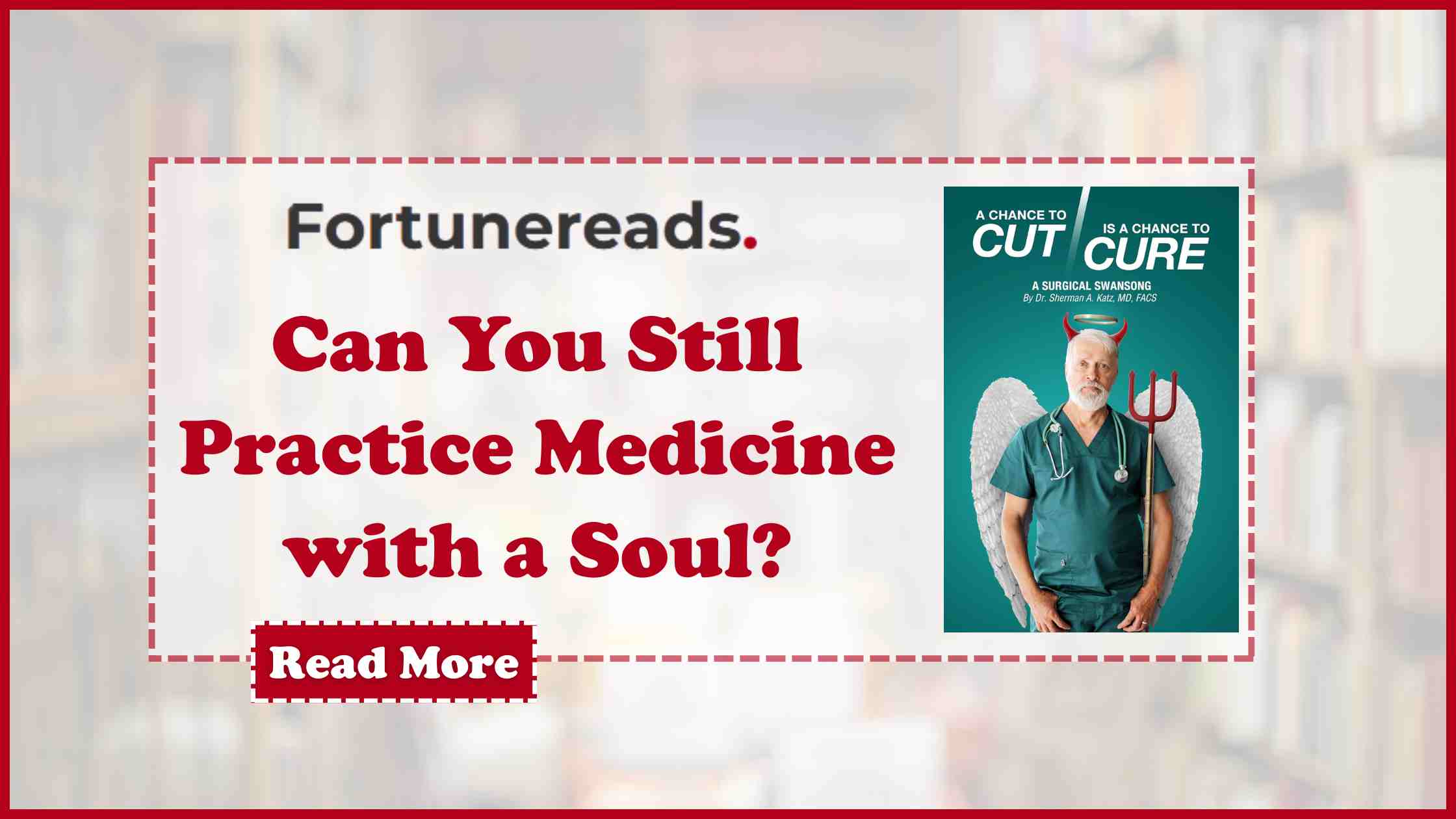
Can you still practice medicine with a soul?
In his memoir A Chance to Cut Is a Chance to Cure, Katz explores not only a personal journey through surgery but also a broader crisis of identity that modern medicine faces.
For Katz, the soul of medicine is found in compassion, autonomy, and the bond between doctor and patient. And in his view, that soul is in danger.
He writes from a place of deep experience. From the analog era of handwritten charts to the digital era of electronic health records and algorithm-driven care, surgery has undergone years of development. Through it all, he’s watched the erosion of a once deeply personal profession. Today’s doctors, he argues, are not free to treat patients as they once did. Regulations, coding requirements, and the priorities of third-party payers constrain them.
The result? Fewer choices for doctors. Less trust from patients. And a growing sense of disillusionment among those who once entered the field with passion and hope.
Katz describes the early years of his career as tough but meaningful. Doctors were respected. They had independence. They made decisions based on their judgment, not on insurance approval. But over time, that autonomy has slipped away. Today, much of a physician’s day is spent in compliance: filling out forms, justifying treatments, fighting denials, and trying to squeeze a human interaction into a fifteen-minute time slot.
Even more troubling is the emotional toll. Katz describes a generation of doctors who feel burned out, disconnected, and voiceless. These are physicians who entered medicine to make a difference, only to find themselves boxed into roles that resemble factory work. The soul of medicine, he writes, is being crushed under the weight of bureaucracy.
So, can you still practice medicine with a soul?
Katz says yes, but only with intention. It takes effort. It requires courage. It means pushing back against the system, even in small ways, to preserve the humanity of the work. It might be as simple as taking a few extra minutes to talk with a patient instead of staring at a screen. It might mean mentoring students in empathy, not just in metrics. It might mean refusing to let your compassion be regulated out of you.
For patients, Katz’s message is also clear. He urges them to insist on treatment that treats them like a person and not just a statistic. The book is not all criticism. Katz still believes in medicine. He still sees moments of grace. But he knows those moments must be protected, by those who practice it.
As Katz puts it, the best surgeons are not just good with their hands. They are honest with themselves. They are humble in the face of suffering. And they remember that every procedure, every diagnosis, is a human story—not just a billing code.
His autobiography challenges everyone to examine themselves and consider whether they are preserving medicine or allowing it to deteriorate. This includes physicians, nurses, administrators, and patients.
The answer isn’t easy. But it starts with remembering that medicine is not just a science. It’s a calling. And a calling, by definition, begins with the soul.
Order your copy on Amazon: https://www.amazon.com/dp/1968615334.