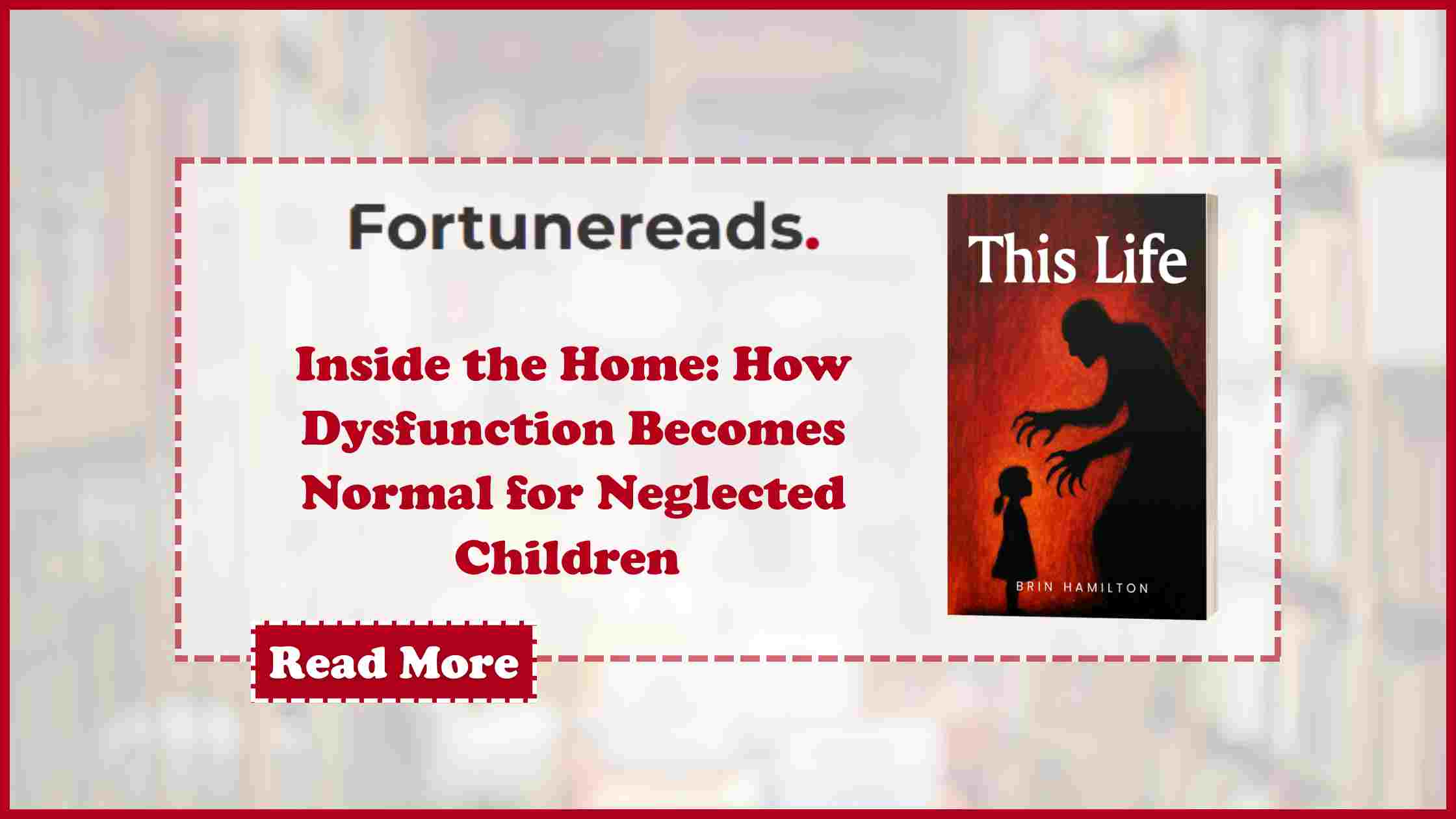
Walk into a home marked by dysfunction, and you might be overwhelmed by the chaos — the shouting, the silence, the filth, the fear. But for a child who lives there, this chaos is normal. In This Life by Brin Hamilton, we meet Callie, a young girl growing up in exactly such an environment. What shocks the reader is not just what happens to her — it’s how numb she becomes to it all. And that is the heartbreaking truth behind so many neglected children’s lives: they don’t know any different.
In Callie’s world, love is unpredictable and conditional. Her mother is angry and cold, lashing out physically and emotionally. Her father drifts in and out, sometimes kind, often too drunk to be present. Meals aren’t guaranteed, clean clothes are a luxury, and comfort is something you imagine — not something you receive. Yet to Callie, this is life. It’s what she wakes up to, what she expects, what she learns to navigate with heartbreaking resignation.
That’s the tragedy of prolonged neglect: over time, dysfunction becomes familiar. Children adjust. They stop complaining. They stop asking questions. They learn to keep their heads down, to anticipate moods, to silence their emotions. And tragically, they begin to believe that what they’re experiencing is their fault.
Brin Hamilton’s This Life doesn’t just tell Callie’s story — it immerses readers in the subtle, insidious ways neglect rewires a child’s understanding of the world. Instead of affection, there’s avoidance. Instead of praise, criticism. Instead of safety, threat. And as Callie grows older, the coping mechanisms she develops — silence, aggression, withdrawal — are misunderstood by the very systems meant to protect her.
We often talk about child abuse in terms of broken bones and bruises. But neglect — the absence of care, love, and protection — leaves invisible scars. Children like Callie are often overlooked because they’re not screaming; they’re quietly fading. They normalize dysfunction because they’ve never known anything else.
The danger of this normalization is long-lasting. It shapes how children see themselves and their place in the world. It tells them they are unworthy of kindness, undeserving of love, destined for chaos. And without intervention, these beliefs follow them into adulthood.
But This Life also shows that, while dysfunction may be learned, healing can be too. With the right support, even children who have spent years in darkness can begin to understand what love, safety, and stability really feel like.
The next time we see a child who seems “difficult” or “withdrawn,” we might do well to ask what their home feels like behind closed doors. Because inside those homes, many children are learning to survive in dysfunction — and calling it normal.