Psychological fiction often becomes most compelling when neither the character nor the reader knows exactly what to believe.
A character senses danger. Something feels wrong. A stranger seems suspicious. A coincidence appears too precise to ignore. The question is whether those instincts are revealing a real threat or whether fear is shaping the character’s interpretation of events.
That uncertainty is where paranoia and intuition begin to separate.
Intuition is usually presented as a quiet sense that something deserves attention. It may come from experience, pattern recognition, or details the conscious mind has not fully processed. The character may not immediately know why something feels wrong, but there is often evidence behind the feeling.
Paranoia works differently.
Paranoia can make unrelated events seem connected. It can turn uncertainty into certainty without enough proof. The character may begin assigning motives to other people, seeing threats in ordinary behavior, or interpreting coincidence as deliberate action.
In psychological fiction, the strongest tension comes when both are possible.
If the reader knows immediately that the character is correct, the mystery disappears. If the character is obviously imagining everything, the suspense weakens. The real power comes from keeping the reader inside the uncertainty.
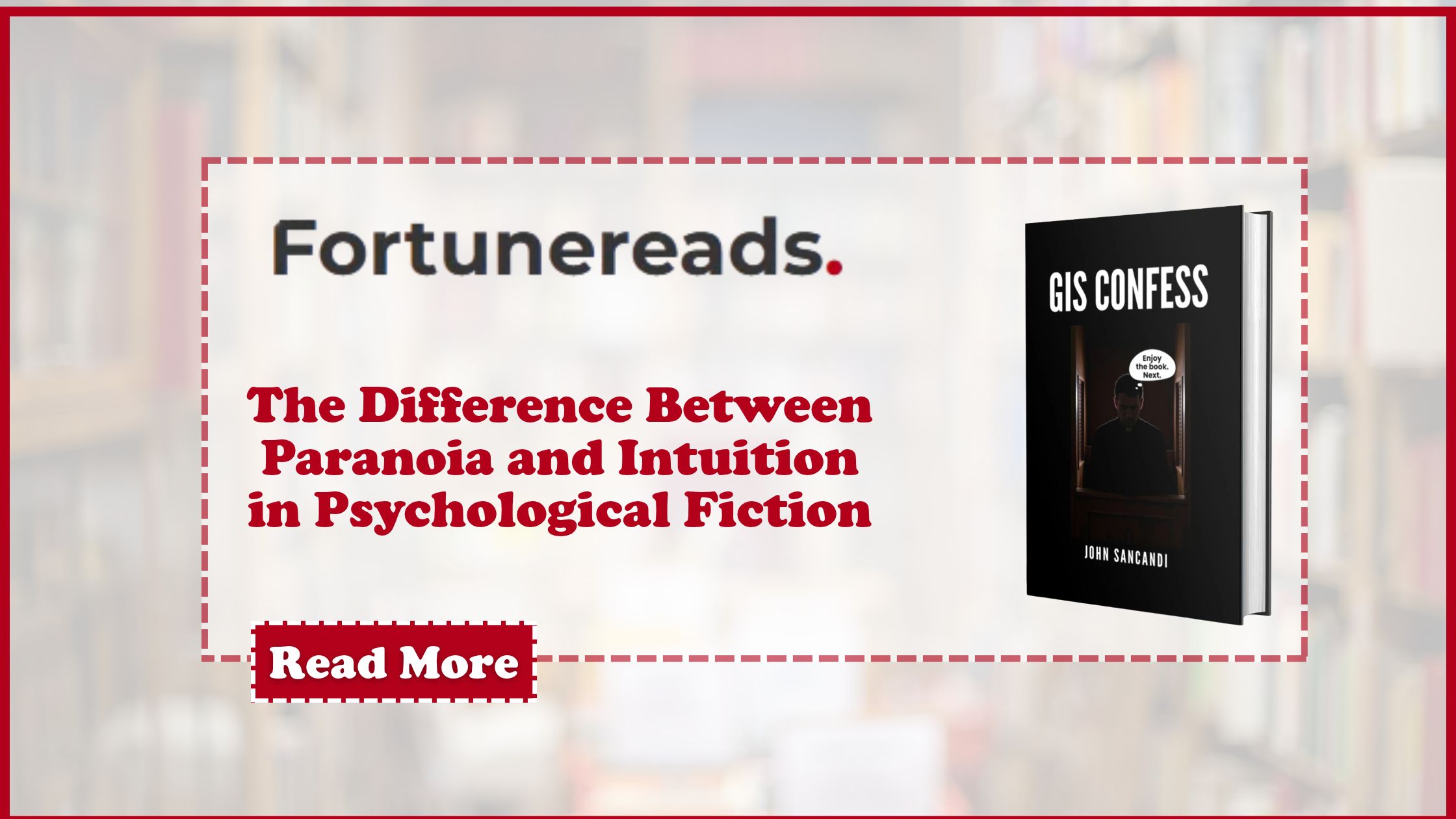
J. Sancandi uses that tension throughout GIs Confess.
Ed Smith is a wounded veteran whose past has shaped the way he responds to danger. He has troubling dreams, strong suspicions, and a mind that does not always give him easy answers. At the same time, events around him are genuinely strange.
A missing painting, criminal activity, hidden motives, powerful interests, and people who may be manipulating him create a situation where suspicion is not necessarily unreasonable.
That is what makes Ed’s position difficult.
When he believes someone is deceiving him, he may be right. When he feels watched, there may actually be someone watching. When he thinks a dream carries meaning, the possibility cannot be dismissed as easily as he would like.
But fear also affects judgment.
Ed has to decide whether his instincts are protecting him or whether his mind is creating connections that are not there. Every decision becomes more dangerous because he cannot completely separate evidence from emotion. For the reader, that creates a constant question.
Is Ed seeing what everyone else has missed, or is he seeing what he needs to see?
GIs Confess uses that uncertainty to push its mystery forward. The story does not simply ask whether danger exists. It asks whether a person carrying psychological wounds can recognize real danger without being controlled by fear.
That distinction between paranoia and intuition is thin.
In Ed Smith’s world, crossing it could mean discovering the truth or walking directly into someone else’s trap.
Read the book on Amazon: https://a.co/d/0eVfZKsW