Life often feels like a rush of moments demanding quick reactions. Someone cuts us off in traffic, and anger flares. A colleague criticizes our work, and defensiveness rises. A child refuses to listen, and frustration explodes. Most of us live on autopilot, reacting without reflection. Yet within every moment lies a hidden space, a pause that carries extraordinary power.
The Space Between Stimulus and Response
Viktor Frankl, a psychologist, suggested that between stimulus and response, there is a space, and in that space lies our freedom and growth. This insight reminds us that our reactions aren’t automatic. They are choices; and once we create momentum for our reaction, they can be mapped. When we stop before we react, we can intentionally allow ourselves to respond in spite of our past programming.
For instance, think about an argument with a partner. You may notice your tendency is to interrupt them or withdraw. However, if you take the time to pause, even for two or three seconds, you will typically notice your fist clenching or your heart racing in response to your partner’s statements. In that pause, we have the opportunity to breathe and articulate words which still express our truth, but do not destroy our connection. The situation is different, but it’s not different because the problem has ceased to exist, but because we were intentional in how we responded.
Why Pausing Feels Difficult
Pausing can often be much more challenging than it seems. Life today inundates us with stimulation. From notifications that buzz incessantly and headlines flashing alarms to overall demands piling on; our nervous system remains constantly in an alert state of being, creating an immediate sense of urgency to react. In addition, many of us are conditioned from childhood that those instant reactions were either needed in a moment of survival or to receive approval from others. These impulses may seem automatic, but they are not permanent.
How to Cultivate the Pause
Mindfulness is one of the most practical tools. A single slow breath creates distance and shifts perspective. When someone criticizes you, your instinct may be to defend yourself immediately. Instead, inhale deeply and remind yourself, “I am safe.” This moment grounds you and allows you to respond from calm rather than fear.
You can also practice in small ways. Before opening your phone in the morning, pause to breathe. During a conversation, silently count to three before replying. If anxiety rises, place a hand on your chest and notice your breath until your body softens. These practices teach the nervous system to slow down.
Journaling is another useful tool. Writing down triggers and your reactions helps you see patterns more clearly. Once you become aware of your habits, you will find it easier to create space the next time you are tested.
Choosing Freedom
The pause is not passive. It is a conscious act of reclaiming power. Each time you pause, you break the chain of habitual reaction. You remind yourself that external events do not control you. You can choose patience instead of anger, compassion instead of judgment, and courage instead of fear.
Conclusion
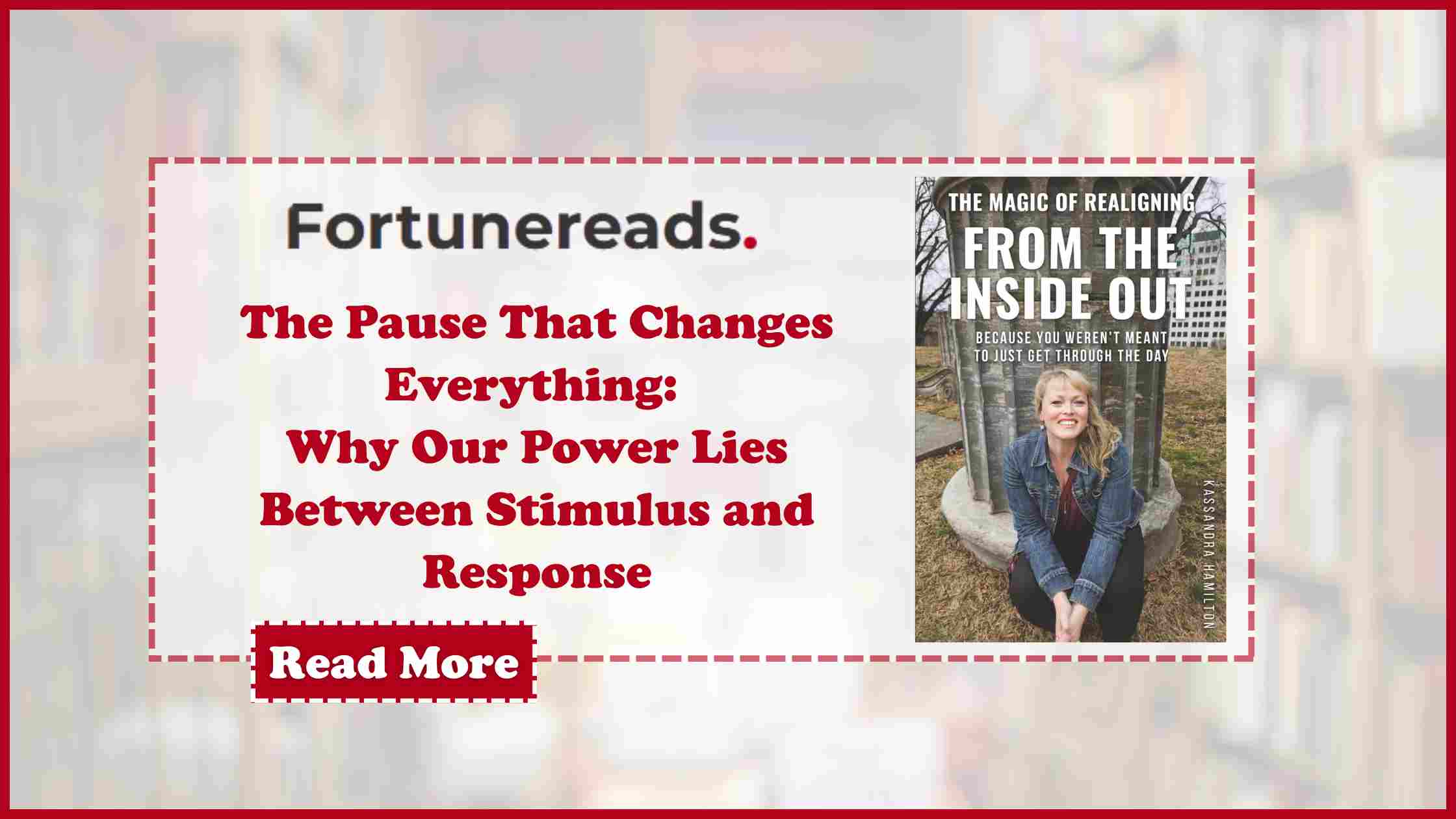
Kassandra Hamilton’s book The Magic of Realigning From the Inside Out emphasizes this truth. By cultivating the pause, she shows how we begin to live intentionally rather than reactively.
The world may be chaotic, but peace begins in the moments we pause. That brief space is where transformation happens. It is where we reclaim our freedom and step into alignment with who we truly are.