Attention is often treated as something casual. Something that drifts in and out while people go about their lives. In reality, attention is one of the most demanding things a person can offer. It requires presence. It asks for sturdiness in a world that rewards speed.
Choosing to pay attention means choosing to see what is inconvenient. It means noticing patterns before they become problems. It means hearing warnings that are easy to dismiss because acknowledging them would require change.
Many people believe courage shows itself in action, but it often appears earlier than that. It appears in the moment someone refuses to look away. Before decisions are made. Before words are spoken. Courage begins with seeing clearly, even when clarity brings discomfort.
Distraction offers comfort. Attention offers clarity, and clarity often brings responsibility. Once something is truly seen, it cannot be unseen. That is why people resist paying attention to difficult truths. Awareness creates duties. It quietly asks, now that you know, what will you do?
This resistance shows up everywhere. In personal relationships, it looks like ignoring small shifts in tone or behavior because addressing them feels awkward. In workplaces, it appears as brushing past concerns because deadlines feel more urgent. In society, it shows itself when early warning signs are dismissed until they become crises.
Attention challenges that pattern. It slows the pace. It interrupts the routine. It asks for care rather than efficiency.
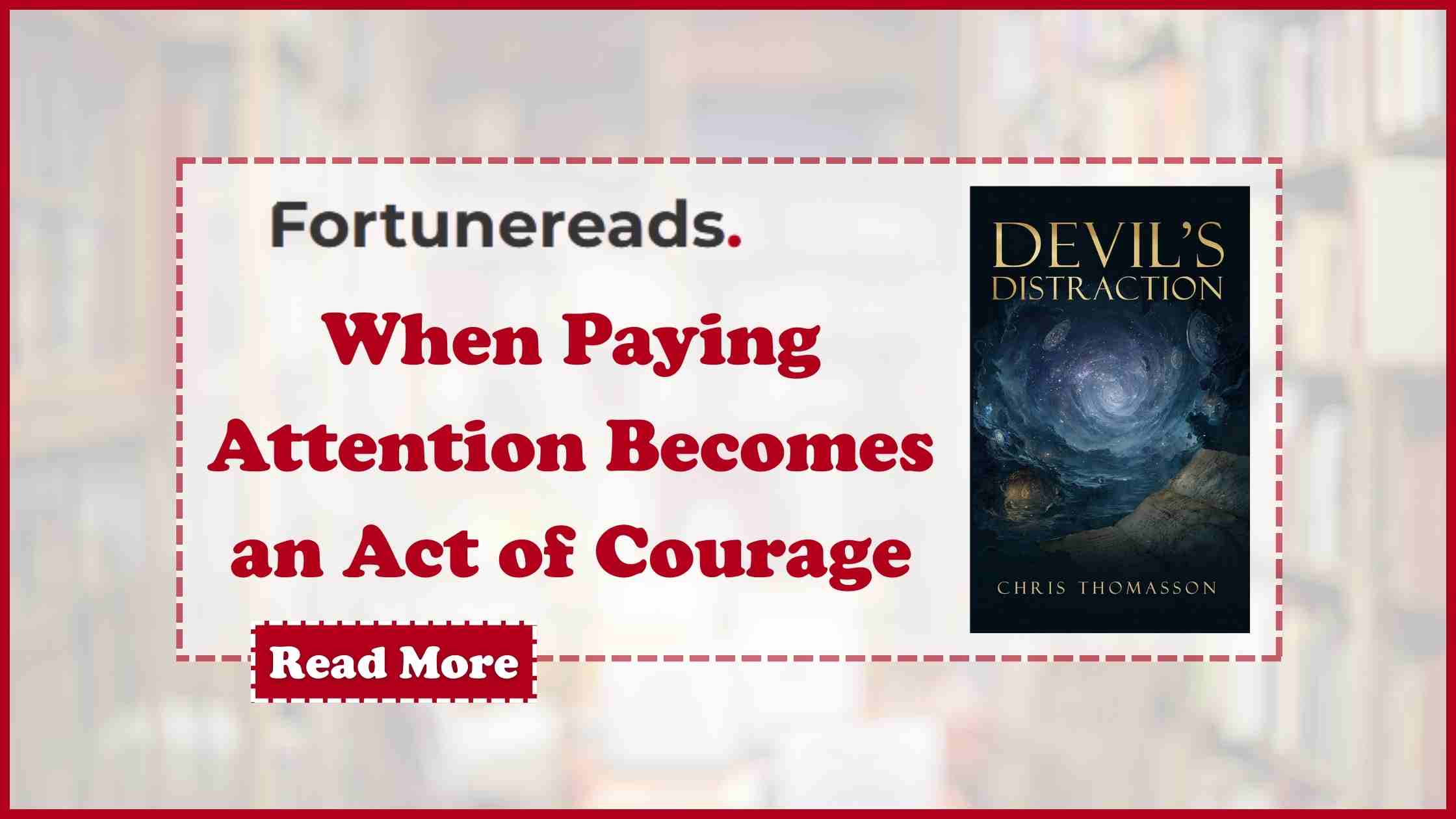
This idea is present in stories where awareness carries consequences. In Devil’s Distraction, a book written by Christopher Thomas, proposes the idea that attention is not passive. The protagonist learns that noticing the wrong thing at the wrong time can be dangerous, yet failing to notice is even worse.
It is a dark supernatural novel that follows Jack Skye, a reluctant hunter forced to move backward through time to stop a rising evil determined to erase his bloodline and reshape the future. As ancient artefacts, forbidden knowledge, and unseen guardians collide, Jack must navigate a world where destiny offers no comfort and every choice carries permanent consequences.
That idea mirrors real life more than fantasy. Relationships rarely end suddenly. They erode through missed signals and unspoken concerns. Crises rarely arrive without warning. They grow quietly while early signs are brushed aside. Harm often begins not with intent, but with inattention.
Paying attention does not guarantee safety. It does not promise success or resolution. Sometimes it leads to difficult conversations. Sometimes it reveals problems that cannot be easily fixed. But it does prevent ignorance from becoming an excuse. It removes the comfort of claiming you did not know.
In a culture that celebrates speed and multitasking, choosing to slow down and notice is a quiet form of resistance. It does not look impressive. It will not be praised. It may even be misunderstood as hesitation. Yet it changes outcomes in subtle but lasting ways.
Attention shapes decisions long before action takes place. It determines what people value, what they protect, and what they allow to fade.
Attention is not about control. It is about responsibility. And responsibility is rarely comfortable. It asks for honesty, patience, and the willingness to sit with what is difficult rather than turning away.
In the end, paying attention is not just an act of awareness. It is an act of courage.
Available on Amazon: https://www.amazon.com/Devils-Distraction-Chris-Thomasson-ebook/dp/B0G22H9S8X/