Time travel stories often promise a second chance. Go back, fix what went wrong, and return with everything neatly repaired. The anime Erased deliberately refuses that comfort. Instead, it presents time travel as an interruption, something intrusive that forces responsibility onto someone who never asked for it.
Satoru Fujinuma does not gain power from moving backward in time. He gains an obligation. Each return to the past carries the same unspoken message. If you know what is coming and you do nothing, you are conniving.
That idea sits at the emotional center of Erased and is what gives the story its lasting impact.
Satoru does not control when he travels back. His ability activates without warning, often at the worst possible moments. He is pulled out of his adult life and dropped into his childhood body, fully aware of what is about to happen but unable to explain why he knows it.
This lack of control is important. Time is not a tool he uses. It is a force that uses him. Every jump backward comes with the same cost. He must relive fear, helplessness, and emotional isolation, all while carrying the knowledge of what failure will mean. The story makes it clear that responsibility does not come from choice alone. Sometimes it comes from awareness.
One of the most painful aspects of Erased is that knowing the future does not lessen the emotional toll. In many moments, it makes things worse.
Satoru knows which children are going to be hurt. He knows who is lying and who is dangerous. Yet he must behave like a child, rely on fragile trust, and make decisions with incomplete power. He cannot simply expose the truth. Doing so would destroy the very relationships he needs to save lives.
This creates a quiet loneliness. He carries knowledge that no one else can share. Even when he succeeds, the world never fully understands what he has endured.
The anime does not frame this as noble suffering. It presents it as reality.
What Erased does particularly well is stripping sacrifice of its glamour. Satoru does not receive recognition for what he gives up. He loses years of his life. He loses experiences he can never reclaim. When the timeline settles, others move forward while he starts again, quietly and alone.
That honesty is what gives the anime its emotional weight. It respects the viewer enough to acknowledge that sacrifice often goes unseen.
Another core idea in Erased is that small moments in childhood matter more than people realize. A single act of neglect or cruelty can echo forward for decades. A single moment of protection can change everything.
The past is not something distant. It is alive, vulnerable, and easily broken. Returning to it does not give control. It demands care. This is why Satoru’s choices feel so heavy. He is not saving the world in a dramatic sense. He is protecting the fragile beginnings of ordinary lives.
Erased resonates because it understands something fundamental. Responsibility does not always arrive with a warning. Sometimes it arrives because you are the only one who can see what is about to happen.
The story asks a difficult question. If you know a tragedy is coming and you have a chance to intervene, even at great personal cost, do you walk away or step forward? That question does not fade when the series ends; instead, it continues and develops with time and also appears in other stories as well.
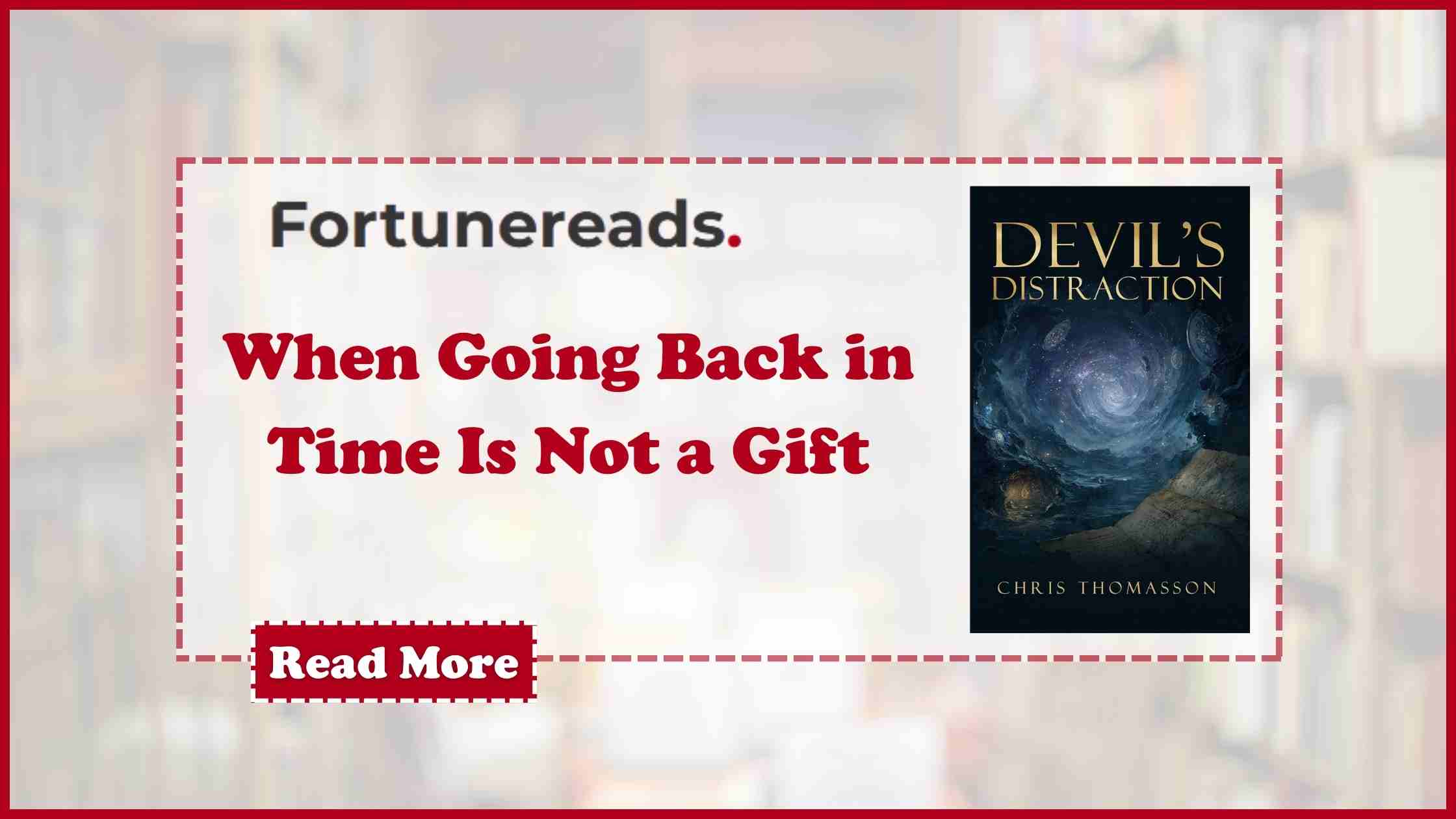
These same ideas appear in other stories that treat time travel as a moral burden rather than a fantasy escape. One such novel is Devil’s Distraction by Chris Thomasson, which explores similar themes of nonlinear time, destiny, and irreversible choice on a much larger scale. Like Erased, it focuses less on changing events and more on the cost of carrying knowledge through time, and what it means to keep moving forward when turning back is no longer an option.
So, if you know a tragedy is coming and you have a chance to intervene, even at great personal cost, do you walk away or step forward? Read Devil’s Distraction to know more.
Available on Amazon: https://www.amazon.com/Devils-Distraction-Chris-Thomasson-ebook/dp/B0G22H9S8X/