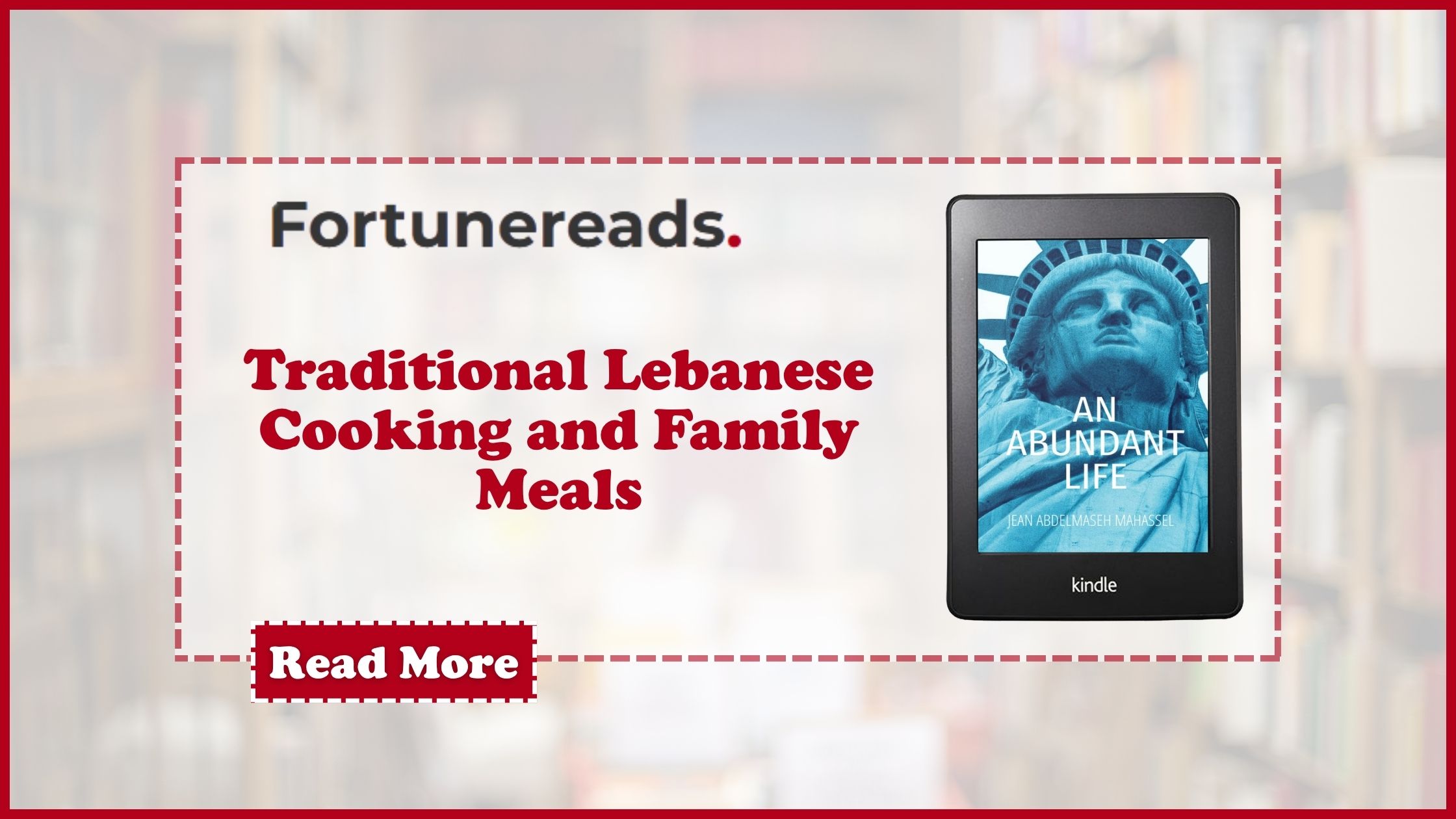
Food is at the heart of Lebanese culture, and in An Abundant Life, Jean Abdelmaseh Mahassel vividly illustrates how cooking and shared meals define family life and community. Traditional dishes like tabouli, khubaz, and za’atar are not simply nourishment; they are expressions of love, heritage, and the rhythms of daily life.
Tabouli, a salad of finely chopped parsley, tomatoes, bulgur, and fresh herbs, embodies freshness and care. Preparing it requires attention to detail, from chopping the ingredients evenly to balancing the flavors with olive oil and lemon juice. This dish is more than sustenance; it is a ritual of togetherness. In the narrative, Amelia and her mother prepare tabouli side by side, singing and reminiscing, showing that the act of cooking reinforces familial bonds while passing traditions to the next generation.
Khubaz, the flatbread staple of every meal, reflects skill, patience, and continuity. Made from simple ingredients—flour, water, and yeast—it requires practice to achieve the right texture and softness. The process of kneading, shaping, and baking is shared across generations, connecting children to their heritage and instilling pride in the work of their hands. Through khubaz, the family not only nourishes the body but maintains a link to the customs of their homeland.
Za’atar, a blend of dried herbs and sesame seeds, carries both flavor and symbolism. Sprinkled on bread or dough rounds, it represents simplicity and abundance, highlighting the Lebanese philosophy of making the most of what is available. Amelia’s preparation of za’atar dishes in her new home demonstrates how traditional foods provide comfort and continuity even in a foreign land, preserving identity while fostering adaptation.
Family meals are equally significant, acting as a daily celebration of connection. Cooking together allows for the exchange of stories, laughter, and guidance. Meals are shared with care, emphasizing gratitude for food, labor, and community. Mahassel’s depiction shows that the act of preparing and sharing traditional dishes is as important as the meals themselves, reinforcing values of cooperation, love, and cultural pride.
Through vivid storytelling, An Abundant Life captures the cultural importance of Lebanese cuisine and family meals. Recipes like tabouli, khubaz, and za’atar are intertwined with memory, heritage, and relational bonds, offering readers a window into a world where food nourishes both body and spirit. These culinary traditions are a testament to the enduring connection between family, culture, and the act of sharing sustenance across generations.
Discover this book now, available on Amazon: https://www.amazon.com/dp/B0CL68NXCC