In the late 1800s, Syrian Christian communities in Mount Lebanon lived under the shadow of Ottoman rule, a presence that shaped every aspect of daily life. Taxes were heavy and often arbitrary, and the threat of violence or displacement loomed over families who simply wanted to cultivate the land and raise their children in peace. Christians, though a substantial portion of the population, had to navigate a delicate balance between practicing their faith and complying with the authority of Ottoman officials and local powers.
Families like Amelia’s faced both hardship and resilience. Men carried the weight of earning enough to sustain households while also managing the constant pressure from authorities, knowing that failure could mean imprisonment or worse. Women maintained the home, raised children, and managed the farm, all while imparting knowledge and traditions that preserved their faith and culture. Christian practices were central to the rhythm of life, from attending church services to celebrating religious festivals, providing a sense of community and spiritual guidance amid uncertainty.
The political climate influenced every interaction. Ottoman soldiers and tax collectors could appear at any moment, inspecting property, demanding payment, or enforcing laws that were sometimes incomprehensible or unjust. Families learned to act discreetly, keeping a careful balance between survival and maintaining dignity. Acts of generosity, mutual aid, and solidarity became lifelines within communities, as neighbors relied on one another to protect homes, crops, and families from predation or neglect.
Despite these pressures, Syrian Christians held fast to their traditions. Community gatherings, shared meals, and collective prayer reinforced bonds and fostered resilience. Education, particularly for boys, was valued but often limited by resources and gender expectations. Girls learned practical skills at home, preparing them to sustain family life and preserve cultural practices. Yet, the thirst for knowledge and growth could not be fully contained, as seen in Amelia’s determination to learn despite societal restrictions.
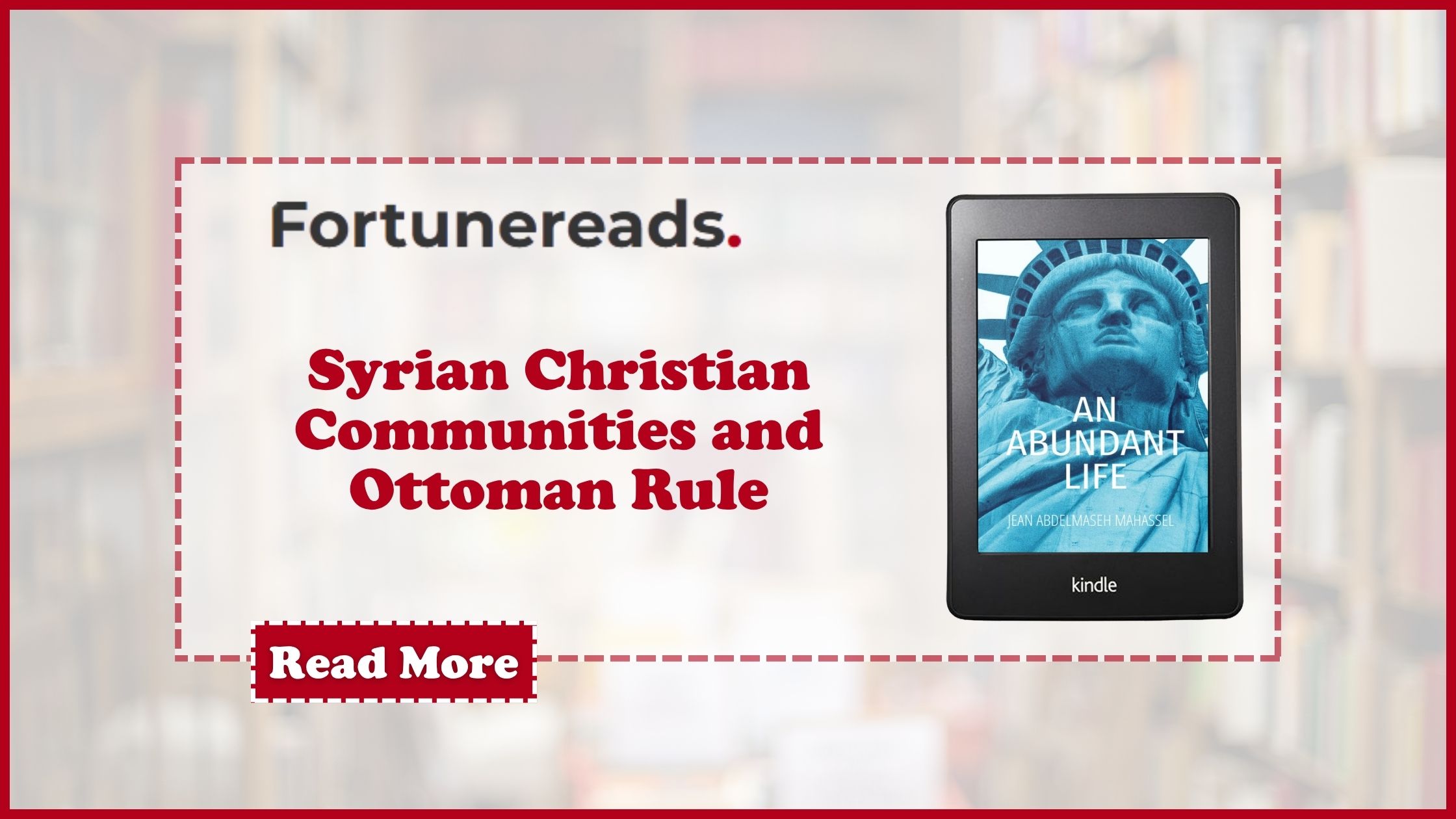
An Abundant Life vividly portrays this era, capturing the tension, courage, and devotion that defined Syrian Christian communities under Ottoman rule. Readers witness the challenges of oppression and the enduring strength of faith, family, and community that allowed these families not only to survive but to thrive, carrying their culture and values across generations and continents. Through Amelia’s experiences, the book offers a window into a world of resilience, devotion, and hope, illuminating a rich history often overlooked but deeply impactful.
Discover this book now, available on Amazon: https://www.amazon.com/dp/B0CL68NXCC