For Polly Justice, freedom is not a grand political idea. It is something much more personal.
It is being allowed to choose her own work. To protect her children. To speak her mind. To love whom she loves. To leave a life that has become unbearable. And, perhaps most importantly, to decide who she wants to become.
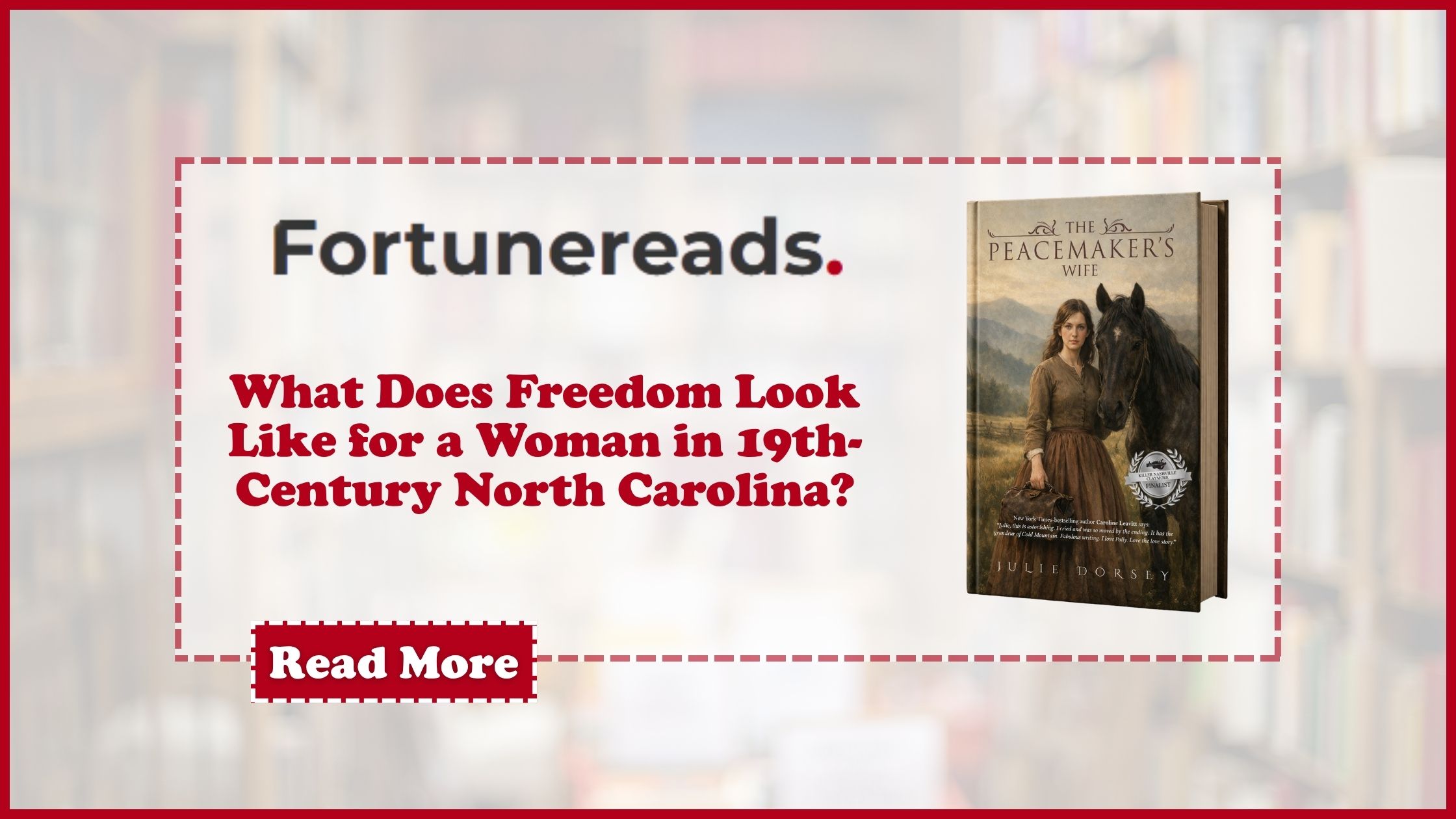
Julie Dorsey explores all of these questions in The Peacemaker’s Wife, a historical novel set in the Blue Ridge Mountains of North Carolina during a period when women were expected to build their lives around marriage, motherhood, household duty and obedience.
Polly understands those expectations well.
She marries John Justice while still young and begins the life that people around her would consider proper. John has ambitions of his own and earns a reputation for settling arguments and disputes throughout Blue Ridge. His skill eventually earns him the nickname “The Peacemaker.”
But while John is allowed to pursue his calling, Polly discovers that pursuing hers creates conflict.
She wants to heal people.
After carrying years of guilt over the death of her baby sister Lucindy, Polly becomes determined to understand childbirth and medicine. She studies whenever she can, learns about herbs and traditional remedies and apprentices under Nan Clark, the community’s experienced healer.
Eventually, Polly begins answering calls herself.
She delivers babies, tends wounds, sets broken bones and treats the sick. The people of Blue Ridge increasingly depend upon her and Polly starts becoming the woman she once imagined: Doctor Polly.
Yet independence comes at a cost.
John does not always accept the time she spends away from home or the importance she places on her work. His drinking, jealousy, anger and violence make Polly’s marriage increasingly dangerous. The contrast is striking. The man celebrated publicly for creating peace becomes the source of turmoil inside his own household.
Polly’s struggle for freedom is therefore about more than having a profession.
It is about possessing authority over her own life.
That struggle becomes even more complicated because Polly never fully stops loving Sam Edney. Sam represents a different possibility, but Polly knows that simply following her heart could cost her reputation, her work and possibly her children. In the world she inhabits, choices available to men do not necessarily exist for women without serious consequences.
Then history itself becomes another force beyond her control.
The Civil War reaches into Blue Ridge, separating families, taking lives, threatening homes and making survival more uncertain. At the same time, a series of disturbing murders forces Polly to confront danger much closer to home.
Against that backdrop, freedom becomes something Polly must define for herself.
It does not mean living without responsibility. Polly remains devoted to her children and to the people who depend upon her medical knowledge. Instead, freedom means refusing to surrender her identity simply because society, marriage or fear tells her to.
That is one reason Polly is such an engaging heroine.
She is imperfect, stubborn, passionate and sometimes conflicted. Her decisions are not always easy or conventional. But she keeps moving toward a life in which she has a voice.
In The Peacemaker’s Wife, Julie Dorsey asks readers to consider what independence might have meant for a woman living more than 150 years ago.
For Polly Justice, the answer is clear: freedom begins when she stops allowing other people to decide the boundaries of her life.