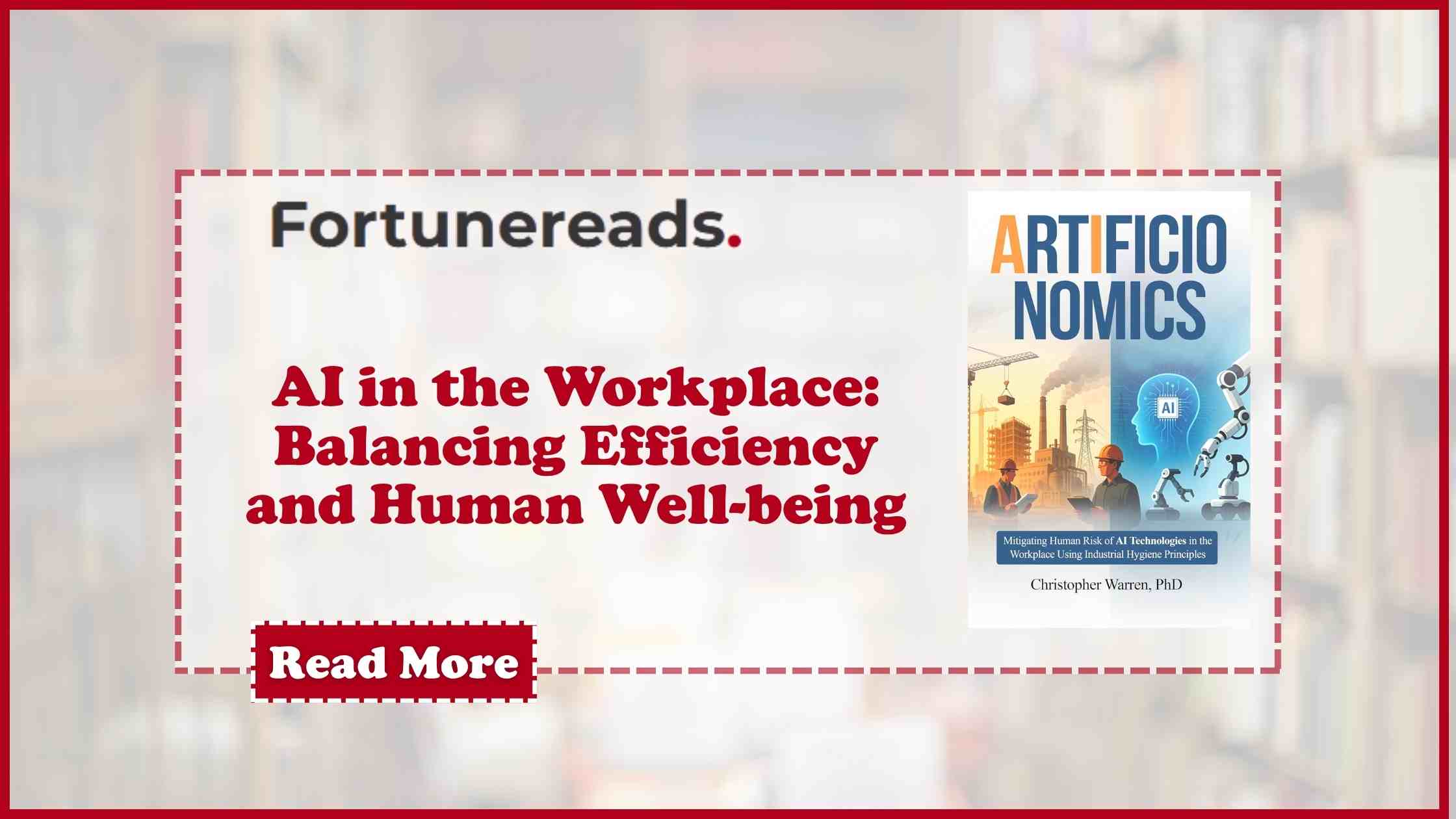
As technology continues to evolve, artificial intelligence is playing an increasingly prominent role in transforming industries and workplaces. With its ability to streamline operations, enhance productivity, and improve decision-making, AI promises significant benefits for businesses. However, as we integrate these powerful tools into our daily work lives, it becomes crucial to strike a balance between efficiency and human well-being. In Artificionomics, the challenges and opportunities of using AI in the workplace are explored, emphasizing the need for thoughtful and human-centered implementation.
One of the primary advantages of AI in the workplace is its capacity to automate routine and repetitive tasks. From data entry to scheduling, AI systems can take over many of the mundane tasks that consume valuable time and resources. This allows employees to focus on more creative and strategic aspects of their roles, potentially leading to greater job satisfaction and engagement. With AI handling time-consuming processes, workers are freed up to apply their expertise and creativity in ways that drive innovation and growth within the company.
However, the efficiency brought by AI must not come at the expense of human well-being. As AI systems take over certain responsibilities, there is a growing concern about job displacement and the potential for workers to feel alienated or undervalued. In Artificionomics , the importance of managing this shift is highlighted. Rather than viewing AI as a replacement for human labor, businesses should see it as a tool that augments and enhances human capabilities. By training employees to work alongside AI, companies can create an environment where technology amplifies their strengths, rather than diminishing their role.
Moreover, the impact of AI on employee mental health is an important consideration. While AI can increase productivity, it can also introduce new challenges, such as stress, anxiety, and feelings of isolation. As AI systems become more integrated into decision-making processes, employees may feel as though their contributions are less valued, or that their jobs are at risk. The key to maintaining employee well-being in this evolving landscape is open communication, support, and training. Companies must be transparent about how AI will be implemented and offer employees the resources they need to adapt to these changes.
One of the crucial lessons in Artificionomics is that AI should be implemented with a human-centered approach. Businesses must prioritize employee well-being by ensuring that technology enhances their work experience rather than diminishing it. This includes creating systems where AI supports, rather than replaces, human judgment, fostering a collaborative relationship between workers and machines. Companies should also be proactive in providing emotional and psychological support for employees during the transition, ensuring they feel valued and secure in their roles.
In conclusion, the integration of AI into the workplace offers incredible potential for efficiency and innovation. However, it is essential to balance this efficiency with the well-being of employees. By implementing AI thoughtfully and with a focus on human-centered design, businesses can unlock the full potential of both technology and their workforce. Artificionomics serves as a guide to navigating these challenges, offering valuable insights on how to create a workplace where AI enhances human potential rather than diminishing it.
Get your Copy Now on Amazon: https://www.amazon.com/dp/B0GFY4RL6B