For many children, expressing feelings in words is a skill that develops over time. But However, naming emotions can be especially challenging for children with Pathological Demand Avoidance (PDA). They may feel emotions strongly yet struggle to express them in the moment. The result can be frustration, meltdowns, or withdrawal, not because they don’t want to share but because they don’t yet have the tools or emotional safety.
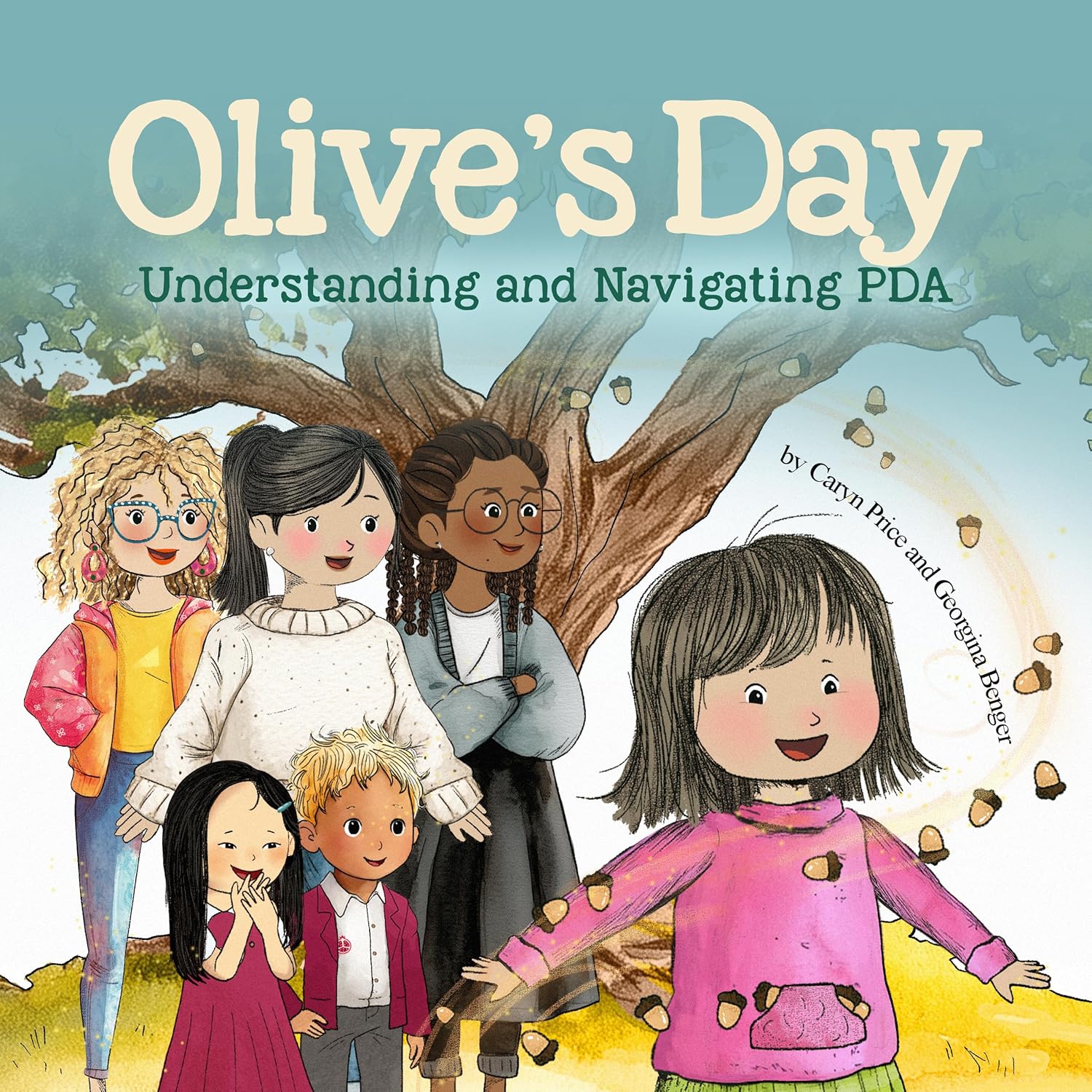
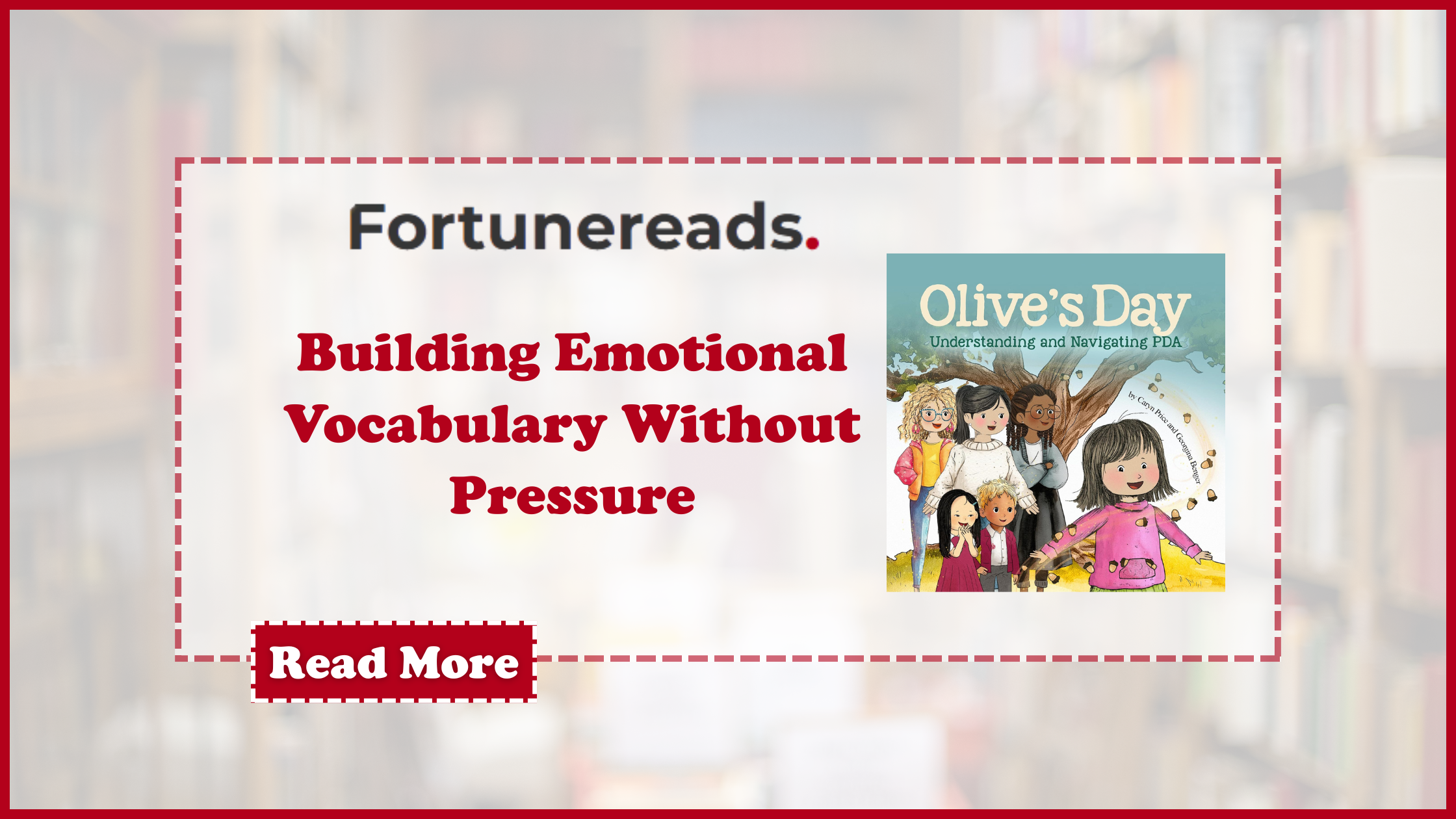
In Olive’s Day by Caryn Price and Georgina Benger, we see a child’s world where intense feelings and small moments collide. Olive is bright, creative, and full of life. Still, her body and mind react before her words catch up when demands feel overwhelming, even fun. Instead of forcing Olive to “use her words” in high-pressure moments, the adults in her life model language and create safe spaces where she can build her emotional vocabulary.
One of the most powerful lessons in the book is that learning to talk about feelings shouldn’t be treated like a pop quiz. In a scene where Olive feels the rush of a big “NO” when asked to get ready for school, her mum doesn’t insist she explain herself. Instead, she shifts the demand into a playful game about putting on armour for the day so that she models problem-solving and acknowledges Olive’s feelings without making her defend them.
This gentle approach is key for children with a PDA profile. When adults force them to name or justify emotions in the heat of the moment, the demand can make the emotion even more complicated to manage for everyone involved. But when the focus shifts to connection and co-regulation, children have the space to calm down first, making it easier to reflect later.
Olive’s teacher takes a similar perspective to the her mum. In a lesson, noise, bright lights, and fast instructions overwhelm her, so Olive uses her “I need a break” card. This simple tool removes the pressure to explain her feelings right away verbally. It gives her an exit that is safe, respected, and predictable. Gradually, emotional safety helps children learn that feelings are manageable and that expressing them, whether through words, visuals, or actions, will be understood. The book also shows how daily routines can become general modelling opportunities. The family uses a fridge display with photos of favourite meals, allowing her to communicate choices without additional stress from conversation when she’s tired or overwhelmed. These small adaptations make it easier for Olive to participate in decision-making and gradually expand her communication strategies. For parents, teachers, and caregivers, the takeaway is clear: building emotional vocabulary isn’t just about naming children’s feelings, it’s about modelling and living the language of emotions alongside them.
It might mean naming your feelings out loud or describing what you see in the child without demanding a reply.
Olive’s Day reminds us that emotional growth happens best when nurtured, not rushed. By modelling emotional language, respecting nonverbal communication, and creating safe spaces, we help children with PDA learn to express their feelings in their own time. And when they do, those words will carry meaning and trust.**
Ultimately, the goal isn’t to make a child talk; it’s to help them feel understood enough to want to share. The quiet power of gentle time and safe spaces, in Olive’s story, beautifully teaches this lesson.
Grab your copy on Amazon: www.amazon.com/dp/B0FDX4GB7N/