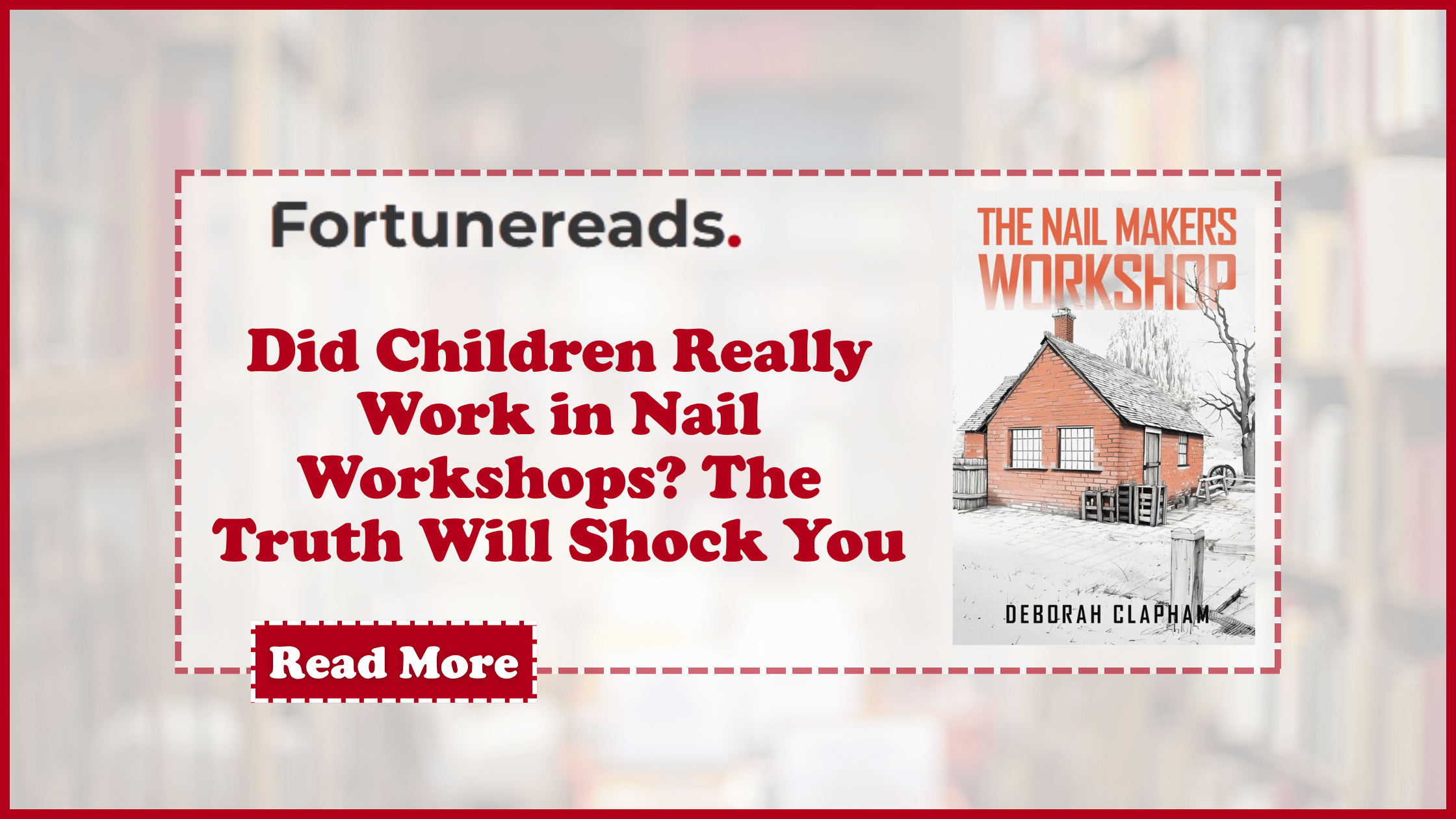
When we think about childhood today, we imagine school classrooms, playgrounds and time spent learning, playing and growing. But step back into 19th-century Britain and the reality for many children was starkly different. In Deborah Clapham’s powerful historical tale “Emily’s Adventures: The Nail Makers Workshop”, readers are transported into a soot-filled world where childhood and labor were deeply intertwined and where even young hands were expected to contribute to survival.
So, did children really work in nail workshops? The answer is yes and the truth behind it is both fascinating and deeply unsettling.
During the Industrial Revolution, particularly in regions like Worcestershire, nail-making was a common family trade. Entire households worked together in small, cramped workshops known as nail shops. These spaces were often dark, hot and filled with smoke from a central hearth fire. Iron rods were heated until red-hot and then hammered into shape by family members working side by side. It was not unusual for children as young as seven or eight to be part of this process.
In Emily’s Adventures: The Nail Makers Workshop, author Deborah Clapham brings this reality to life through the eyes of young Emily, a child growing up in a nail-making family. Emily’s world is defined by the rhythmic “bang, bang, bang” of the hammer, the smell of soot and the constant presence of hard labor. Yet, through her innocence and curiosity, readers gain a deeply human perspective on a world that history often reduces to statistics.
Children in nail workshops were not simply observers; they were workers. Their small hands were often used for making smaller nails, which required less strength but still demanded precision and endurance. According to historical accounts, some children could produce hundreds of nails in a single hour. The work was repetitive, physically demanding and performed in conditions that would be considered unacceptable today.
What makes Deborah Clapham’s storytelling so compelling is how she balances historical truth with emotional depth. Through Emily’s experiences, readers begin to understand that this was not just labor, it was life. Families depended on every member contributing to the workshop. If nails were not produced in time, the entire household risked falling into deeper poverty.
One of the most shocking aspects revealed in both history and the book is the economic system surrounding this trade. Nail-making families were often controlled by nail masters and middlemen known as foggers. These figures could manipulate wages, enforce strict deadlines and even control how workers were paid. Instead of receiving fair wages in money, families were sometimes given tokens that could only be spent in company-controlled shops, where prices were inflated and goods were often of poor quality.
This system created a cycle of dependency and debt that was incredibly difficult to escape. In Emily’s story, we see how her father works tirelessly to meet production demands, only to receive far less than the true value of his labor. The emotional weight of this injustice is felt through Emily’s observations, making the historical reality both accessible and deeply affecting for readers.
However, “Emily’s Adventures: The Nail Makers Workshop” is not only a story of hardship. It is also a story of resilience, dignity and quiet strength. Despite the harsh conditions, families found ways to support one another. Children still experienced moments of wonder, curiosity and learning. Emily herself begins to discover the world beyond the workshop through education, showing that even in the darkest environments, hope can emerge.
Deborah Clapham’s background as an author deeply passionate about forgotten working-class history is evident on every page. Her vivid descriptions of soot-covered walls, glowing iron rods and the constant rhythm of hammers immerse readers in a world that feels both real and unforgettable. She does not sensationalize the past; instead, she honors it by presenting it with honesty and respect.
The inclusion of detailed explanations about tools, nail types and workshop life also adds educational value to the story. Readers learn about everything from hob nails used in boots to tenterhooks used in textile production, turning the book into both a narrative and a window into industrial history.
So, did children really work in nail workshops? Yes and stories like Emily’s remind us that history is not always comfortable, but it is essential to understand. Behind every nail hammered into wood was a child like Emily, living a life shaped by necessity, endurance and quiet resilience.
Through “Emily’s Adventures: The Nail Makers Workshop”, Deborah Clapham ensures that these forgotten voices are heard again. And once you step into Emily’s world, you may never look at history the same way again.
Amazon Book Link : https://www.amazon.co.uk/dp/B0G63Y8Q6B/