Pain rarely stays with one person. When it is ignored, hidden, excused, or passed over in silence, it often travels through families in ways that no one fully understands until much later. Generational trauma does not always look like one dramatic event. Sometimes it appears in repeated anger, emotional distance, control, shame, fear, and the quiet expectation that children must carry burdens they never created.
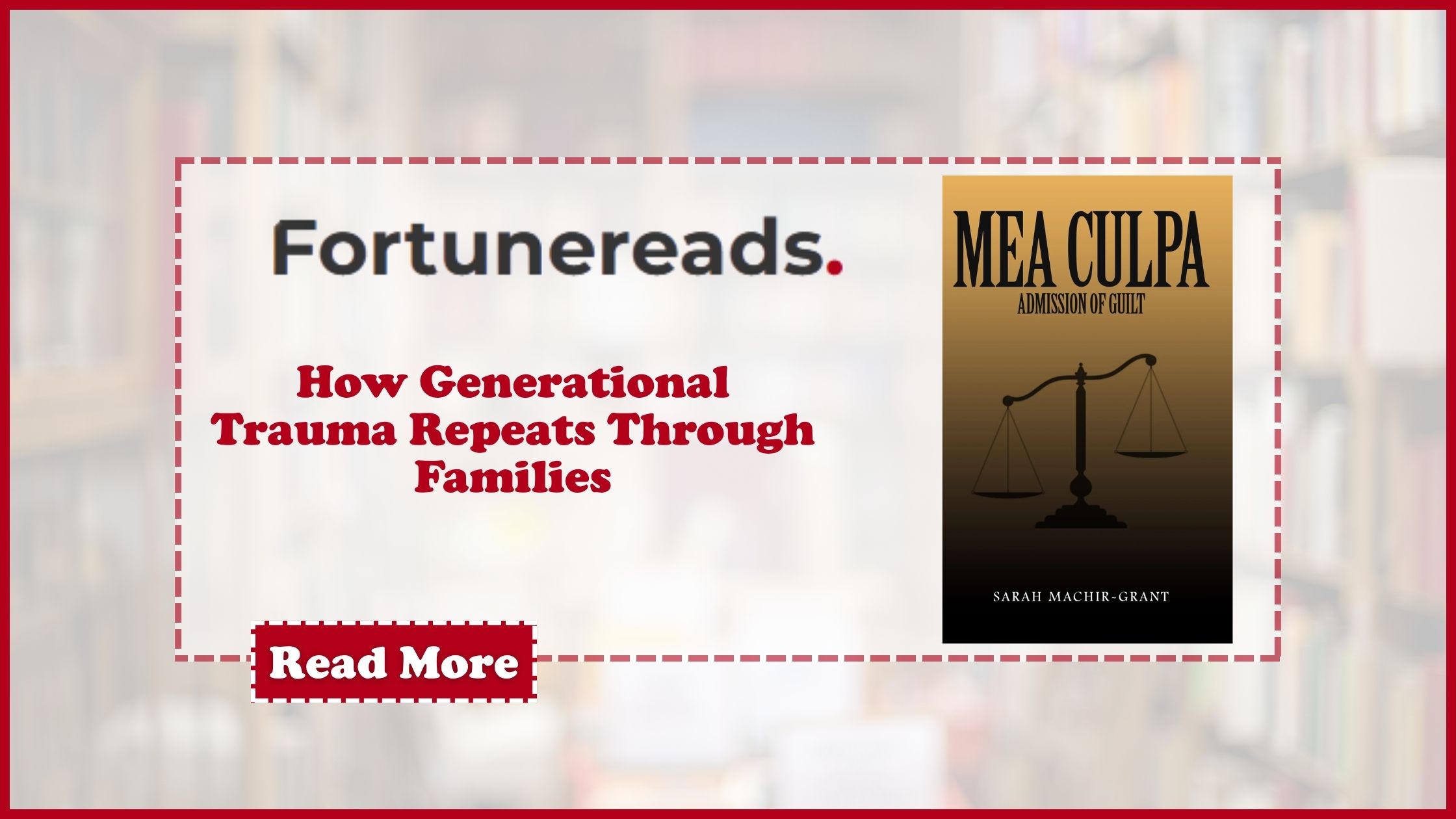
In Mea Culpa, Sarah Machir Grant explores this difficult inheritance with honesty and emotional depth. The book moves through memory, family history, childhood wounds, and adult fear, showing how one generation’s unresolved suffering can shape the next. It is a powerful creative nonfiction work about what happens when pain is not faced, and when silence becomes part of family life.
Families often pass down more than names, stories, and traditions. They can also pass down ways of coping. A parent who was never comforted may not know how to comfort. A child who grew up around fear may later create fear without fully understanding why. A family that hides shame may teach the next generation to hide their own pain. These patterns can become so familiar that they feel normal, even when they are deeply harmful.
Mea Culpa shows how trauma can become woven into everyday life. The narrator reflects on childhood, family control, emotional neglect, blame, and the painful confusion of loving people who also caused harm. This complexity makes the book deeply human. It does not present family pain as simple. Instead, it reveals how damage can be repeated by people who may themselves have been damaged, and how difficult it can be to separate love from fear.
One of the strongest parts of the book is its attention to memory. The past is not treated as something finished. It returns in fragments, emotions, reactions, and fears that continue into adulthood. This is how generational trauma survives. It hides inside behaviour. It appears in the way people speak, punish, protect, deny, and remember.
Yet the book also makes clear that naming the truth matters. When someone finally looks back and gives language to what happened, the cycle begins to weaken. Telling the story does not erase the pain, but it challenges the silence that allowed the pain to continue.
For readers drawn to stories of family trauma, emotional survival, difficult memory, and the search for self-understanding, Mea Culpa offers a brave and haunting reading experience. It reminds us that inherited pain can shape a life, but truth can begin the work of breaking the pattern.
Discover the story that refuses to stay quiet. Get your copy of MEA CULPA today. https://www.amazon.com/dp/197100216X/