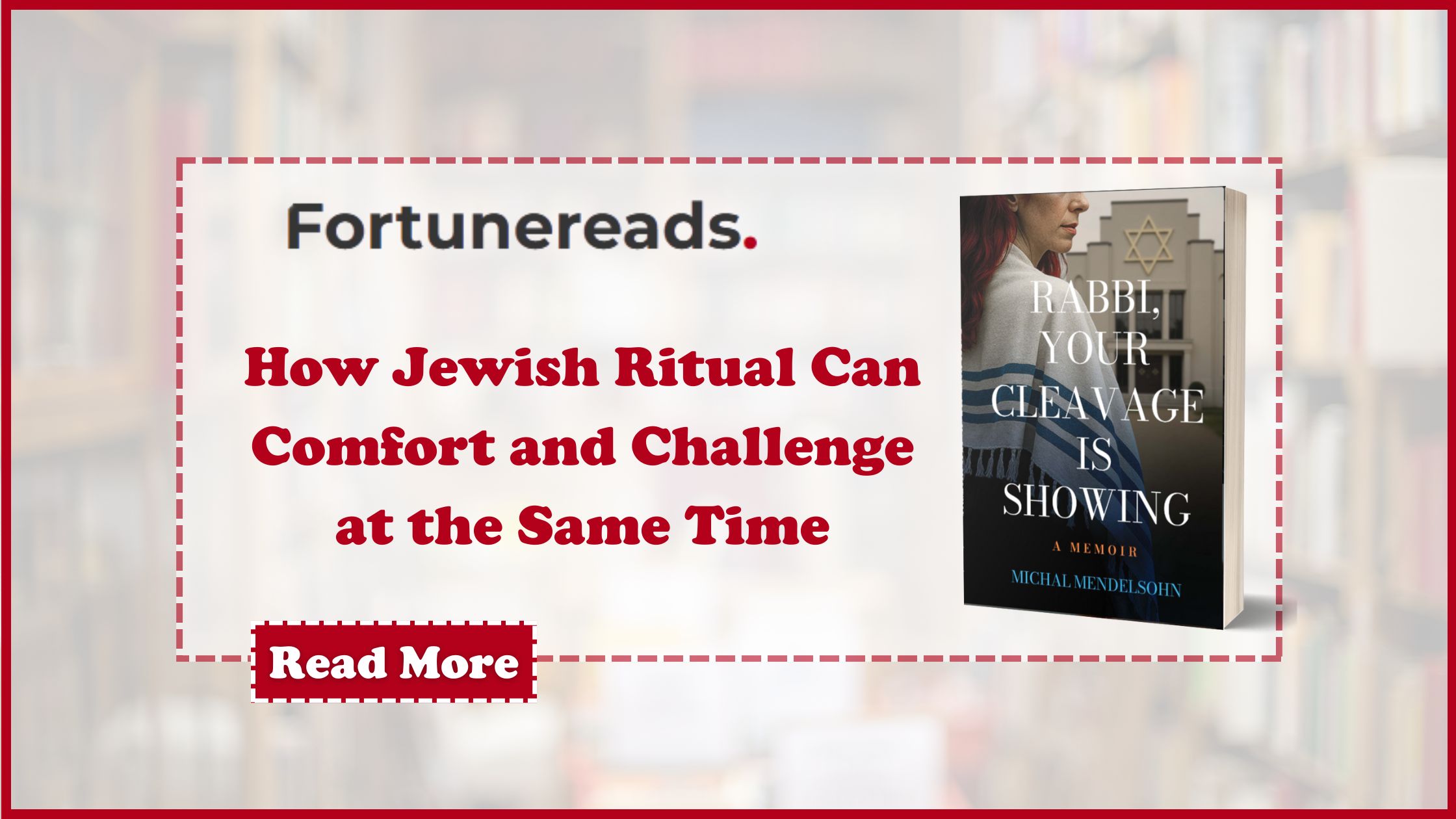
Ritual is often where people turn when life feels uncertain. Familiar prayers, shared traditions, and repeated practices can provide a sense of grounding and reassurance. At the same time, those very rituals can raise difficult questions about belonging, authority, and inclusion. This tension is explored with honesty in Rabbi, Your Cleavage Is Showing by Michal Mendelsohn, a memoir that reveals how Jewish ritual can serve as both a refuge and a source of conflict.
Ritual as a Source of Comfort
Jewish ritual has long provided structure during moments of joy and grief. Lighting candles, reciting prayers, and gathering for communal worship create continuity across generations. For many people, these practices offer stability and meaning. Michal Mendelsohn’s life reflects this comfort. Jewish ritual connected her to history and community, even when other parts of her life felt uncertain.
Rituals can soothe because they do not ask for an explanation. They allow people to participate even when emotions are complex or words are hard to find. This quality makes ritual especially powerful during times of loss or transition. It becomes a steady presence when everything else feels fragile.
When Ritual Becomes a Point of Tension
At the same time, ritual can reflect the values and limits of the institutions that uphold it. In Mendelsohn’s experience, entering religious leadership revealed how long-standing assumptions about gender shaped ritual spaces. Practices that once felt comforting could also become sites of tension when questions of authority and belonging arose.
For example, who leads a prayer or stands at the center of ritual matters. When leadership roles are restricted, ritual can feel less inclusive. Mendelsohn encountered moments when her participation challenged expectations, turning familiar practices into arenas of quiet conflict. These experiences show how ritual can unintentionally reinforce boundaries.
The Dual Role of Tradition
Tradition often carries both care and constraint. It can nurture identity while also limiting expression. Mendelsohn’s story illustrates how Jewish ritual offered spiritual grounding while also reflecting institutional resistance to change. This dual role required her to hold both appreciation and critique simultaneously.
She remained deeply connected to Jewish life, even as she questioned how ritual spaces treated women in leadership roles. This balance is not easy. It requires honesty and patience. It also invites reflection on how tradition can evolve without losing its essence.
Navigating Comfort and Challenge Together
Learning to engage with ritual in this way became part of Mendelsohn’s growth. She did not abandon tradition because of conflict. Instead, she stayed present within it, seeking ways to honor its meaning while acknowledging its limits. This approach allowed her to find comfort without ignoring discomfort.
Many readers will recognize this experience. Faith traditions often hold both healing and harm. Recognizing this reality does not weaken belief. It deepens it by making room for truth.
Why This Perspective Matters
Understanding the dual nature of ritual helps communities grow more inclusive and thoughtful. When people acknowledge both comfort and challenge, they open the door to meaningful change. Mendelsohn’s reflections encourage readers to view ritual not as a fixed but as a living practice shaped by those who participate in it.
For anyone interested in how tradition can hold both refuge and conflict, Rabbi, Your Cleavage Is Showing by Michal Mendelsohn offers a clear and reflective exploration worth reading.