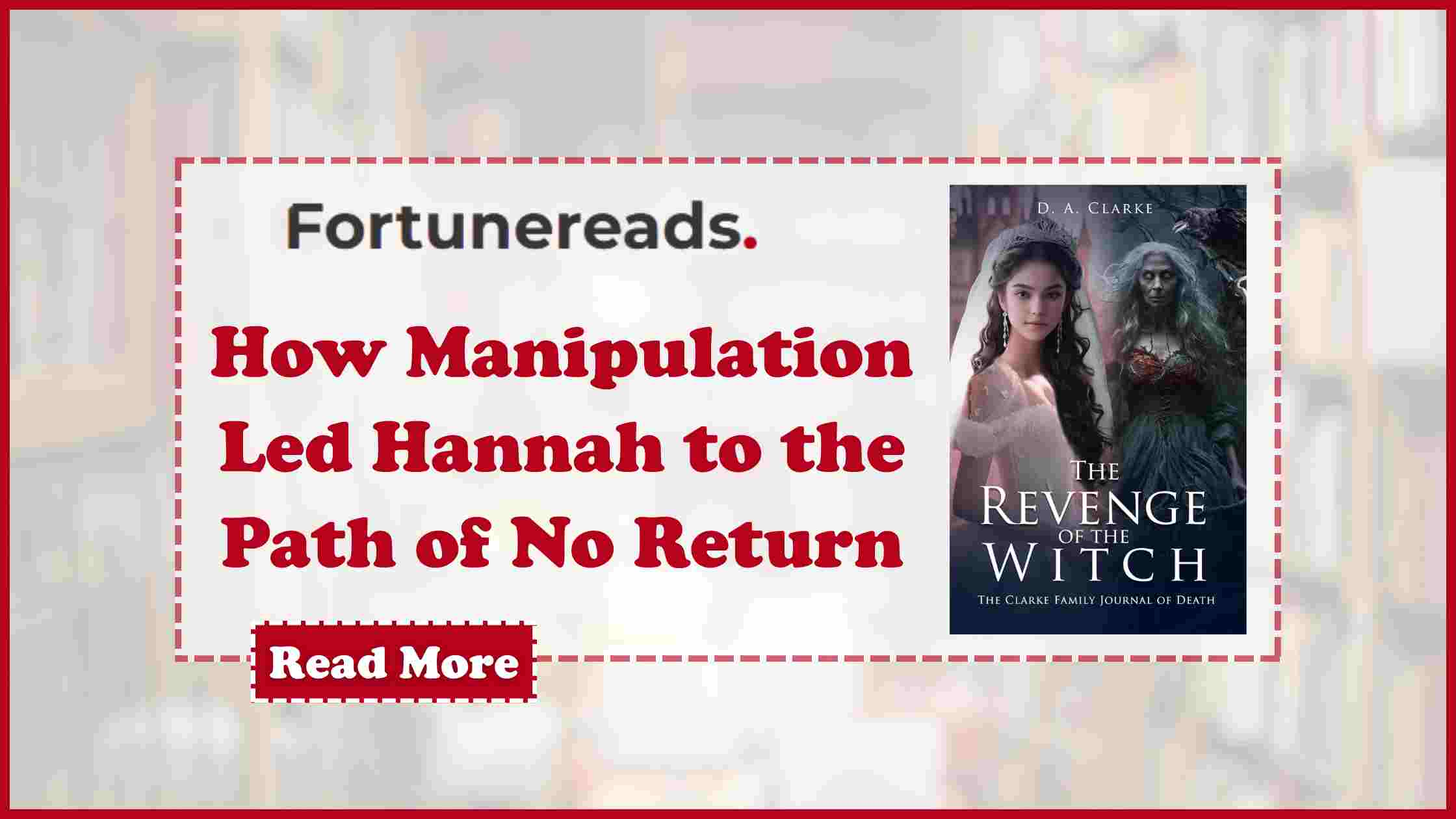
In The Revenge of The Witch by Dennis A. Clarke, one of the most haunting aspects of the story is the psychological manipulation that Magus, the evil warlock, exerts over Hannah. His influence over her is not just through magic but through carefully crafted words and twisted logic. He preys on her vulnerabilities—her isolation, anger, and broken trust—to push her towards an irreversible fate. This article explores how Magus manipulates Hannah, leading her deeper into darkness and making her believe that murder is just another step in her sinful path.
The Power of Persuasion
Magus does not force Hannah to commit murder; instead, he makes it seem like the only logical choice. When Hannah, filled with grief and betrayal, confronts him about her husband Edmond’s infidelity, Magus does not console her or offer advice. Instead, he subtly shifts her focus from pain to vengeance. He presents himself as a friend, someone who understands her suffering and knows exactly how to end it.
His words are laced with deceit. By reminding her that she is already practicing witchcraft—a sin according to her religious beliefs—he makes her question the weight of her actions. He implies that she has already crossed a moral line, so committing murder would not make much of a difference. This technique, known as moral desensitization, makes Hannah feel as though she has nothing to lose.
Isolation and Vulnerability
Hannah is in a fragile state—isolated, emotionally wounded, and filled with resentment. Her husband, whom she trusted, has betrayed her. The people around her dismiss her concerns. She has no one to turn to except Magus. He takes advantage of this loneliness, presenting himself as her only ally.
Isolation plays a crucial role in manipulation. When people feel cut off from the world, they become more susceptible to influence. Magus ensures that Hannah remains dependent on him by feeding her information that confirms her worst fears while simultaneously offering a solution to her problems.
Twisting Morality
One of the most chilling aspects of Magus’s manipulation is the way he distorts Hannah’s sense of morality. Instead of acknowledging murder as a sin, he equates it to her already-forbidden practice of witchcraft. He tells her, “A sin is a sin, and one is no worse than the other.” With these words, he eliminates any distinction between lesser wrongdoings and extreme evil.
This method, known as moral relativism, makes Hannah believe that if she has already sinned, committing another will not make a difference. But this is far from the truth. Every action carries its weight, and Magus deliberately blurs this understanding to suit his own dark agenda.
Playing on Emotion Over Reason
Magus knows that in moments of intense emotion, people rarely think rationally. He fuels Hannah’s anger and heartbreak, ensuring she is too consumed with rage to analyze her actions carefully. Instead of allowing her to process her pain and make her own decisions, he keeps her emotions raw and uncontrolled.
By revealing Edmond’s affair in the most brutal way possible, Magus ensures that Hannah reacts impulsively. He gives her a book of spells, increasing her power and making her feel invincible. In doing so, he removes her fear of consequences, making her believe that she has the ability to get away with anything—even murder.
The Final Push
Magus does not directly order Hannah to kill Edmond and Emily. Instead, he presents the idea in a way that makes it seem like her decision. “I have a plan that will rid you of them both,” he says, planting the seed of murder in her mind. When she questions whether he is suggesting murder, he does not deny it—instead, he reassures her that it will appear as an accident, ensuring no one will suspect her involvement.
This final step is crucial in manipulation. Magus does not force Hannah’s hand; he lets her believe that she is in control of her own choices. However, every step she takes is carefully orchestrated by him. He has led her down this path without her realizing that she has been played like a puppet all along.
The Unseen Chains of Control
By the time Hannah truly understands the depth of Magus’s manipulation, it is too late. She is already ensnared in the darkness he has created around her. What started as heartbreak turned into vengeance, and what began as anger ended in bloodshed. Magus, much like the serpent in the Garden of Eden, convinced her that one sin led to another, making her believe that she was beyond redemption.
Hannah’s tragic descent into darkness serves as a chilling reminder of how powerful manipulation can be. Magus did not need to use spells or curses to control her—his words and psychological tactics were enough to turn a grieving woman into a murderer.
GET YOUR COPY : https://www.amazon.com/dp/B0DVH1VLTP/