Human beings experience the world through perception. Everything we understand about history, society, and even our personal lives is filtered through the way we interpret events and information. Our beliefs, culture, education, and experiences all shape how we see reality. What one person considers truth may appear completely different to someone else, simply because each individual interprets the world through a unique lens.
This idea lies at the heart of many philosophical debates that have lasted for centuries. Thinkers have long questioned whether reality is entirely objective or whether our perception actively shapes the world we believe we live in. If perception influences interpretation, then the way information is presented can significantly affect how people understand events, systems, and history itself.
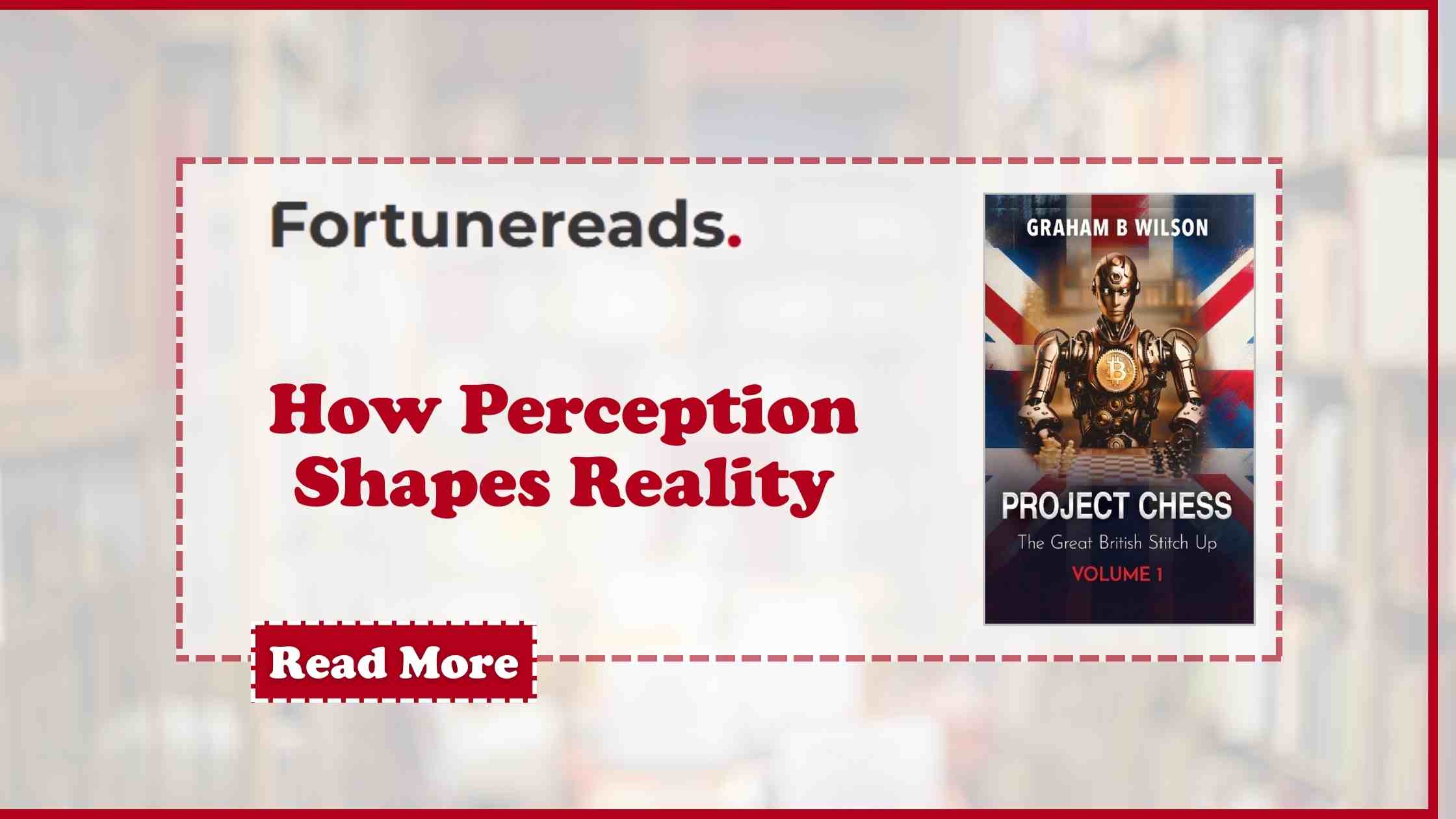
In Project Chess: The Great British Stitch Up Volume One, Graham B. Wilson explores this concept through a wide ranging examination of history, mythology, power structures, and modern systems of influence. The book invites readers to reflect on how perception can influence collective understanding and how narratives may shape the way societies interpret the past and present.
Throughout history, perception has played a powerful role in shaping civilizations. Leaders have used symbols, stories, and messaging to influence public opinion. Religious traditions have used myths and teachings to guide belief systems. Governments and institutions have often controlled information in order to maintain stability or authority. In each case, perception becomes a powerful tool in determining how reality is understood by the public.
The book suggests that perception is not simply about individual interpretation. It can also be influenced by larger systems of communication and authority. When information flows through institutions such as governments, financial systems, or media networks, the narratives that emerge can shape how entire populations understand events.
Project Chess explores how these narratives may evolve over time. Ancient stories and myths once served as ways to explain the world before modern science. Over generations, those stories became embedded in culture and belief. Even today, historical narratives continue to influence how societies interpret their origins and their future.
Another aspect the book considers is the relationship between perception and power. When certain groups control the flow of information, they often have the ability to shape how reality is perceived by others. This influence does not necessarily require deception. Sometimes it simply involves emphasizing particular viewpoints while leaving others unexplored.
As societies became more complex, the systems that shape perception expanded. Today, information travels instantly through global communication networks. News, entertainment, and social media continuously shape how people interpret events around the world. In such an environment, the boundary between perception and reality can become increasingly difficult to distinguish.
Project Chess encourages readers to examine these dynamics carefully. By questioning how narratives are formed and how perceptions are influenced, readers can begin to see how history and modern systems may be interconnected in unexpected ways.
The book does not attempt to provide simple conclusions. Instead, it offers a perspective that encourages curiosity and reflection. By examining mythology, historical developments, and the structures that organize modern societies, it invites readers to think critically about how perception shapes the reality they experience.
Project Chess: The Great British Stitch Up Volume One presents a thought provoking exploration of how ideas, stories, and systems influence the way humanity understands the world. It reminds readers that reality is not always defined solely by events themselves but also by how those events are perceived, interpreted, and remembered across generations.
The book is available on https://www.amazon.com/dp/B0G4VFBH6Z.