Most employees understand the boundaries of their roles. They know which tasks belong to them, which projects fall under another department and where their formal responsibilities begin and end. While structure keeps organizations running, staying permanently inside those boundaries can also limit professional growth.
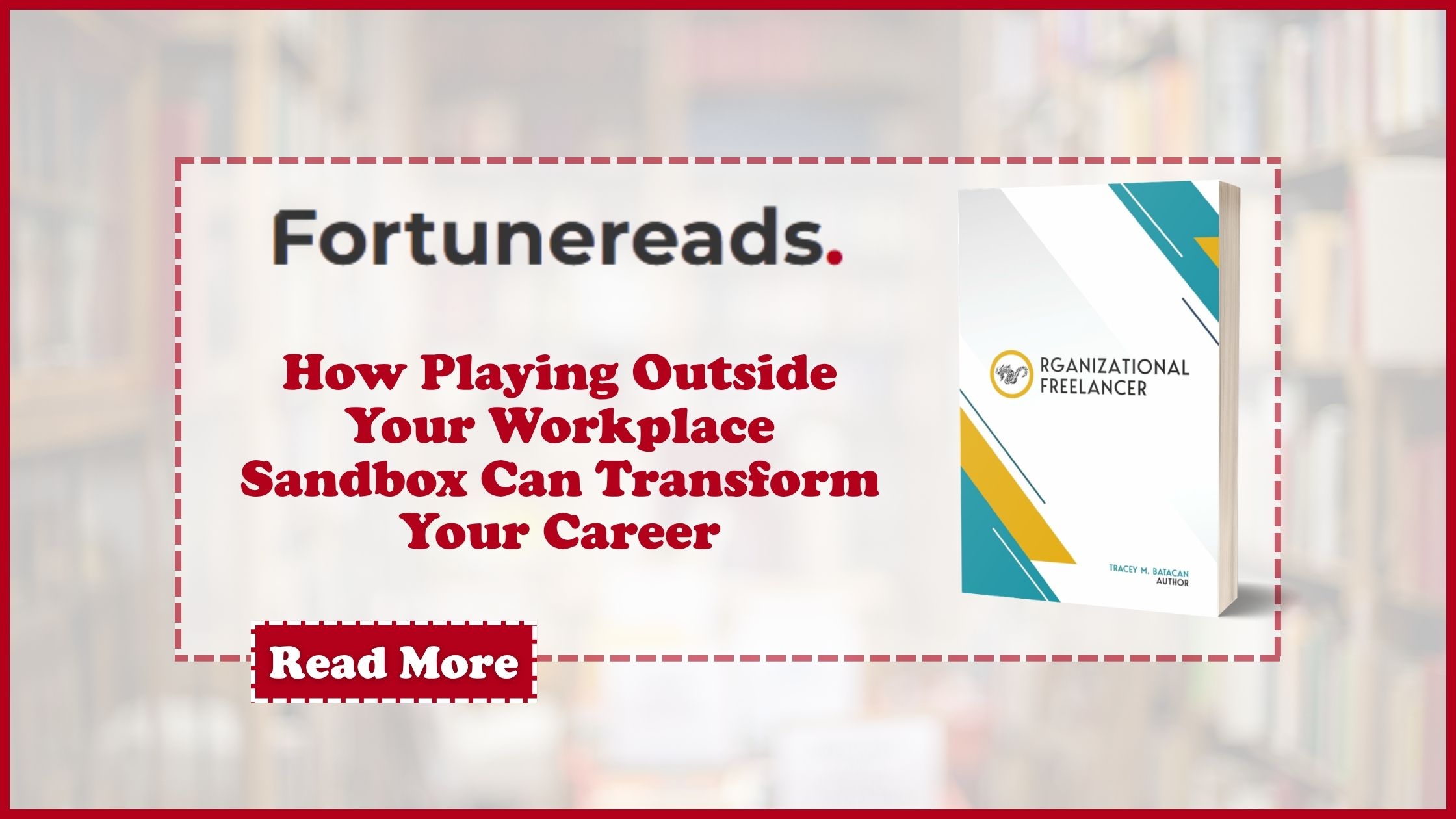
In Organizational Freelancer, author Tracey M. Batacan encourages professionals to consider what can happen when they begin “playing outside the sandbox.” This does not mean ignoring responsibilities or interfering with someone else’s work. It means looking beyond a narrow job description, identifying where your skills could help and contributing to opportunities outside your usual routine.
For many people, career stagnation begins when work becomes predictable. The same meetings, assignments and expectations repeat every week. Even when employees perform well, they may feel that their creativity and experience are not being fully used. Batacan suggests that one way to regain energy is to explore meaningful work with other teams or internal clients.
Imagine that you work in communications but also have strong design skills. Another department may need help developing visual materials for an upcoming campaign. Or perhaps you are highly organized and could support a temporary project that lacks coordination. By offering your expertise, you gain the chance to solve a real problem while demonstrating abilities that your regular role may not reveal.
These experiences can transform a career in several ways. First, they help professionals develop new and marketable skills. Working with unfamiliar teams often requires adaptability, stronger communication and creative problem-solving. Each new project can add depth to a résumé, portfolio or professional story.
Second, stepping outside your usual environment expands your network. Batacan explains that internal freelance work can introduce employees to new colleagues, mentors, leaders and subject-matter experts. Those relationships may later lead to high-profile assignments, rotational opportunities, recommendations or even a different position within the same organization.
Playing outside the sandbox can also improve confidence. It is easy to underestimate your abilities when you perform the same duties every day. A fresh challenge shows you how your knowledge can create value in a different setting. Completing that challenge successfully can strengthen your reputation as someone who is dependable, resourceful and willing to contribute.
However, Batacan makes it clear that additional opportunities must be managed responsibly. Your main job still comes first. Taking on extra work without planning can lead to missed deadlines, poor performance and unnecessary stress. Successful organizational freelancers prioritize carefully, communicate timelines and avoid promising more than they can realistically deliver.
The goal is not to become the busiest person in the organization. It is to become more intentional about where you invest your energy. Choose projects that support your development, align with your strengths and allow you to make a meaningful contribution.
Organizational Freelancer by Tracey M. Batacan offers an insightful and relatable guide for professionals who want more from their working lives. It reminds readers that career advancement is not always found by leaving an organization. Sometimes, it begins by exploring more of what is already available within it.
Your workplace sandbox may feel safe and familiar, but your next major opportunity could be waiting just beyond its edges.