Over the last ten years, Western politics has shifted significantly. What was once considered fringe, such as nationalist rhetoric, anti-immigrant sentiments, and opposition to global cooperation, has now become standard political discourse. Leaders like Donald Trump in the U.S., Nigel Farage in the UK, and Marine Le Pen in France have transformed outsider politics into mainstream movements. What initially started as protests has grown into wielding power, with the far right no longer on the sidelines but actively shaping the strategy.
The success of these leaders did not appear from nowhere. It is the result of years of frustration and distrust. Many people felt ignored by traditional politicians, who promised prosperity but delivered insecurity. Factory towns closed, jobs disappeared, and communities were left behind by globalisation. At the same time, rapid cultural and social change left many citizens feeling alienated in their own countries. When populist leaders arrived, they spoke a language that felt familiar: direct, emotional, and angry. They pointed to someone to blame—the elites, the immigrants, the global institutions—and offered simple answers to complex problems.
Donald Trump exemplified this shift most prominently. His 2016 rise demonstrated that anger could lead to electoral victory. He rallied a movement centered on the belief that America had been taken over by corrupt politicians and cultural outsiders. His “America First” slogan was more than just policy; it served as a rallying cry for those who felt overlooked. Even after leaving office, his influence persisted. His reemergence in 2025 has revealed that the underlying forces responsible for his rise were never truly vanquished—they were merely biding their time for another opportunity.
In Britain, Nigel Farage played a similar role. For years, he was dismissed as a political showman. Yet his campaign for Brexit tapped into a deep reservoir of resentment toward the establishment. The vote to leave the European Union was about more than bureaucracy in Brussels—it was a rejection of the entire political class. Farage’s message was clear: take back control. It resonated because it offered people the illusion of agency in a world that felt increasingly out of their control. Even now, as the economic consequences of Brexit unfold, Farage’s legacy continues to shape British politics.
Across the Channel, Marine Le Pen has spent more than a decade softening the image of France’s far right. By distancing herself from her father’s old extremism, she turned the National Rally into a legitimate contender for power. Her message, like Trump’s and Farage’s, focuses on identity and sovereignty. She presents herself as the defender of “ordinary French people” against global elites and mass immigration. Each election brings her closer to the presidency, and her ideas have already influenced the national agenda.
What ties these figures together is not ideology but instinct. They understand emotion better than policy. They thrive on division, presenting themselves as champions of the people against a corrupt system. Social media has amplified their reach, allowing them to bypass traditional journalism and speak directly to their audiences. In this environment, outrage is currency, and facts are negotiable. What was once extreme now feels routine because it is repeated every day on television, online, and at rallies.
The mainstreaming of the far right has transformed how politics functions. Traditional parties, fearful of losing votes, have incorporated elements of populist rhetoric. Even moderates now talk about “the people versus the elite.” This normalization makes it more difficult to push back. As the boundaries of acceptable debate shift, so do the limits of democracy itself. The danger lies not only in what populists say but also in how they alter the tone of the entire conversation.
Ending this trend won’t be simple. Populism thrives on distrust, which is deeply rooted. It requires more than warnings or fact checks to change it. Citizens must see that democracy can still function effectively for them, providing fairness and stability. Until then, the far right will continue to expand, not because it possesses all the solutions, but because it has perfected the skill of speaking to those who feel ignored.
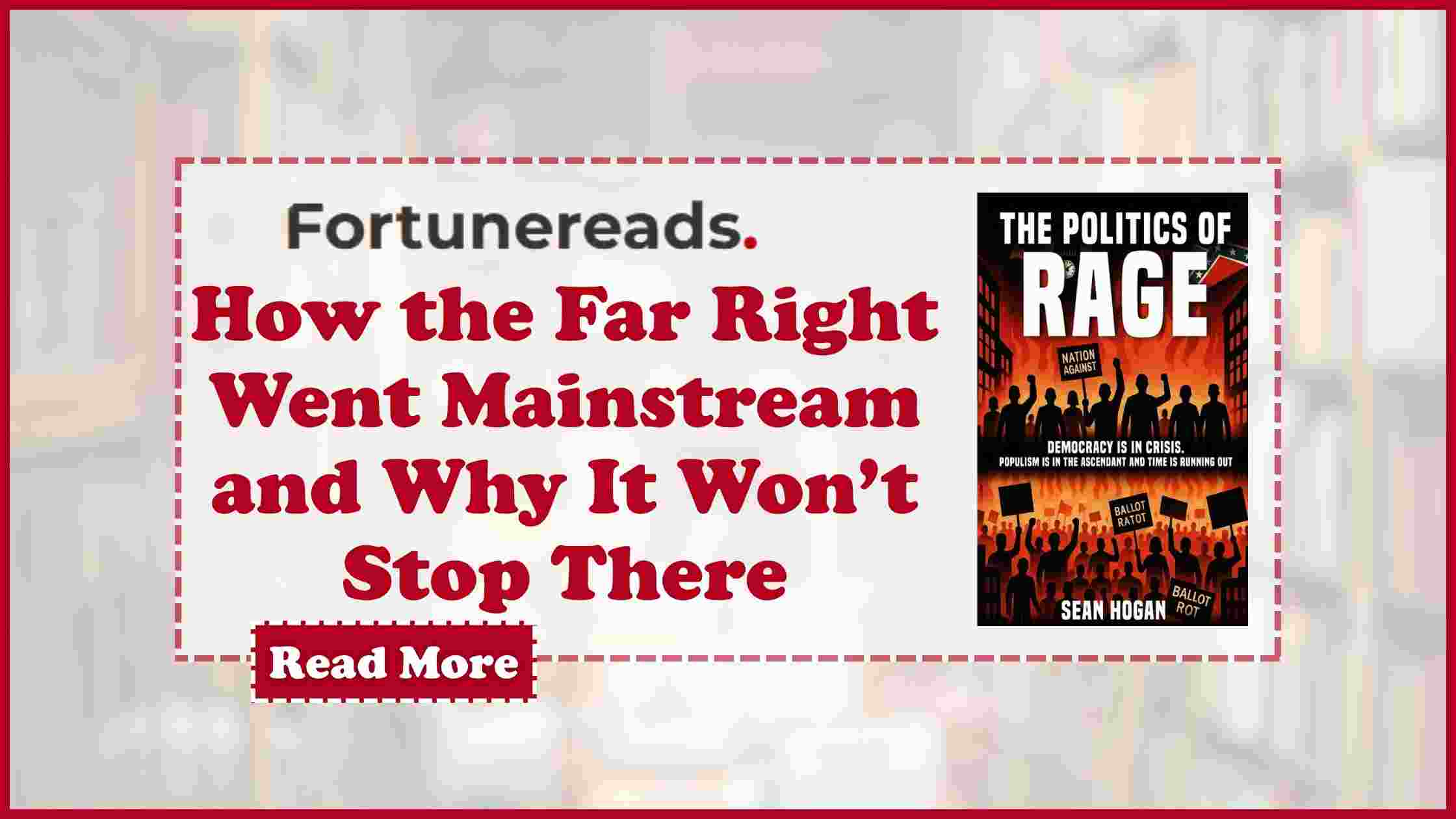
The forces that brought the far right into the mainstream will keep shaping our future unless we confront them with clarity and courage. In The Politics of Rage, Seán Hogan examines this transformation through real events and lived experience, offering a roadmap for those who still believe democracy is worth defending.
Discover the full story in The Politics of Rage. It is a timely look at how we arrived here and what it will take to find our way back.
Head to Amazon to purcahse your copy: https://www.amazon.com/dp/B0FH5N8FVQ/.