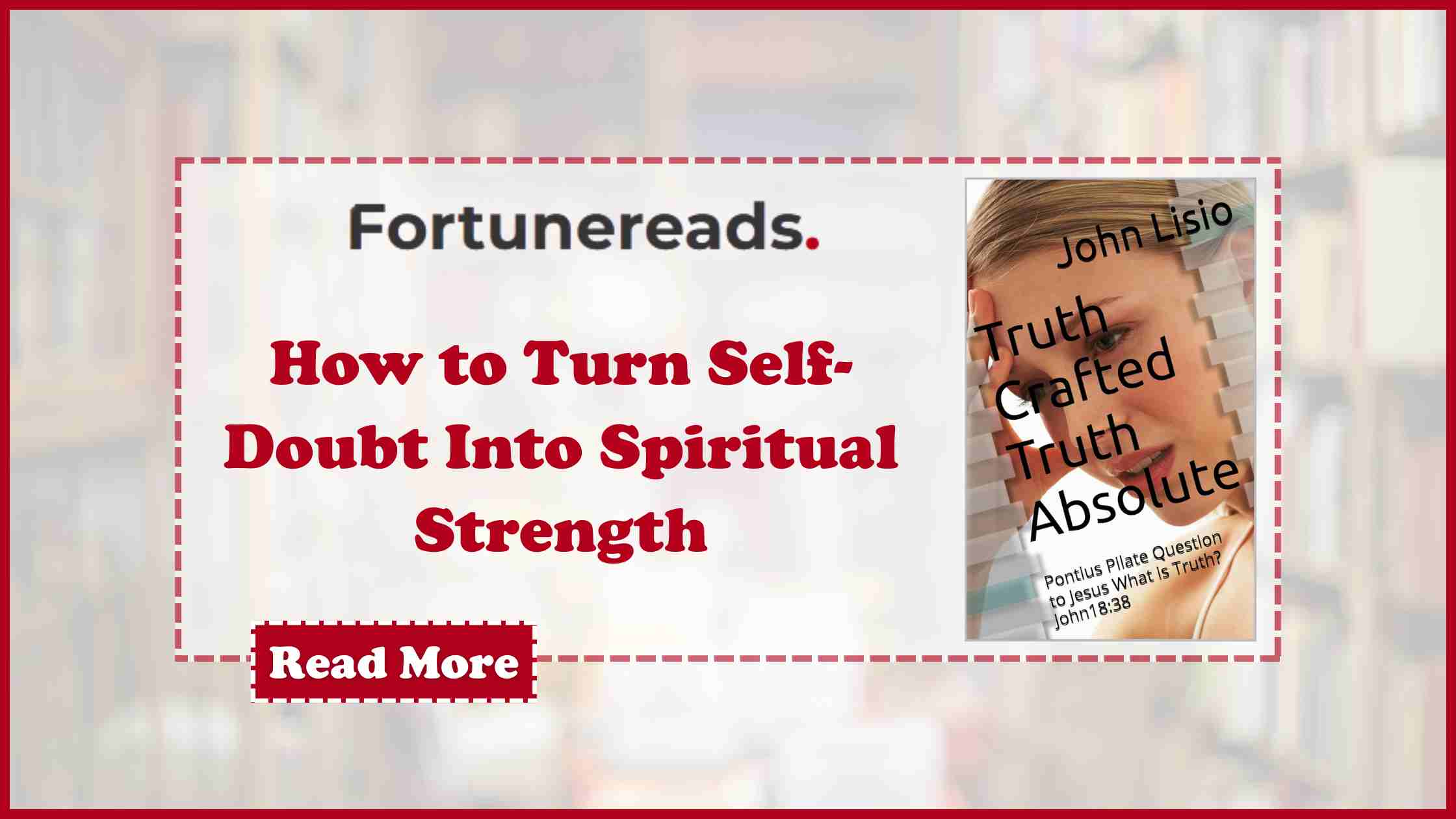
Everyone faces moments of self-doubt. It can appear quietly in the back of your mind as a whisper and make you think that you’re not enough, you’ll never get this right, and others are stronger than you. For many people, this voice becomes so familiar that it shapes how they live, decide, and believe. Yet, as J.J. Lisio reminds readers in Truth Crafted Truth Absolute that self-doubt does not have to be an enemy. When handled with faith, it becomes a doorway to deeper spiritual strength and closer dependence on God.
Lisio’s book blends science and scripture to explain why self-doubt feels so real. The brain releases stress chemicals like cortisol when fear or uncertainty arise, causing your body to tense and your confidence to drop. Over time, these repeated thoughts form neural pathways that make doubt feel automatic. But here’s the hopeful truth: those pathways can be changed. Through faith and intentional thought, the mind can be rewired to reflect God’s truth rather than fear’s lies.
Step 1: Recognize the Pattern
The first step is awareness. You cannot fight what you refuse to face. When doubt starts to surface, pause and recognize it. Write down what the thought says. For example, “I’ll never be able to do this.” Naming it helps shift the belief from emotion into observation. In Truth Crafted Truth Absolute, Lisio introduces the Thought Journal, a simple tool to record these moments. Seeing your doubts on paper makes it easier to challenge them.
Step 2: Compare It With God’s Word
Self-doubt thrives when it goes untested. The next step is to measure each doubtful thought against scripture. The Bible provides countless reminders of God’s strength within us: “I can do all things through Christ who strengthens me” (Philippians 4:13). When you replace a lie with truth, your brain begins to calm. Dopamine and serotonin, the “peace chemicals,” start to replace cortisol, leading to a sense of stability.
Step 3: Shift From Fear to Faith
Lisio explains that emotions are influenced by where you direct your focus. Concentrating on fear makes it intensify, while focusing on God’s presence fosters peace. A practical method to achieve this is with the Truth-Crafting Matrix: jot down your doubt in one column, note the feeling it stirs, then write the biblical truth that counteracts it. For example:
- Doubt: “I’m not capable.”
- Feeling: Fear, anxiety.
- Truth: “God equips me for every good work.”
Over time, this simple discipline changes both mindset and body chemistry.
Step 4: Pray With Honesty
Turning self-doubt into strength is not about pretending to be fearless; it is about trusting God enough to admit weakness. Honest prayer invites God into the space that fear occupies. When you acknowledge, “Lord, I feel uncertain, but I choose to trust You,” the burden lightens. Lisio often connects this act to neuroplasticity—the brain’s ability to create new patterns. Each prayer builds a new spiritual and mental pathway that strengthens resilience.
Step 5: Act on Faith
The last step is movement. Even a small act of faith can be impactful—whether it’s making a call, drafting a plan, or forgiving yourself and others. Such actions show that doubt doesn’t dominate you. As you take these steps, your brain releases reward chemicals that boost confidence, forming a positive cycle of courage and trust.
If you’re ready to move from fear to faith and discover the peace that comes from anchoring your thoughts in truth, J.J. Lisio’s Truth Crafted Truth Absolute provides practical steps, scientific insight, and biblical encouragement to guide you along the way to spiritual strength.
Head to Amazon to purchase your copies: https://www.amazon.com/dp/B0FGKS935H.