Humanoid robots are no longer just symbols of science fiction. They are beginning to appear in hospitals, warehouses, construction sites, manufacturing facilities, emergency response settings and public service environments. Designed to move, respond and sometimes interact in ways that resemble human behavior, these machines represent one of the most visible signs of the AI-driven workplace. Their promise is exciting. They can assist with repetitive tasks, enter dangerous areas, support care teams, inspect unsafe locations and improve operational efficiency. However, their arrival also raises an important question: how can businesses innovate without placing workers at new forms of risk?
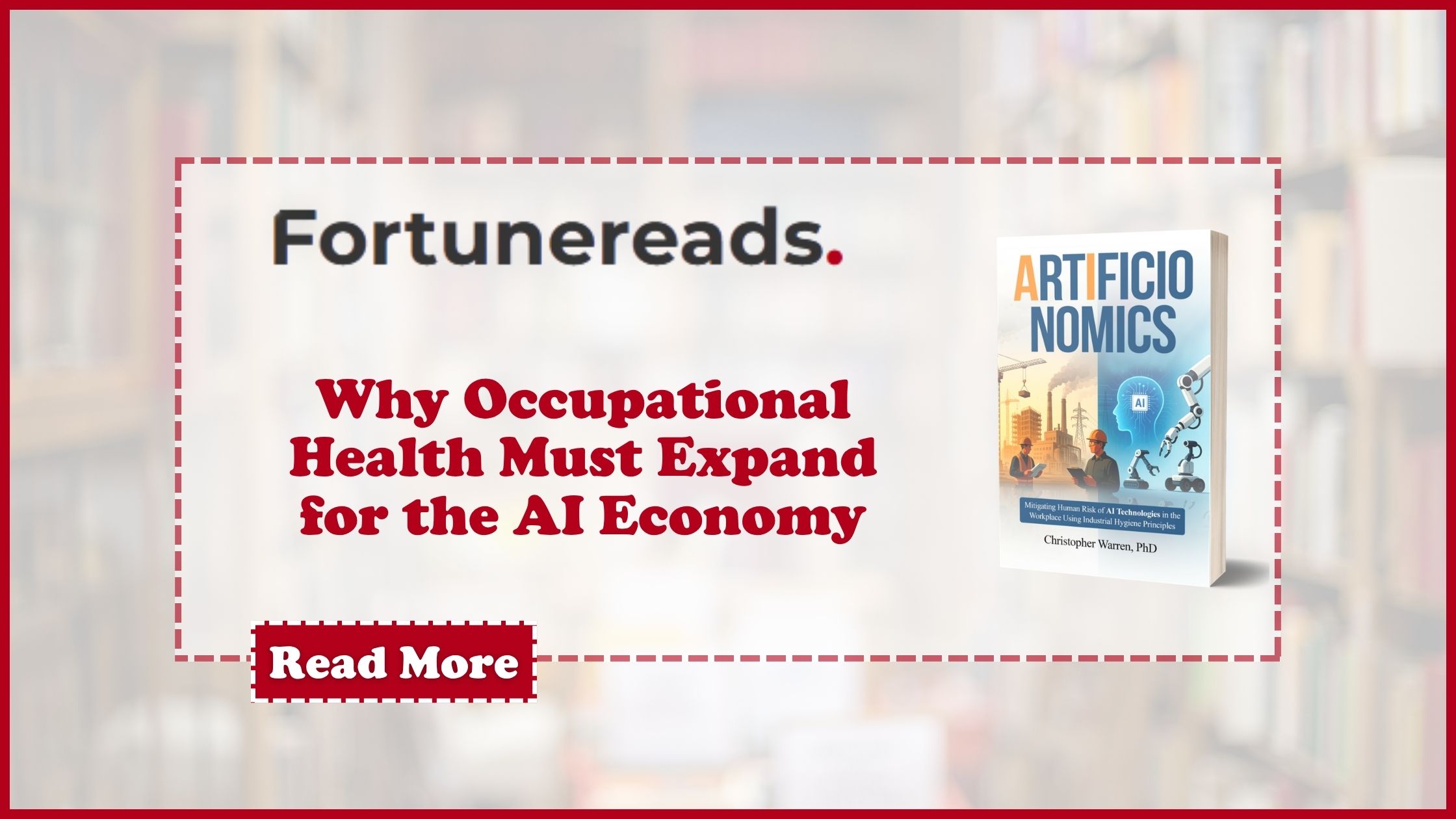
This is one of the key concerns explored in ArtificIonomics: Mitigating Human Risk of AI Technologies in the Workplace Using Industrial Hygiene Principles by Christopher Warren, PhD. The book presents a timely framework for understanding how AI and robotics affect human health, safety, dignity and trust in modern workplaces.
Humanoid robots can bring major benefits when they are introduced responsibly. In healthcare, they may help with patient support, mobility assistance, routine monitoring or service tasks that reduce pressure on overworked staff. In construction and disaster response, robots can inspect unstable structures, contaminated areas or hazardous zones before human workers enter. In manufacturing and logistics, they can handle repetitive or physically demanding work that may reduce strain and injury.
Yet innovation does not remove responsibility. A robot that improves efficiency can also create new hazards. Workers may face collision risks, unclear movement patterns, poor communication with robotic systems, ergonomic strain from adapting to machine-paced workflows or anxiety about being replaced. In emotionally sensitive workplaces, such as hospitals or elder care facilities, humanoid robots can also raise concerns about empathy, privacy, dignity and the loss of human connection.
Dr. Warren’s book helps readers understand that these risks should not be treated as afterthoughts. They should be identified, evaluated and controlled before deployment. This is where ArtificIonomics becomes especially important. By applying industrial hygiene principles to AI and robotics, the book gives organizations a practical method for protecting workers while still allowing innovation to move forward.
The industrial hygiene approach begins with identifying hazards. In the case of humanoid robots, this may include physical risks, such as movement, proximity, mechanical failure and workspace design. It may also include psychological and social risks, such as stress, reduced autonomy, mistrust, surveillance concerns and uncertainty about job security. The next step is evaluation. Businesses must assess how workers interact with robots, how often exposure occurs, what tasks are affected and whether employees feel safe, trained and respected.
Control is the final and most important step. Organizations can create safer robot work zones, require human override options, provide clear training, use transparent policies, include workers in testing and set ethical boundaries for how robots are used. In some cases, companies may need to rethink whether a humanoid robot is the right solution at all. Technology should be chosen because it improves work responsibly, not simply because it appears advanced.
What makes ArtificIonomics valuable is its balanced perspective. Christopher Warren, PhD does not present robotics as something to fear. Instead, he shows that AI-powered machines can become powerful tools when they are designed and managed with human well-being at the center. The goal is not to stop progress. The goal is to make progress safer, smarter and more humane.
As humanoid robots enter more workplaces, businesses will need more than technical expertise. They will need ethical judgment, safety planning, worker participation and clear governance. ArtificIonomics offers a guide for that new responsibility.
The future of work may include robots that walk beside us, assist us and protect us. But that future must be built carefully. Innovation is only meaningful when it respects the people it is meant to serve.